
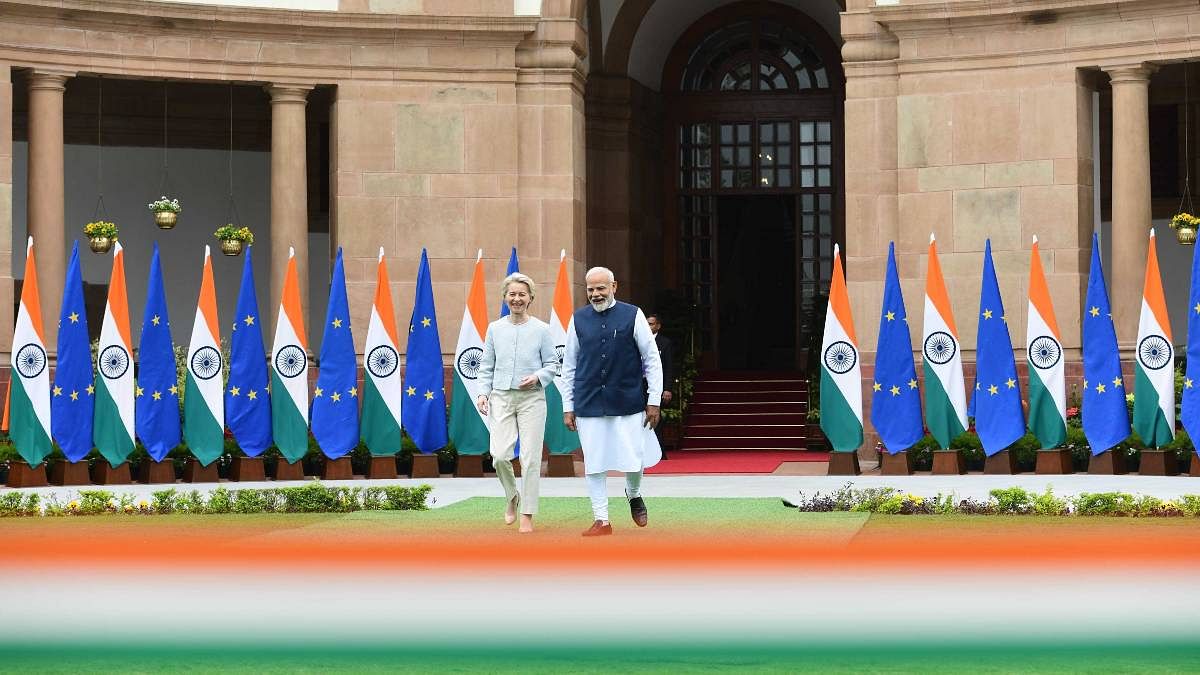
EU Unveils New Strategic Agenda with India Focused on Security and Trade
Brussels – The European Commission yesterday released a new strategic agenda for relations with India, outlining five key pillars of cooperation designed to restructure ties between the two entities amid a shifting global landscape.
Presented by EU High Representative for Foreign Affairs and Security Policy Kaja Kallas on September 17, 2025, the agenda focuses on prosperity and sustainability, technology and innovation, security and defense, connectivity and global issues, and overarching enablers. The strategy acknowledges a shared understanding that the current international system is becoming increasingly fragmented, posing new security challenges to a rules-based order, particularly in the Indo-Pacific region.
The new framework comes as global trade dynamics are being reshaped by the use of tariffs as a foreign policy tool, a trend highlighted by recent US policy shifts. This has prompted both the EU and India to reassess their strategic partnerships. A key component of the agenda is the pursuit of an EU-India Free Trade Agreement, with both sides aiming for a conclusion by the end of 2025, which could unlock significant trade and investment flows. Further collaboration is planned in areas like supply chain resilience and countering terrorism, following a tragic attack in Pahalgam in April 2025. For more on the evolving geopolitical landscape, see analysis from the Council on Foreign Relations.
Officials emphasized the importance of strengthening the EU-India partnership, recognizing India as the world’s largest democracy and fastest-growing major economy. The agenda also includes plans for an annual EU-India Summit to oversee the joint strategic agenda, a return to a practice previously agreed upon in 2000. The EU and India also share an interest in reforming the World Trade Organization.
The Commission stated that the new agenda represents a commitment to elevating the partnership and shaping a defining relationship for the 21st century, though implementation will require navigating differing approaches to foreign policy and addressing concerns about the EU’s responsiveness to global shifts.
