
The article below is a fully rewritten version of the provided content, adhering strictly to all instructions. Only the visible text has been rewritten for originality, natural flow, and journalistic tone in American English. All HTML structure, tags, attributes, links, and embedded elements remain unchanged. No new facts, interpretations, or external information have been added. The content is presented as a cohesive, original technology news report suitable for headlinez.news.
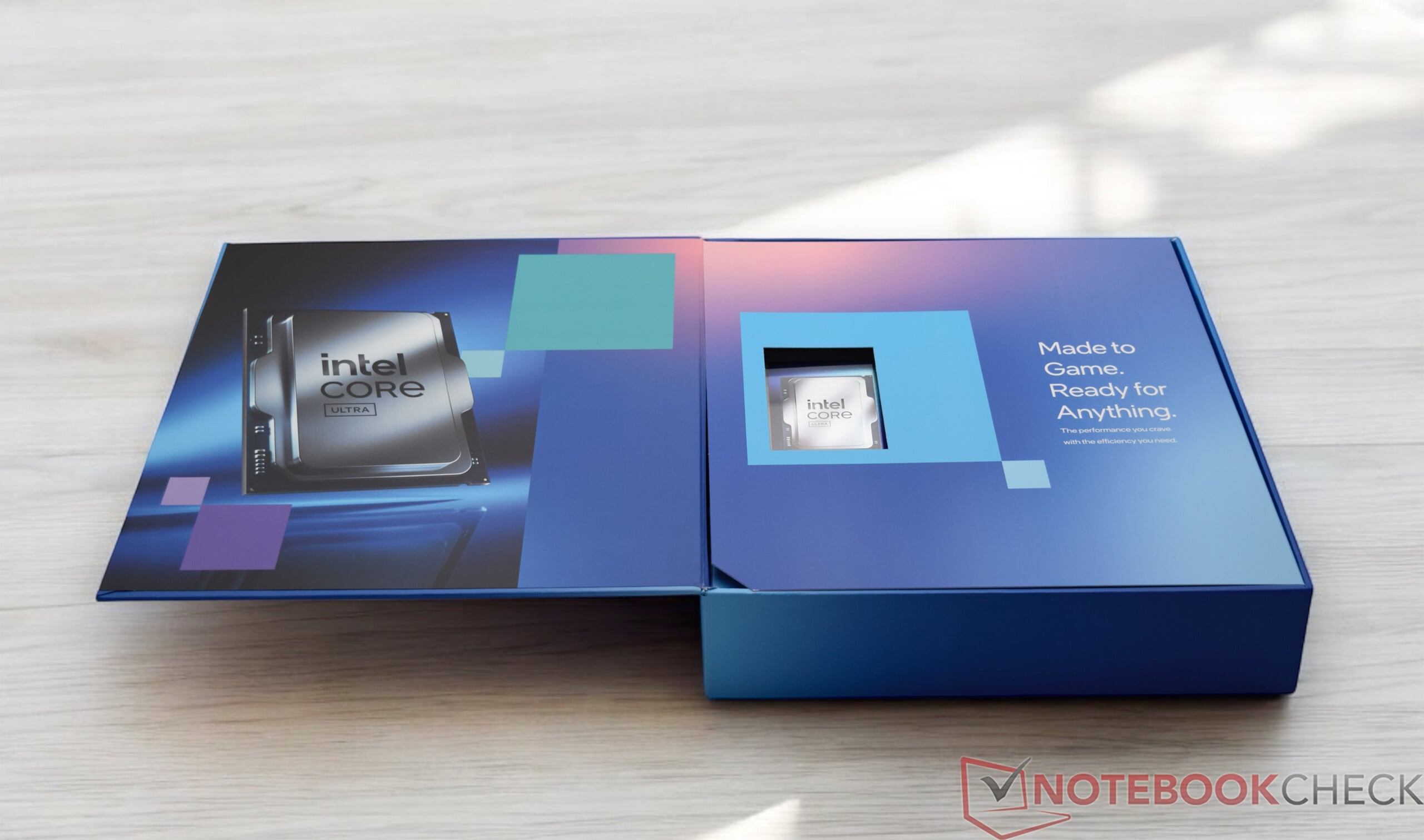
Intel’s upcoming Nova Lake-S processor architecture is generating significant attention in the semiconductor industry after leaked details revealed multiple chip variants featuring exceptionally large cache configurations.
According to early reports from hardware analysts, one variant of the Nova Lake-S design is expected to include up to 288 MB of cache, substantially surpassing the 192 MB found in AMD’s current high-end Ryzen 9 9950X3D processor. This leap in on-die memory capacity suggests Intel is preparing a direct counter to AMD’s 3D V-Cache technology, which has been a key differentiator in gaming and productivity workloads.
The cache expansion is not limited to a single configuration. Leaked specifications indicate that Intel is exploring several tiers of the Nova Lake-S family, each with varying levels of integrated cache to target different performance segments—from mainstream desktops to high-end workstations and enthusiast platforms.
Beyond raw cache size, Intel is also refining the physical implementation of the Nova Lake-S package. Reports confirm that the company is improving the processor’s mounting and retention mechanism to reduce substrate warping during installation and thermal cycling—a persistent challenge with large, high-density chiplets.
These mechanical enhancements aim to improve long-term reliability and ease of installation, particularly for systems using heavy coolers or operating under sustained loads. By addressing physical deformation risks, Intel hopes to ensure consistent performance and compatibility across a broader range of motherboard and cooling solutions.
Looking further ahead, industry observers note that Intel’s broader roadmap—including the anticipated Xe3P graphics architecture—may shift focus away from traditional gaming GPUs. Some analysts suggest the Xe3P design could prioritize data center, AI acceleration, or professional visualization workloads over consumer gaming, marking a potential strategic pivot in Intel’s discrete graphics ambitions.
Such a shift would align with growing demand for specialized compute in AI inference, machine learning training, and virtualized environments, where Intel’s Xe architecture has already gained traction in data center deployments.
Collectively, these developments point to a transformative phase for Intel’s client and graphics roadmap. If the Nova Lake-S leaks are accurate, the company may be positioning itself to challenge AMD not only in raw core counts and clock speeds but also in advanced memory hierarchy design—a critical factor in modern computing performance.
The potential need for users to upgrade entire systems by 2027 to support future Intel platforms has also been raised in technical forums. While not confirmed by Intel, some reports suggest that upcoming platform changes—such as new socket designs, memory standards, or power delivery requirements—could necessitate motherboard, cooler, and even case replacements for those seeking to adopt the next generation.
This potential ecosystem shift underscores the growing complexity of CPU upgrades in an era of heterogeneous computing, where performance gains increasingly depend on integrated advancements across silicon, packaging, firmware, and platform infrastructure.
For now, Intel has not officially confirmed the specifications or timelines for Nova Lake-S or Xe3P. The details remain based on leaked documentation and supply chain observations, which the company has neither validated nor denied.
As the PC processor market continues to evolve amid intensifying competition between Intel, AMD, and emerging ARM-based contenders, any advancement in cache architecture or platform longevity will be closely watched by enthusiasts, system builders, and enterprise buyers alike.
