
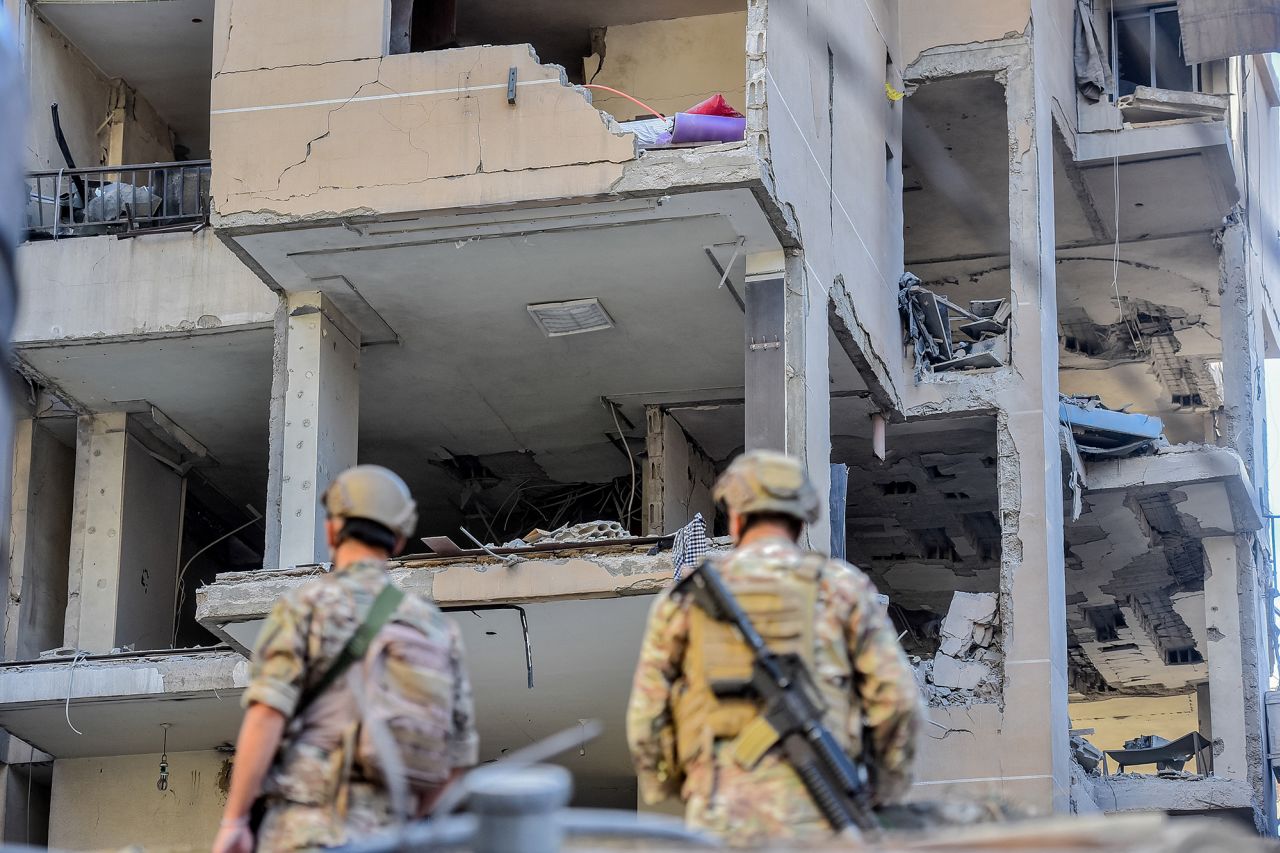
Two Lebanese soldiers were wounded on Monday when Israeli airstrikes targeted a military patrol near the southern border, marking a rare direct confrontation between Israeli forces and the Lebanese Armed Forces (LAF) amid escalating regional tensions.
The incident occurred in the early hours of April 28, 2026, near the village of Kfar Kila, a flashpoint area along Lebanon’s southern frontier with Israel. According to a statement from the Lebanese military, the patrol was struck by Israeli fire while conducting routine operations in the area, resulting in injuries to two soldiers. Both were transported to a nearby hospital for treatment, though their conditions were not immediately disclosed.
The Lebanese Armed Forces confirmed the attack in a brief statement, calling it a “clear violation of Lebanese sovereignty” and urging international bodies to intervene. The statement did not specify whether the soldiers were hit by artillery fire or airstrikes, but local reports suggested Israeli drones were active in the area at the time of the incident.
Israel’s military has not yet commented on the strike, though it has previously accused Lebanese forces of failing to prevent Hezbollah—Lebanon’s Iran-backed militant group—from launching attacks across the border. The latest incident underscores the growing risk of miscalculation in a region already on edge following months of cross-border hostilities between Israel and Hezbollah, which have displaced tens of thousands of civilians on both sides.
Since October 2023, when the war between Israel and Hamas in Gaza spilled over into Lebanon, Israeli airstrikes have become a near-daily occurrence in southern Lebanon, targeting Hezbollah positions, infrastructure, and suspected weapons depots. Though, direct clashes with the Lebanese military remain uncommon, making Monday’s strike a notable escalation. The Lebanese Armed Forces, which operate independently of Hezbollah, have sought to avoid entanglement in the conflict, though their presence in the south has occasionally drawn Israeli fire.
The attack comes just days after a series of Israeli airstrikes in southern Lebanon killed at least seven people, including civilians, drawing condemnation from Lebanon’s health ministry. The ministry accused Israel of “flagrant violations of international law” and vowed to pursue accountability through legal channels. Hezbollah, in a separate statement, pledged retaliation, further raising concerns about a broader regional conflict.
Diplomatic efforts to de-escalate the situation have so far yielded little progress. The United Nations Interim Force in Lebanon (UNIFIL), tasked with monitoring the border under UN Security Council Resolution 1701, has called for restraint but lacks the authority to enforce a ceasefire. The resolution, passed in 2006 to end the month-long war between Israel and Hezbollah, remains the primary framework for maintaining stability in the area, though its implementation has been uneven.
For Lebanon, already grappling with a severe economic crisis and political paralysis, the latest violence adds another layer of instability. The country’s caretaker government, led by Prime Minister Najib Mikati, has repeatedly warned that continued Israeli aggression risks dragging Lebanon into a full-scale war it cannot afford. Meanwhile, international observers fear that even minor incidents—like Monday’s strike on the Lebanese military patrol—could spiral into a wider confrontation with unpredictable consequences.
The wounded soldiers’ identities have not been released, and the Lebanese military has not provided further details about the patrol’s mission or the exact circumstances of the attack. As tensions simmer, the incident serves as a stark reminder of how quickly localized skirmishes can escalate in a region where multiple armed factions operate with overlapping agendas.
