
EU Unveils Sweeping Reform Plan Amid Economic Slowdown and Political Shifts
BRUSSELS — European Commission President Ursula von der Leyen has signed a landmark EU pact while simultaneously pledging a major overhaul of the bloc’s regulatory framework, signaling a fresh phase in the union’s economic and political strategy as it grapples with slowing growth and internal divisions.

The moves come at a pivotal moment for the European Union, where recent elections in Hungary have reshaped the political landscape and raised questions about the future of EU cohesion. Analysts say the developments could set the tone for how Brussels balances economic competitiveness with rule-of-law concerns in the years ahead.
Regulatory Overhaul Announced
In a statement released Tuesday, the European Commission announced plans for a “large-scale cleanup” of EU regulations, aiming to streamline bureaucracy and reduce administrative burdens on businesses and member states. The initiative, described as a “comprehensive review,” seeks to eliminate redundant or outdated rules while preserving core standards in areas like environmental protection and labor rights.
“We are committed to making the EU more efficient and responsive,” a Commission spokesperson said, though specific details of which regulations would be targeted remain unclear. The announcement follows growing criticism from some member states about excessive red tape hindering economic growth.

The timing of the regulatory push coincides with a broader effort to boost the EU’s global competitiveness. Earlier this week, the Commission unveiled a new joint plan to accelerate innovation and investment across member states, though skeptics warn it risks repeating the fate of past ambitious EU initiatives that failed to deliver tangible results.
“Brussels’ new plan is ambitious, but it could easily end up like previous promises—unfulfilled,” one analyst noted, pointing to past struggles in implementing large-scale economic reforms. The proposal includes measures to strengthen supply chains, enhance digital infrastructure, and support key industries, though concrete funding mechanisms have yet to be outlined.
Economic Slowdown Looms
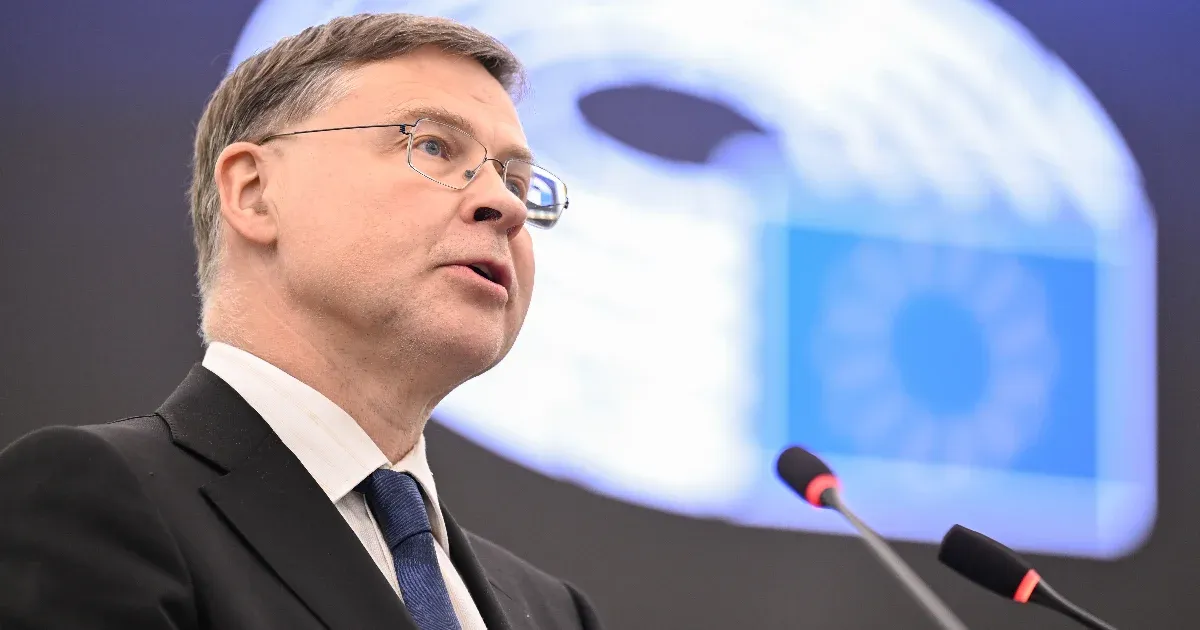
The regulatory and competitiveness announcements come as the EU faces mounting economic challenges. Valdis Dombrovskis, the European Commission’s Executive Vice President for Economy, acknowledged Tuesday that the bloc’s economy is slowing but insisted it has not yet fallen into crisis.
“The European Union’s economy is experiencing a slowdown, but it is not in recession,” Dombrovskis said in a statement. He cited ongoing geopolitical tensions, energy market volatility, and global trade disruptions as key factors weighing on growth. While no specific growth forecasts were provided, the remarks underscored concerns about the EU’s ability to sustain its post-pandemic recovery.
The economic outlook has added urgency to Brussels’ efforts to reform its regulatory and competitiveness frameworks. With inflation pressures easing but still elevated in some member states, policymakers are under pressure to balance fiscal discipline with measures to stimulate growth.
Political Shifts Add Complexity
The flurry of activity in Brussels also reflects the EU’s evolving political dynamics. Von der Leyen’s decision to sign the major EU pact came as global attention was focused on Hungary’s recent decision to lift its veto on a key EU policy—a move that had been a source of prolonged tension between Budapest and Brussels.
The timing of the pact’s signing, described by some observers as strategic, highlights the Commission’s determination to push forward with its agenda despite ongoing disputes with member states over rule-of-law and democratic standards. Hungary’s recent election results, which saw a shift away from the long-standing dominance of Prime Minister Viktor Orbán’s party, have been interpreted by some EU officials as a potential turning point in the bloc’s relationship with Budapest.

“Orbán’s political setback is a positive development for EU-Hungary relations, but the reset will not be smooth,” one EU diplomat said, noting that deep-seated policy differences remain. The Commission has previously frozen billions in EU funds to Hungary over concerns about corruption and democratic backsliding, a move von der Leyen has suggested influenced the election outcome.
The broader implications of Hungary’s political shift are still unfolding, but the development has injected a new variable into the EU’s internal negotiations. With the bloc preparing for critical decisions on climate policy, migration, and defense cooperation, the ability to maintain unity among member states will be tested in the coming months.
What Comes Next?
The Commission’s regulatory cleanup and competitiveness plan are expected to be debated in the European Parliament and among member states in the coming weeks. While the proposals have been framed as necessary steps to modernize the EU, their success will depend on securing broad political support and overcoming resistance from vested interests.
For now, the focus remains on stabilizing the EU’s economic trajectory while navigating the complexities of its internal politics. As von der Leyen’s administration moves forward with its agenda, the challenge will be to translate ambitious plans into concrete action without further alienating member states already wary of Brussels’ authority.
The stakes are high. With global competition intensifying and geopolitical tensions showing no signs of abating, the EU’s ability to adapt could determine its role on the world stage in the decades to come.
