
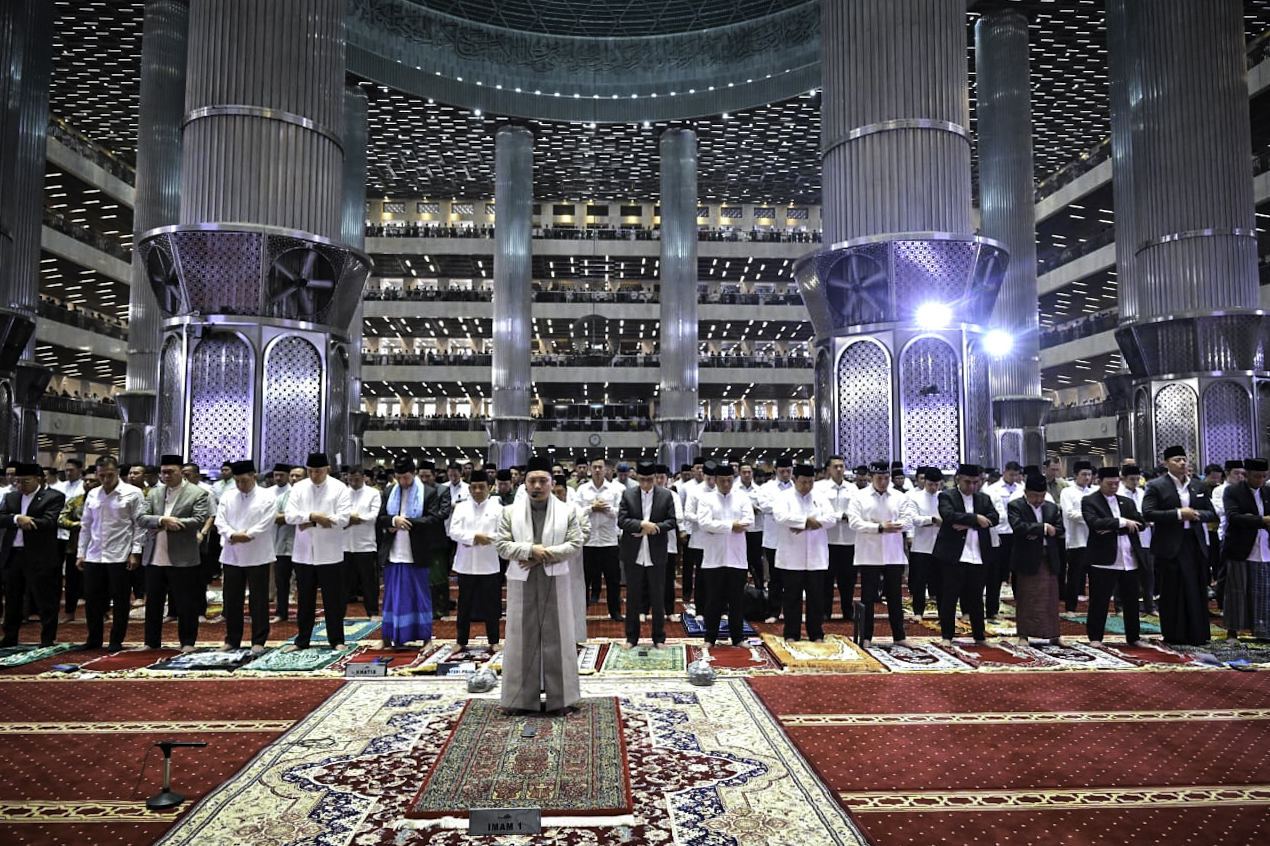
Vice President Gibran Rakabuming Raka of Indonesia led Eid al-Adha prayers at Jakarta’s Istiqlal Mosque on May 26, 2026, amid speculation over President Prabowo Subianto’s absence from the ceremony, as religious and political observers weigh the significance of the holiday’s role in Indonesia’s national calendar.
VP Gibran’s High-Profile Eid al-Adha Attendance Contrasts with Prabowo’s Absence
Vice President Gibran Rakabuming Raka attended Eid al-Adha prayers at Jakarta’s Istiqlal Mosque on May 26, 2026, marking the first time a sitting Indonesian vice president has participated in the major Islamic holiday’s congregational prayers. The event drew thousands of worshippers, including government officials, diplomats, and civil society leaders, underscoring the ceremony’s dual role as both a religious observance and a public display of national unity.
Gibran’s presence at Istiqlal—one of the world’s largest mosques—followed a tradition established by former presidents and high-ranking officials, though his participation carries added political weight given his position as the nation’s second-in-command. The vice president’s office confirmed his attendance without elaborating on the decision, which comes amid ongoing discussions about the role of religious observances in Indonesia’s secular governance framework.
In contrast, President Prabowo Subianto did not attend the prayers, a deviation from recent precedent. While the president has historically participated in Eid al-Fitr and other major Islamic events, his absence this year has sparked speculation. Official statements from the presidential palace did not address the reason, but sources close to the government suggested logistical constraints or scheduling conflicts. The omission has not triggered significant public backlash, though it contrasts with Gibran’s visible engagement in the ceremony.
Eid al-Adha’s Growing Role in Indonesia’s Political Calendar
Eid al-Adha, which marks the end of Hajj and commemorates Prophet Ibrahim’s willingness to sacrifice his son, has increasingly become a focal point in Indonesia’s political and social landscape. As the world’s largest Muslim-majority nation, Indonesia’s leadership often uses the holiday to reinforce national identity and interfaith harmony. Gibran’s attendance aligns with this trend, as vice presidents and other officials have in recent years sought to balance religious observance with public duty.
This year’s ceremony took place against a backdrop of heightened national discourse on secularism versus religious expression in governance. While Indonesia’s constitution guarantees freedom of religion, debates persist over the visibility of Islamic practices in state functions. Gibran’s participation at Istiqlal—without overt political messaging—reflects a deliberate approach to navigating these tensions. The mosque’s capacity of up to 250,000 worshippers made the event a natural platform for such symbolism.
Historically, Indonesian presidents have attended Eid prayers at Istiqlal, with former leader Joko Widodo leading the congregation in 2021 and 2023. Prabowo’s absence in 2026, however, marks the first time in his presidency that he has not been present for the ceremony. The shift has been noted by political analysts, though it has not yet prompted broader commentary on its implications.
What the Absences—and Attendances—Signal
Gibran’s attendance at Eid al-Adha can be interpreted through multiple lenses. As a devout Muslim, his participation aligns with personal faith while also reinforcing his role as a unifying figure in a diverse nation. His public profile has grown since assuming office in 2024, particularly in his advocacy for youth issues and digital governance, and the ceremony provided an opportunity to connect with Indonesia’s religious communities.

Meanwhile, Prabowo’s absence raises questions about priorities in the presidential calendar. The president has faced criticism in the past for balancing domestic and foreign policy demands, and the omission of Eid al-Adha may reflect operational realities. However, it also comes at a time when Indonesia’s political landscape is increasingly scrutinized for its handling of religious and cultural symbols. Some observers suggest the absence could be a deliberate move to avoid perceptions of state favoritism toward any particular faith, though this remains speculative without official confirmation.
Indonesia’s vice presidents have historically played a lower public profile compared to their counterparts in other nations, but Gibran’s active engagement in high-visibility events like Eid al-Adha signals a potential shift. His office has emphasized outreach to youth and marginalized communities, and the mosque ceremony allowed him to project an image of inclusivity. Whether this trend continues will depend on future political dynamics, including the lead-up to the 2029 presidential election.
Looking Ahead: Religious Observances and Political Strategy
As Indonesia prepares for the next major religious holidays, including Eid al-Fitr in 2027, the balance between personal faith and public duty will remain a key consideration for the country’s leadership. Gibran’s participation in Eid al-Adha sets a precedent for how vice presidents might engage with religious events, while Prabowo’s absence—though not unprecedented—highlights the evolving nature of presidential priorities.
For now, the focus remains on the symbolic unity represented by ceremonies like those at Istiqlal. With Indonesia’s 2027 general elections on the horizon, the visibility of religious observances by top officials may increasingly intersect with political strategy. Whether this year’s Eid al-Adha attendance and absence will shape future trends remains to be seen, but the event underscores the delicate interplay between faith, governance, and public perception in the world’s most populous Muslim nation.
One certainty is that the story of Gibran’s prayers and Prabowo’s absence will be closely watched by religious leaders, political strategists, and the public alike—each group interpreting the signals differently. For Indonesia, where religion and statecraft are inextricably linked, the details matter.
