
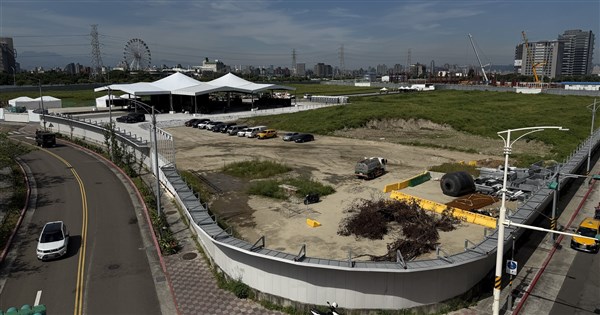
NVIDIA CEO Jensen Huang addressed employees at the company’s upcoming Taiwan headquarters in the Beitou Shilin Technology Park (Beist) on Wednesday, May 27, 2026. Amid ongoing debates regarding infrastructure, Huang underscored the necessity of electricity for AI development, while Taipei City officials finalized plans for a new underground transformer substation to support the site.
Powering the Future: NVIDIA’s Infrastructure Needs
The energy requirements of the semiconductor and AI sectors dominated discussions during the NVIDIA employee event held on the T17 and T18 sites in the Beitou Shilin Technology Park. During his address, Jensen Huang emphasized the fundamental role of electricity in sustaining the growth of the company’s operations in Taiwan. Huang drew a direct comparison between the needs of the workforce and the technical demands of artificial intelligence, stating that while human employees require sustenance, the AI infrastructure requires significant, reliable power.
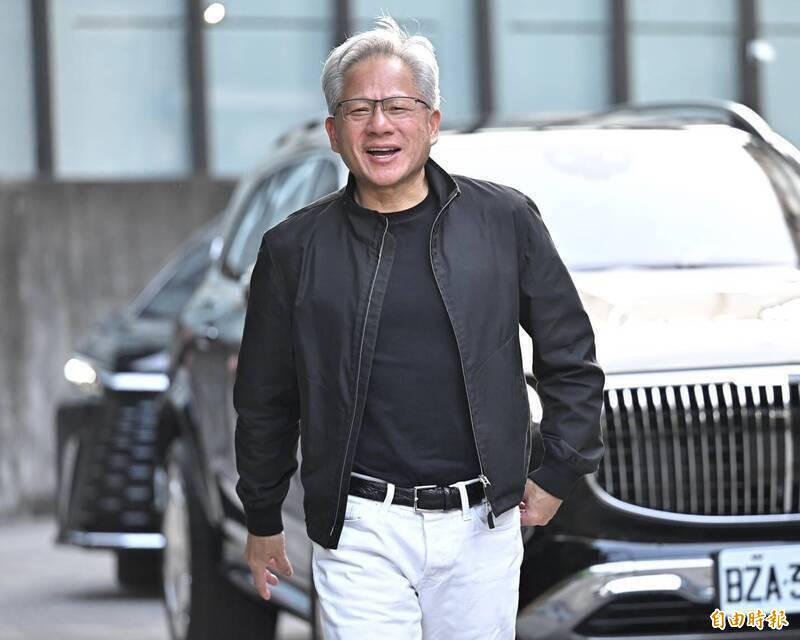
Huang’s remarks regarding the need for electricity—specifically using the English term during his presentation—have drawn significant attention from political observers. According to reporting by Yahoo News, these comments follow a period of public debate in which some political figures attempted to distinguish between general energy needs and specific electricity infrastructure requirements. Huang’s explicit focus on electricity during the staff meeting provided a clear stance on the industrial necessities facing the region.
Taipei City and Taipower Finalize Substation Plans
To address the mounting energy demands of the Beist tech hub, the Taipei City Government and the Taiwan Power Company (Taipower) have reached a long-term agreement on infrastructure deployment. Central News Agency (CNA) reported that the parties have settled on a transformer station design that utilizes underground installation. This decision aligns with the 2009 Beitou Shilin Technology Park urban planning guidelines, which prioritize underground infrastructure to mitigate environmental and electromagnetic interference concerns for nearby educational facilities.

The supply strategy is structured into three distinct phases to ensure continuous operational capacity for NVIDIA and other technology firms in the park:
- Short-term: The city will utilize cross-district support from the Xiandu and Bailing substations, with completion expected by the end of next year.
- Mid-term: A temporary substation will be constructed within a 20-month timeframe, ensuring capacity before the full commissioning of the NVIDIA headquarters.
- Long-term: The permanent, underground transformer station will serve as the core power facility for the area.
According to Yahoo News, the city emphasized that the Beist area is protected by a 200-year flood frequency standard, and the underground design incorporates necessary flood protection measures. The project represents a critical pivot point for regional grid management, as Taipei officials seek to balance the high-density load requirements of advanced semiconductor research with existing urban planning constraints.
Industrial Implications and National Priorities
The resolution of the substation design has drawn praise from central government entities. The Ministry of Economic Affairs stated that the agreement between the city and Taipower represents a positive step for both industrial development and national interests. As noted by Liberty Times, officials highlighted that the compromise—a partial underground configuration—allows for a construction timeline of six to seven years, significantly faster than the nine-year duration originally associated with full underground burial plans.

This development comes after a period of intense coordination. ETtoday reported that Taipower had been engaged in discussions with the city since June of last year, reviewing over seven different design iterations to reach this outcome. By aligning the facility layout with urban planning requirements while maintaining engineering feasibility, the agencies involved aim to provide a stable power environment for the high-tech sector.
The technical specifications of the substation are intended to address the specific voltage stability required for NVIDIA’s high-performance computing clusters. Local authorities have noted that the integration of this facility into the existing grid will necessitate significant upgrades to the surrounding distribution network. These upgrades are categorized as essential infrastructure investments by the Ministry of Economic Affairs, which views the secure power supply for Beist as a bellwether for Taiwan’s broader AI development strategy. The focus now shifts toward the timely execution of these infrastructure projects to match the 2029 target for the full operation of the NVIDIA headquarters.
