
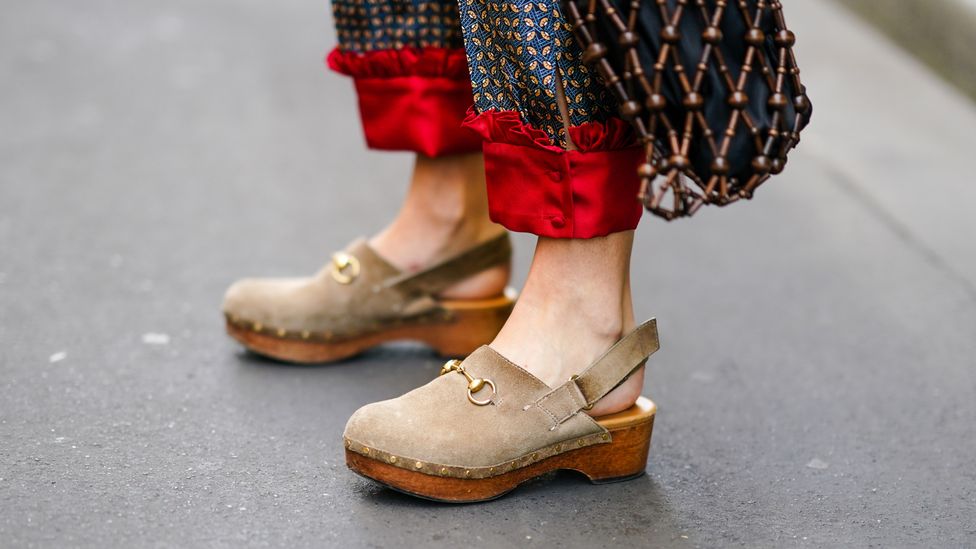
A Latvian fashion designer made waves this month by pairing garden clogs with high-end jewelry at a major fashion event, defying expectations of what counts as “statement footwear.” The move—captured in photos from a Santa.lv report—has sparked conversations about where fashion boundaries truly lie, blending everyday practicality with avant-garde design.
Why Garden Clogs Became the Unexpected Star of a Fashion Show
Una Bērziņa, a textile artist known for her bold, playful designs, arrived at a recent fashion event in what appeared to be a casual pair of garden clogs—footwear typically associated with yard work rather than runway glamour. But Bērziņa didn’t stop there. She accessorized the clogs with intricate, sparkling embellishments, transforming them into a statement piece. “These are clogs,” she explained, “and I decorated them myself because I love everything shiny.” The admission—paired with the visual evidence—challenged the industry’s long-held distinction between “high fashion” and “everyday wear.”

“I see them as a joke—turns out, garden clogs with rhinestones can actually be stylish.”
The juxtaposition of utility and luxury isn’t entirely new in fashion, but Bērziņa’s approach stands out for its unapologetic practicality. While designers often repurpose vintage or repurpose materials for artistic effect, her choice to elevate a functional item—one that most would dismiss as mundane—marks a deliberate shift. “I’m a big fan of clog fetishism,” she admitted, framing her choice not as rebellion but as an extension of her aesthetic.
The Clash Between High Fashion and Everyday Realism
Fashion critics and industry insiders have long debated the line between “wearable” and “art.” Bērziņa’s clog moment forces a reckoning: if a piece is styled with intention and executed with craft, does its origin matter? The answer, according to her, is no. “They’re garden clogs, but when you decorate them, they become something else entirely,” she said. The statement resonates in an era where sustainability and upcycling are reshaping how designers approach materials. Yet, her choice also reflects a broader cultural moment where “ugly chic” and “anti-fashion” trends have gained traction—proving that what’s deemed “unfashionable” can become the next big thing.

What makes Bērziņa’s move particularly striking is the timing. In 2026, fashion shows are increasingly embracing inclusivity—both in terms of body types and in the materials used. Brands like Google’s experimental design projects have explored how technology can redefine aesthetics, while platforms like Fotor have made DIY customization more accessible than ever. Bērziņa’s clogs, then, aren’t just a fashion statement; they’re a commentary on the democratization of style. By taking an everyday object and reimagining it, she’s participating in a larger conversation about who gets to define what’s “fashionable.”
What This Means for the Future of Fashion
The fashion world has a history of reclaiming “unfashionable” items—think of the rise of sneakers as high-fashion staples or the resurgence of utilitarian workwear. Bērziņa’s clogs fit neatly into this pattern, but with a twist: she didn’t repurpose a vintage piece or a designer original. She took something functional, something most people own or could easily acquire, and turned it into a statement. This approach aligns with growing consumer demand for sustainable, accessible fashion—where the focus is on creativity over cost.
Yet, the reaction to her choice reveals deeper divides. Some critics argue that her look was a gimmick, a stunt designed for shock value rather than meaningful innovation. Others see it as a bold step toward a more inclusive definition of fashion—one that doesn’t require expensive materials or exclusive access. The debate highlights a tension in the industry: Can fashion truly be for everyone, or is it still an elite pursuit? Bērziņa’s clogs suggest the former, but the industry’s response will determine whether this moment is a fleeting trend or the start of a lasting shift.
Beyond the Clogs: What Other Designers Can Learn
Bērziņa’s experiment offers a masterclass in how to challenge conventions without alienating an audience. By starting with something familiar—garden clogs—she made her statement immediately relatable. The lesson for other designers? Innovation doesn’t always require reinvention. Sometimes, it’s about recontextualization. Her approach also underscores the power of personal branding: Bērziņa’s playful, unfiltered personality makes her designs feel authentic, even when they defy expectations.
Looking ahead, the question isn’t just whether garden clogs will remain a fashion staple (though they likely won’t). It’s whether Bērziņa’s philosophy—prioritizing creativity over tradition—will inspire a new wave of designers to think differently about materials, accessibility, and what it means to be “fashionable.” If the past few years have taught us anything, it’s that fashion’s most enduring trends often begin with a single, bold statement. Bērziņa’s clogs might just be the beginning.
For now, the debate rages on—but one thing is clear: in 2026, the rules of fashion are being rewritten, one unexpected pair of shoes at a time.
