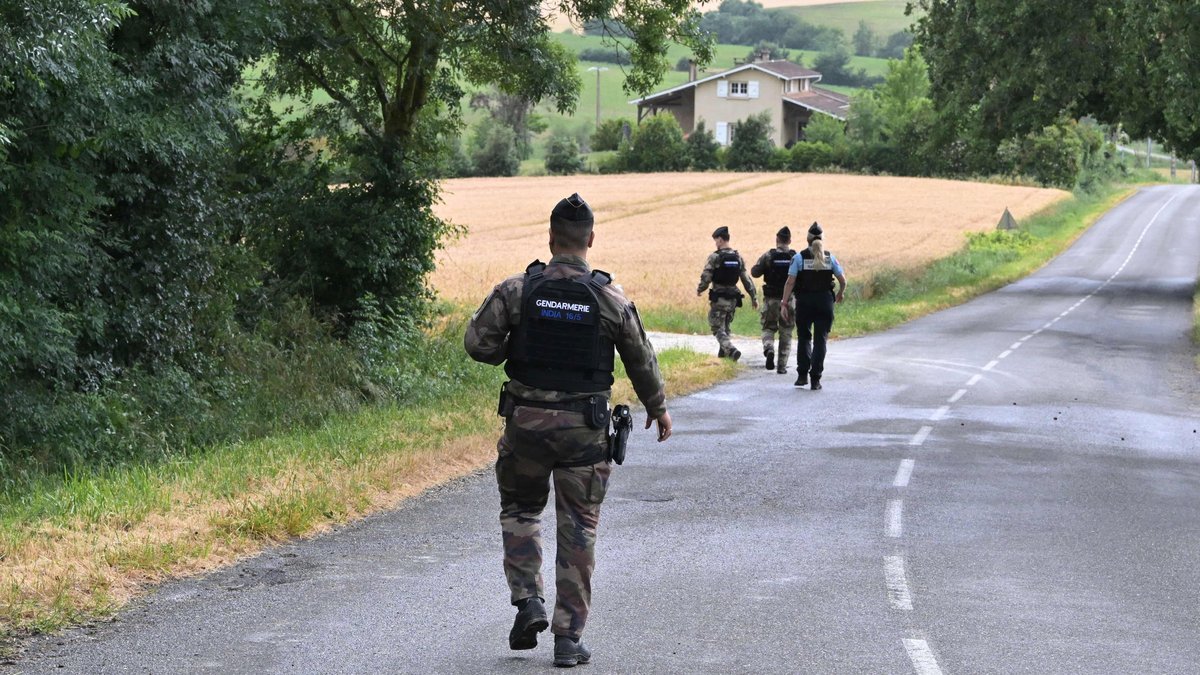
A body discovered on a farm near Fleurance, France, on Thursday, June 4, 2026, is believed to be that of the missing schoolgirl Lyhanna. The discovery, which occurred nearly a week after her disappearance, has prompted an autopsy to confirm the identity, while authorities face mounting scrutiny over the handling of the suspect.
The Discovery Near Fleurance
The search for Lyhanna ended in tragedy this Thursday, June 4, 2026, when gendarmes located a body on an agricultural property near Fleurance in the Gers region. The recovery of the remains, which were reported as being porteur de vêtements similaires to those worn by the girl at the time of her disappearance, marks the conclusion of a six-day search.
Louis Turchi, the mayor of the nearby village of Puycasquier, expressed profound shock as the news broke. He noted that he had observed security forces cordoning off the area near a local silo, but the grim reality of the discovery became clear only as the situation unfolded throughout the day.
“Ce jeudi 4 juin 2026 restera gravé dans la mémoire de Louis Turchi, le maire de Puycasquier. Il avait bien vu des gendarmes quadriller le bois de La Ville, proche des silos où le corps de l’enfant a été retrouvé, mais il n’y avait pas eu de recherches là-bas, à ma connaissance. Il paraît que Jérôme Barella avait travaillé dans cette installation, mais il n’a pas de connaissances dans la commune. Je tombe des nues.”Louis Turchi, Mayor of Puycasquier, via La Dépêche
The local impact has been severe. Mayor Turchi acted quickly to inform the 500 residents of Puycasquier via email and electronic signage, while the gendarmerie closed the departmental road 151, which runs between Puycasquier and Tourrenquets, until Saturday. As reported by La Dépêche, the proximity of the location to the suspect’s route and the victim’s home has left the community reeling.
Institutional Failure and Public Outcry
cluster (priority): franceinfo
The case has ignited a fierce debate regarding the efficacy of the French justice system. Jérôme Barella, the 41-year-old suspect, was already in custody and under investigation for “abduction and sequestration” following the disappearance of Lyhanna on May 29. However, revelations about his history have drawn sharp criticism from national figures and advocates.
According to RTL, Jordan Bardella, president of the Rassemblement National, publicly accused the state of having “lourdement failli” (heavily failed) in its duty to protect the public. He asserted that the tragedy could have been prevented had the judicial system addressed the prior warnings and complaints against the suspect.
Interior Minister Gérald Darmanin echoed these sentiments, describing himself as “terrified” by the judicial dysfunction. He specifically pointed to systemic failures, including the slow transmission of files between different public prosecutor’s offices and significant delays in investigative procedures.
The Road Ahead for the Investigation
While the investigation moves into a new phase following the discovery of the body, the immediate focus remains on formal identification. Olivier Naboulet, the public prosecutor of Agen, confirmed that an autopsy is scheduled to be performed in the coming hours to provide legal certainty regarding the identity of the remains.
The family of the victim has requested privacy during this period. “La tristesse et la colère des parents ne sauraient être exprimées,” said François Roujou de Boubée, the family’s lawyer, in a statement calling for respect as the family enters a period of mourning.
The administrative implications of the case are already underway. The Prime Minister, Sébastien Lecornu, has scheduled a high-level meeting for Friday at Matignon with the Ministers of the Interior and Justice to review the situation. Furthermore, the government has promised that the findings of an administrative inquiry into the handling of the suspect’s previous files will be made public.
Experts in the field of child protection emphasize that this case is not an isolated incident of systemic delay. Denis Roth-Fichet, Secretary General of the Independent Commission on Incest and Sexual Violence Against Children (Civiise), noted that “soixante-treize pour cent des plaintes de violences sexuelles sur mineurs sont classées sans suite,” highlighting what he describes as the “parent pauvre” (neglected area) of the French justice system.
ail: emily.johnson@headlinez.news
Bio:
Emily Johnson serves as News Editor at Headlinez.News, overseeing the publication’s coverage of national and breaking stories. She has worked in journalism for more than 12 years, building a reputation for precision, credibility, and rapid-response reporting. Emily’s editorial philosophy focuses on clear, fact-based writing that helps readers understand the full context behind the day’s most important events. Her expertise bridges traditional reporting and modern digital news strategies.
Expertise: Breaking news, political reporting, fact-checking, newsroom coordination, public affairs.
Location: Washington, D.C., USA