

A landmark genetic study published this week in Nature Genetics has uncovered 16 new genetic risk factors for Alzheimer’s disease, reshaping our understanding of the disease’s biological pathways and opening doors to potential new drug targets. By analyzing data from nearly 1 million people—including over 128,000 with Alzheimer’s—the international research consortium identified 91 genome regions linked to dementia risk, with 16 previously unknown in European populations. The findings, which highlight the critical role of immune signaling and neuroinflammation, suggest that future treatments may need to go beyond amyloid plaques to address the broader mechanisms driving neurodegeneration.
Beyond Amyloid: How Immune Cells Are Rewriting Alzheimer’s Research
The study’s most striking revelation is the central role of microglia—the brain’s immune cells—in Alzheimer’s progression. While the APOE ε4 gene remains the strongest known risk factor (doubling or tripling the likelihood of developing the disease), the new research pinpoints genes like SRC, PTPRC, and MGAT5 as key players in microglial dysfunction. These genes, which regulate immune responses and cellular waste disposal, were found to be highly active in microglia across multiple brain regions, according to the comprehensive genome-wide analysis published by Inside Precision Medicine.
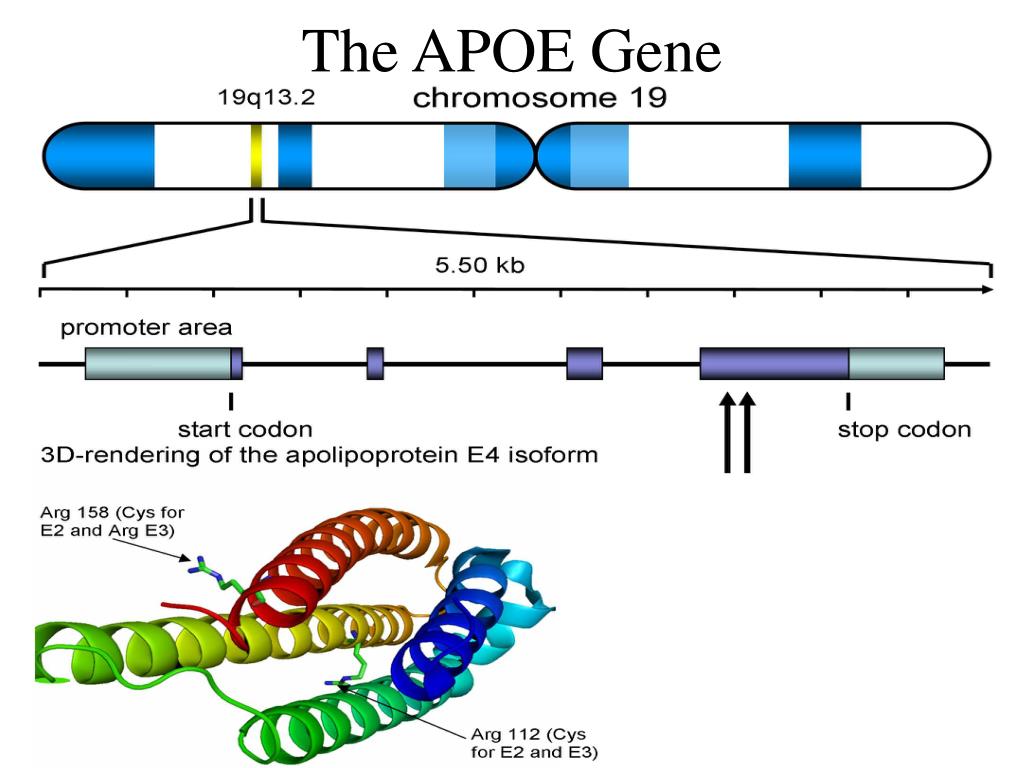
This challenges the long-held focus on amyloid-beta plaques as the sole driver of Alzheimer’s. While the first four Alzheimer’s genes discovered in 1987—including APP—pointed to amyloid deposition, the new study reveals that most of the newly identified genes implicate immunity and neuroinflammation, said Rudolph Tanzi of Massachusetts General Hospital, who co-authored the original 1987 discovery. “While the first four Alzheimer’s genes discovered all pointed to amyloid-beta deposition, many still implicate amyloid, but the majority of the new genes implicate the roles of immunity and neuroinflammation,” Tanzi told New Scientist.
“It’s an exciting time for Alzheimer’s genetics.”
The study’s authors went further, testing how combined genetic risk influences brain pathology. By creating polygenic risk scores—excluding the APOE gene—they found that even without the strongest known risk factor, genetic vulnerability still correlated with postmortem brain changes. This suggests that Alzheimer’s may develop through multiple, overlapping pathways, some of which are still poorly understood.
A Genetic Map with 91 Loci: What the Numbers Really Mean
The sheer scale of the study—combining data from 52 individual research projects and 978,514 participants—makes it the largest genome-wide association analysis ever conducted for Alzheimer’s. Of the 91 risk regions identified, 16 were new to European populations, while the broader analysis of 127 gene locations (including 48 new discoveries) revealed patterns that could redefine treatment strategies. The study’s rigor is evident in its methodology: researchers excluded “proxy” cases (individuals with family history but no clinical diagnosis) and large biobank datasets reliant on medical coding alone, ensuring the findings were specific to clinically diagnosed Alzheimer’s.
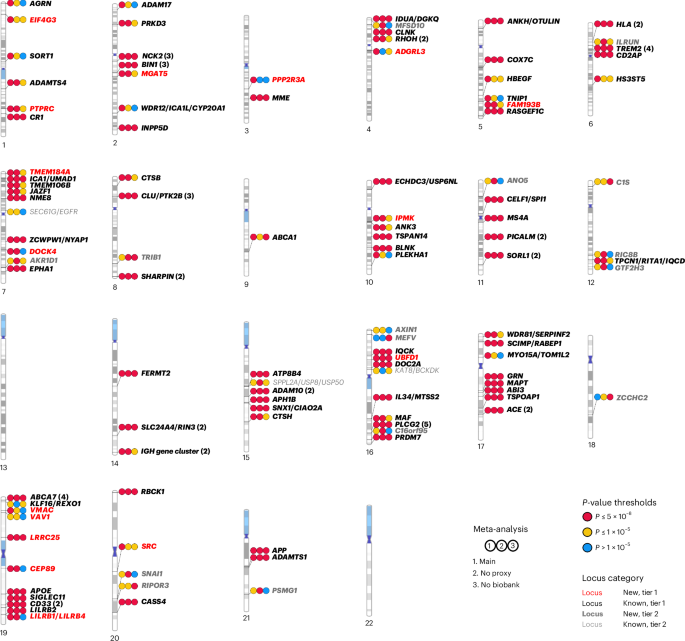
- 91 genome regions linked to Alzheimer’s risk, with 16 new to European populations.
- 127 gene locations associated with Alzheimer’s, including 48 previously unknown.
- 56 loci remained strongly associated even after excluding proxy cases and strict biobank datasets.
- ~80% heritability for Alzheimer’s risk, per twin studies cited in the New Scientist analysis.
The study’s authors also identified three types of neurons where gene expression weakens in individuals with Alzheimer’s-linked genetic variants. This aligns with earlier research showing that inflammation and reduced neuronal function are hallmarks of the disease. The implication? Future therapies may need to target both amyloid and the immune system’s overactive response.
The APOE ε4 Paradox: Why Genetics Aren’t Destiny
Despite the genetic advances, the study underscores a crucial caveat: even high-risk genetic profiles don’t guarantee Alzheimer’s. Danielle Posthuma of the Free University of Amsterdam noted that some individuals with two copies of the APOE ε4 variant—who face up to a 12-fold increased risk—never develop the disease. “There are people who have those two risk variants and never develop Alzheimer’s,” Posthuma told New Scientist, highlighting the role of lifestyle, environment, and other unidentified factors.
This raises critical questions: If genetics explain up to 80% of Alzheimer’s risk, why do some people escape it? Could early interventions—diet, exercise, or emerging drugs—override genetic predisposition? The study doesn’t answer these, but it does provide a roadmap for future research. For instance, the newly identified genes in lipid metabolism and cellular waste disposal could lead to therapies that mimic the brain’s natural repair mechanisms.
Drug Targets on the Horizon: What’s Next for Alzheimer’s Research?
The study’s most immediate impact may be in drug development. By pinpointing genes tied to microglial dysfunction and neuroinflammation, researchers now have clearer targets for therapies aimed at reducing brain inflammation or boosting the brain’s ability to clear toxic proteins.

- Immune modulation: Drugs that calm overactive microglia to prevent neuroinflammation.
- Lipid metabolism: Therapies targeting genes involved in cholesterol and fat processing, which may influence amyloid plaque formation.
- Cellular waste disposal: Enhancing the brain’s ability to clear misfolded proteins like tau and amyloid.
- Neuronal protection: Strengthening the three neuron types where gene expression weakens in Alzheimer’s patients.
Yet challenges remain. The study’s focus on European ancestry means its findings may not fully apply to other populations, where genetic risk factors could differ. Additionally, translating genetic insights into effective drugs is a decades-long process—one that requires clinical trials to test whether targeting these pathways actually slows or reverses Alzheimer’s progression.
The Bigger Picture: Why This Study Matters Beyond the Lab
Alzheimer’s affects tens of millions worldwide, with no cure in sight. The new genetic map offers hope—but also underscores the complexity of the disease. While the study confirms that aging remains the strongest risk factor, genetics now provide a clearer picture of how the brain’s immune system and metabolic processes contribute to neurodegeneration.
For individuals with a family history of Alzheimer’s, the findings may prompt earlier genetic screening and proactive lifestyle changes. For researchers, the study validates decades of work while opening new avenues for intervention. And for pharmaceutical companies, the identified drug targets could accelerate the development of therapies that go beyond amyloid—though success will depend on overcoming the high failure rate of past Alzheimer’s drugs.
One thing is certain: the era of treating Alzheimer’s as a single-pathway disease is over. The future lies in understanding—and targeting—the tangled web of genetic, immune, and metabolic factors that drive it. As Tanzi put it, “It’s an exciting time for Alzheimer’s genetics,” but the real test will be turning these discoveries into treatments that work.
For now, the study serves as a reminder that Alzheimer’s is not just a memory disorder—it’s a systemic failure of the brain’s most fundamental processes. And for the first time, we have a genetic roadmap to navigate it.
