
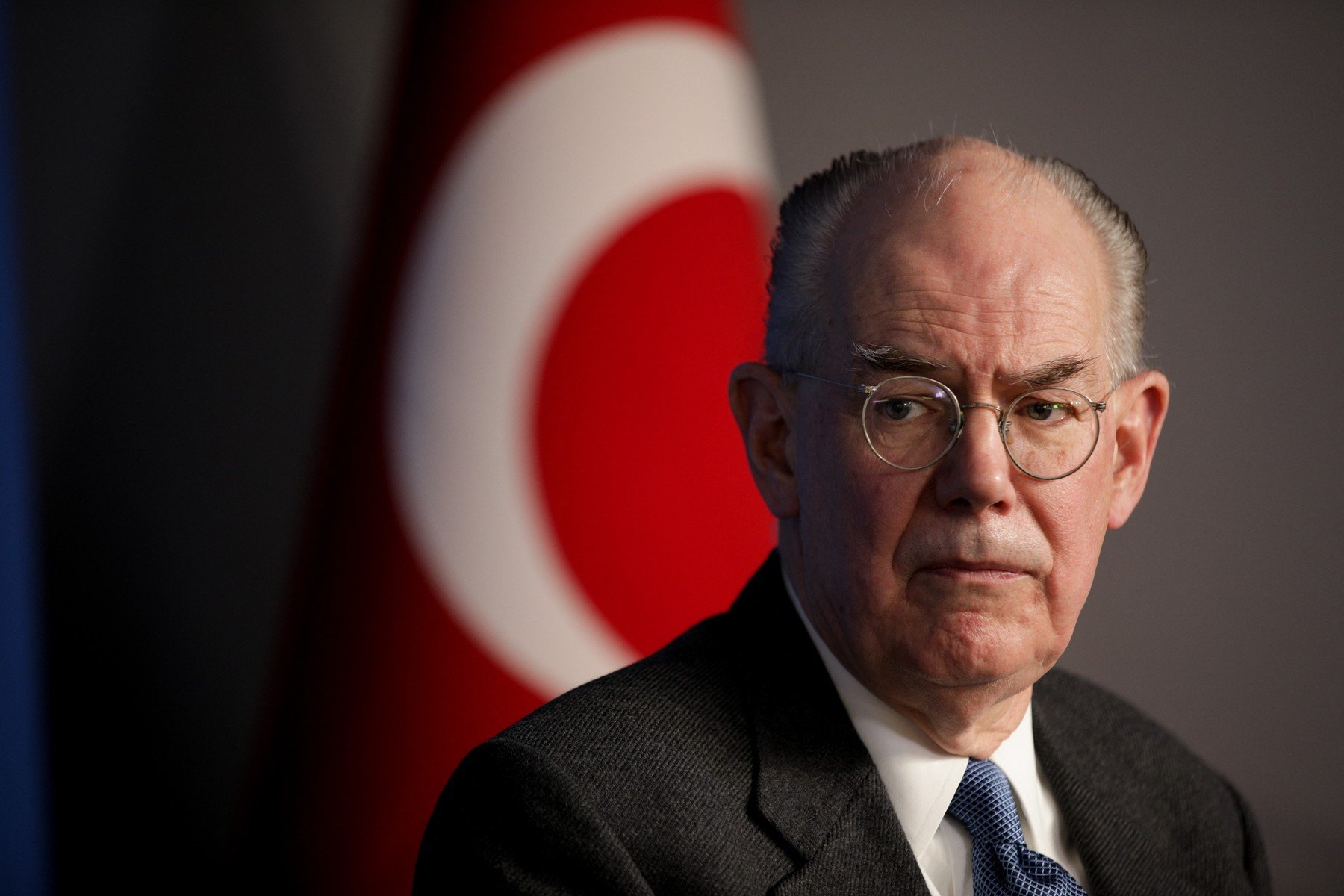
Mounting concerns over U.S. foreign policy are surfacing as reports indicate a potential shift in strategy toward Venezuela and a bolstered military presence in Puerto Rico. A newly released interview with University of Chicago political science professor John Mearsheimer details a critical assessment of American interventionism, alleging a long-standing pattern of actively working to destabilize governments in Latin America deemed ideologically unfavorable-a practice he traces back to the Chávez management in Venezuela. The wide-ranging discussion, initially appearing on the “Judging Freedom” podcast, also examines the legality of military orders and the evolving conflicts in Ukraine and Gaza.
Concerns are mounting over potential U.S. intervention in Venezuela and a significant military presence in Puerto Rico, raising questions about Washington’s foreign policy in the region.
A long-standing pattern of U.S. opposition to left-leaning governments in Central and South America appears to be driving current policy, according to a recent analysis by Professor John Mearsheimer. He suggests the U.S. actively works to destabilize or replace regimes it deems ideologically unacceptable, a practice dating back to the election of Hugo Chávez in Venezuela a decade ago.
“We simply don’t tolerate leftist governments in either South or Central America,” Mearsheimer explained. “As soon as we see a government that we think is significantly left-wing, we intervene to try to overthrow or replace that government. We’ve been doing this for a long time. Since Chávez won the election in Venezuela ten years ago, the United States has had Venezuela in its sights, and nothing has changed. We want to get rid of Maduro and would prefer to install a right-wing government.” He drew parallels to decades of strained relations with Cuba following Fidel Castro’s rise to power in 1959.
Despite Cuba posing no direct national security threat to the U.S. – even decades after the Cuban Missile Crisis – the ideological opposition remains strong. Mearsheimer believes a similar dynamic is at play with Venezuela, with some viewing its government as a threat to regional stability, even without external support from powers like the former Soviet Union.
The question of intervention arises even when governments are democratically elected, such as the current administration in Brazil led by Luiz Inácio Lula da Silva. Mearsheimer argues the U.S. doesn’t fully respect the sovereignty of other nations, asserting a perceived right and responsibility to interfere in the internal affairs of countries worldwide when it deems necessary. This approach, he acknowledges, violates the UN Charter and contributes to a less peaceful world.
The discussion also touched on the legality of following unlawful orders within the military. Mearsheimer, a West Point graduate and former Air Force officer, emphasized the rigorous training soldiers receive regarding the rules of engagement and the prohibition of indiscriminate violence, including targeting civilians or prisoners of war. He cited the example of the My Lai Massacre as a stark reminder of the need for clear boundaries and accountability.
“Armies are huge killing machines,” Mearsheimer stated. “Because soldiers are trained to kill people, there’s a very strong tendency toward gratuitous violence, so you need a set of rules that are drilled into everyone’s heads to make people think twice before committing a murderous act.”
He affirmed that a soldier is legally justified in refusing an order to kill an unarmed civilian not involved in hostilities, a point underscored by recent concerns over alleged U.S. actions in the Caribbean. The debate intensified following reports of 81 deaths and two survivors from alleged attacks, prompting a video response from several members of Congress – all veterans or former intelligence officials – urging service members to disobey illegal orders. The video has sparked controversy, with President Trump labeling it “TREASONOUS BEHAVIOR punishable by DEATH!”
The congressional group, including Senator Elissa Slotkin (former CIA officer), Senator Mark Kelly (former Navy Captain), Representative Chris Deluzio (former Marine), Congresswoman Maggie Goodlander (former intelligence officer), Representative Chrissy Houlahan (former Air Force officer), and Congressman Jason Crow (former Army Ranger), collectively stated: “We want to reach out directly to the men and women of the armed forces and intelligence services who risk everything every day to keep Americans safe. We know you are under immense stress and pressure right now. Americans trust their military, but that trust is being jeopardized. This administration is pitting our uniformed personnel and intelligence professionals against American citizens. Like us, you took an oath to protect and defend this Constitution. Right now, the threats to our Constitution are coming not just from abroad, but from right here at home. Our laws are clear – you can refuse illegal orders. You must refuse illegal orders. No one has to carry out orders that violate the law or our Constitution.”
Mearsheimer characterized the congressional statement as a legitimate exercise of free speech and a correct interpretation of the law, dismissing concerns it would incite mutiny. He argued that while thousands of orders are issued daily, only a small fraction are clearly illegal, and soldiers are expected to question those orders within the chain of command.
The discussion then shifted to Ukraine, where a potential Russian victory appears increasingly likely. Mearsheimer suggested that Russia’s gains on the battlefield are prompting the U.S. to consider accepting nearly all of Russia’s demands in peace negotiations. He cited dwindling U.S. financial support for Ukraine, Europe’s inability to fully fund the war effort, and significant corruption within the Ukrainian government as contributing factors.
“The Americans are coming to grips with the reality on the ground, that the Ukrainian government is facing a number of other problems, one of which is that the United States is no longer funding Ukraine, and the Europeans are not able to come up with the money to fund Ukraine,” Mearsheimer explained. “There’s a significant corruption crisis that is undermining Zelenskyy’s position in Kyiv, and the Russian air force, cruise missiles, ballistic missiles, and drones are destroying infrastructure in Ukraine.”
He predicted that any potential peace deal would likely require Ukraine to cede significant territory, reduce its military size, and accept limitations on its weapons capabilities, with little prospect of NATO membership or substantial security guarantees from the West. The development underscores growing regional tensions and the potential for a reshaping of the European security landscape.
Regarding the situation in Gaza, Mearsheimer criticized a recent UN resolution endorsed by the Biden administration – a plan initially conceived by Donald Trump, Steve Witkoff, and Jared Kushner – as “comic” and “shameful.” He argued it grants Israel and the U.S. control over Gaza without providing Palestinians any right to self-determination.
“The resolution doesn’t include any right of self-determination for the Palestinians. Palestinians will not get their own state, and they will have no say in how Gaza is governed,” Mearsheimer said. “Moreover, who is responsible for Gaza as a result of this UN resolution? It’s the United States and Israel. And those are the two main perpetrators of genocide since October 2023.”
He expressed shock that Russia and China did not veto the resolution and questioned why many Arab and Islamic nations supported it, given its detrimental impact on Palestinians. The announcement could influence future diplomatic talks and further complicate the search for a lasting resolution to the Israeli-Palestinian conflict.
Finally, Mearsheimer questioned whether Israeli Prime Minister Benjamin Netanyahu was pleased with the warm reception recently given to Saudi Crown Prince Mohammed bin Salman in Washington, particularly the potential sale of F-35 fighter jets to Saudi Arabia. While acknowledging Saudi Arabia doesn’t pose a direct threat to Israel, he noted that Israel would likely demand significant concessions – increased arms and financial aid – in exchange for allowing the sale to proceed.
The discussion concluded with Mearsheimer addressing claims made by former CIA agent John Kiriakou, who alleged that Israel threatened to use nuclear weapons against Iran if the U.S. didn’t bomb its nuclear facilities. Mearsheimer found the claim plausible, given Israel’s strong opposition to a nuclear Iran and its willingness to take drastic measures to prevent it. He emphasized that Israel views a nuclear-armed Iran as an existential threat and might be willing to use nuclear weapons preemptively if it believed its conventional forces were insufficient to neutralize the threat.
“Israelis believe that Iran with nuclear weapons is an existential threat,” Mearsheimer stated. “And they believe that capability to enrich uranium, which we attacked on June 22nd of last year, is the beginning of Iran getting nuclear weapons. So they have a great interest in destroying that. They can’t destroy it themselves. They can’t do what we did at Fordow or Natanz. They don’t have the capabilities. They don’t have the bombs that can reach in and destroy those targets deep underground.”
This interview originally appeared as a podcast on Judging Freedom, translated by Timotej Dunaj.
