
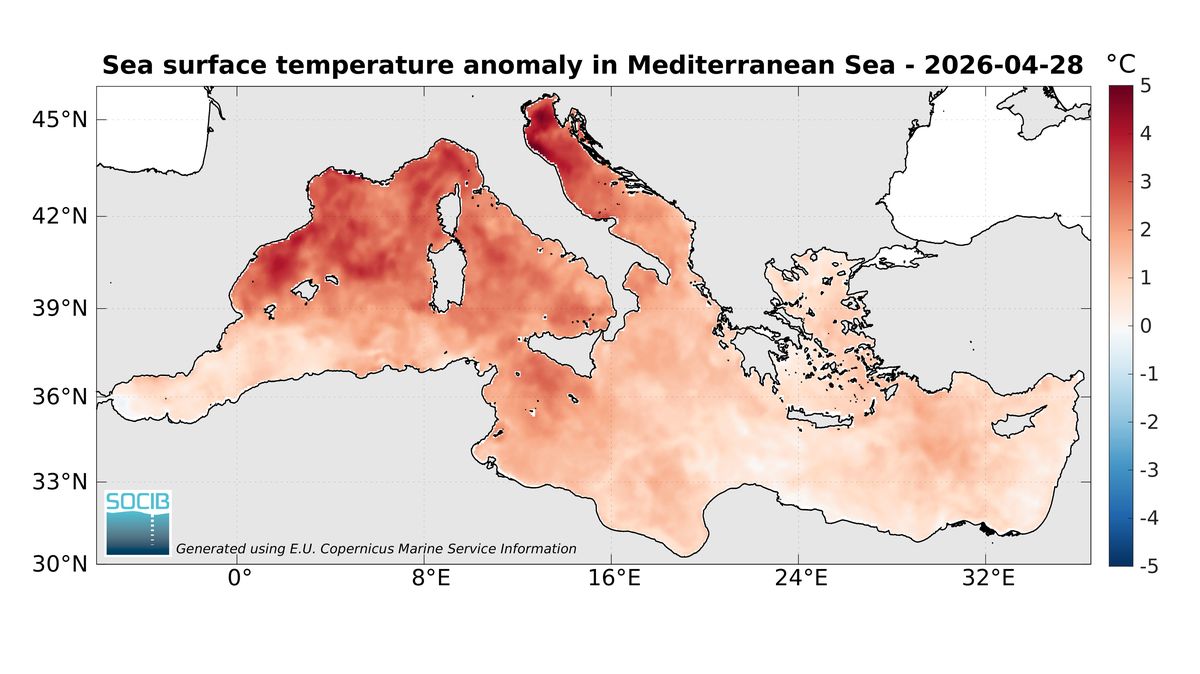
The Mediterranean Sea is experiencing record-breaking warmth this spring, with surface temperatures already hitting levels typically seen in midsummer and raising concerns among scientists about long-term environmental impacts.
Unseasonable Heat Across the Region
As of late April, water temperatures across the Mediterranean range between 57°F and 70°F (14°C and 21°C) depending on the area—well above historical averages for this time of year. In some parts of the sea, temperatures are running more than 5°F (3°C) higher than normal, according to data from European climate monitoring agencies.

The most extreme anomalies have been recorded near Spain’s eastern coast and the Balearic Islands, where surface temperatures have climbed as high as 82°F (28°C) in some spots—levels more typical of late July than late April. Similar readings have been observed along the French Riviera, the Italian coastline, and even in traditionally cooler areas like the Gulf of Lion and the Alboran Sea.
A Warming Trend Accelerating Faster Than Global Averages
The Mediterranean has been heating up at a rate roughly 20% faster than the global average, according to the United Nations. Since the 1980s, the sea’s average surface temperature has risen nearly 3.6°F (2°C), with no signs of slowing down. Last year, European waters—including the Mediterranean—recorded their highest annual sea surface temperatures on record, marking the fourth consecutive year of record-breaking warmth.

Climate models project that by 2100, the Mediterranean’s temperature could rise another 3.2°F to 6.3°F (1.8°C to 3.5°C), with the most dramatic increases expected near Spain and the eastern basin.
Immediate and Long-Term Consequences
The unusually warm water has already begun altering weather patterns across Southern Europe. Scientists warn that higher sea surface temperatures contribute to stronger storms, heavier rainfall, and more frequent flash flooding—conditions that have already caused devastation in recent years.
Last summer, a heat dome over southwestern Europe pushed Mediterranean temperatures to unprecedented levels, with some coastal areas exceeding 86°F (30°C). The resulting extreme weather included record-breaking rainfall in Spain, where some regions received a year’s worth of precipitation in just eight hours. Similar conditions were linked to last year’s Tropical Storm Boris, which brought catastrophic flooding to Central Europe, including the Czech Republic.
“It’s something we’ve never seen before, and it’s certainly going to bring consequences—though we don’t want to paint a catastrophic scenario,” said Bohumír Jánský, a hydrologist at Charles University in Prague. “This is a global phenomenon, and its effects will be felt far beyond the Mediterranean.”
Marine Ecosystems Under Stress
Beyond weather disruptions, the warming sea is taking a toll on marine life. Higher temperatures reduce oxygen levels in the water, stressing fish populations and contributing to harmful algal blooms. Scientists have too documented shifts in species distribution, with some native fish and invertebrates migrating northward in search of cooler waters, while invasive tropical species expand their range.

The trend shows no signs of reversing. Global ocean temperatures hit record highs in March 2026, with the average surface temperature across the world’s seas reaching 69.7°F (20.97°C)—just shy of the all-time high set in 2024. Forecasts suggest April’s readings will follow suit, with a strong El Niño event expected to push temperatures even higher in the coming months.
Why This Matters Beyond the Mediterranean
The Mediterranean’s rapid warming serves as a microcosm of broader climate trends, offering a preview of how rising sea temperatures could reshape weather patterns, coastal communities, and ecosystems worldwide. With nearly half of Europe’s population living near the Mediterranean coast, the stakes for adaptation and mitigation are high.
For now, scientists are closely monitoring the situation, but the message is clear: the sea’s unprecedented warmth is not an anomaly—it’s the new normal.
