

Mercury reaches its greatest eastern elongation on June 15, positioning the planet 24.5 degrees from the sun in the evening sky, offering one of the year’s best viewing opportunities. The event, reported by multiple outlets, occurs as Mercury transitions from an evening to a morning object, with visibility dependent on weather and location.
Mercury’s Greatest Eastern Elongation on June 15
On June 15, Mercury will appear at its farthest point from the sun in the evening sky, reaching a separation of 24.5 degrees according to the Taipei Astronomical Museum. This alignment, described as one of the year’s best chances to observe the planet, occurs as Mercury orbits closer to the sun than Earth, making it challenging to spot under normal conditions. The event was confirmed by multiple sources, including Astronomy Magazine, which noted Mercury’s magnitude of 0.5 and its position in the constellation Gemini. Space.com emphasized that Mercury’s visibility will diminish after this date as it approaches the sun.
Visibility and Observational Tips
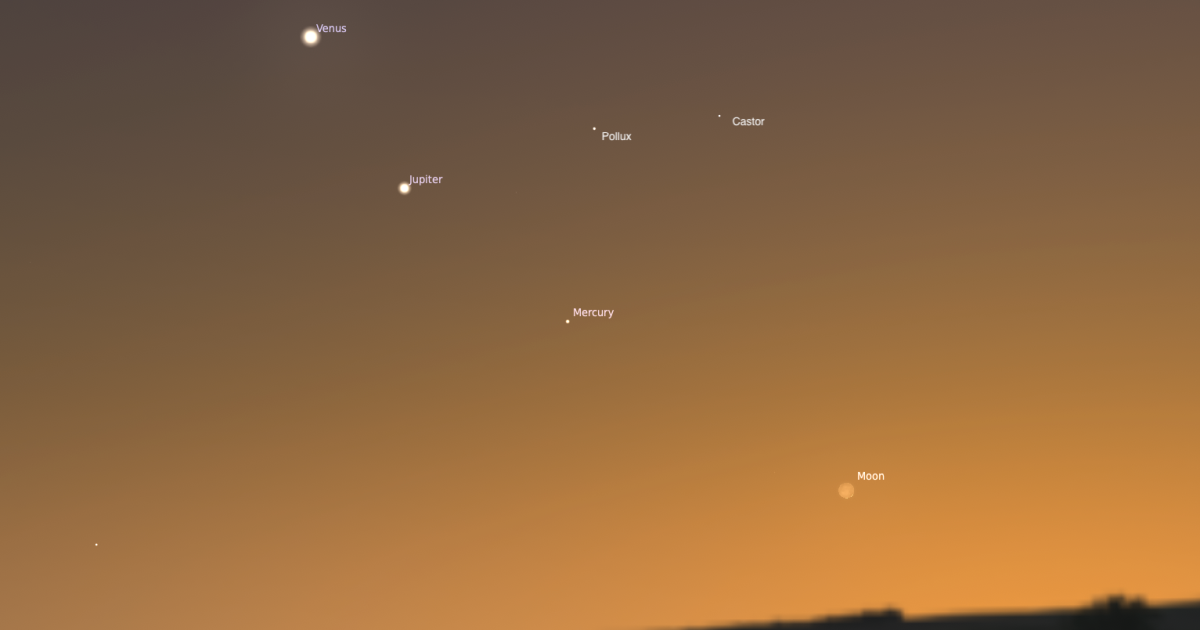
Observers are advised to look toward the western horizon shortly after sunset, where Mercury will shine below Venus and Jupiter. Focus Taiwan reported that the planet will be approximately 22 degrees above the horizon, with a waxing crescent moon nearby. The Taipei Times added that the alignment of Mercury, Venus, Jupiter, and the moon on June 17 and 18 will create a vertical arrangement, with Mercury at the bottom. However, the museum warned that unstable weather could affect visibility, urging viewers to check local forecasts.
Contrasting Sources and Weather Concerns
While most sources agree on Mercury’s position, details vary. Astronomy Magazine reported a 25-degree separation, slightly higher than the 24.5 degrees cited by the Taipei Astronomical Museum. Space.com noted Mercury’s 17-degree separation, highlighting the planet’s erratic visibility due to its tight orbit. The differences underscore the importance of local conditions, with the museum advising viewers to prioritize clear skies and unobstructed horizons.
What Comes Next for Mercury?
After June 15, Mercury will gradually sink toward the horizon, culminating in an inferior solar conjunction on July 12, when it passes between Earth and the sun. Space.com noted that the planet will reappear as a morning object in late July. For now, the June 15 event remains a critical window for stargazers, with the Taipei Astronomical Museum urging observers to act quickly before Mercury vanishes into the sun’s glare.
Find more reporting in our Tech section.
