
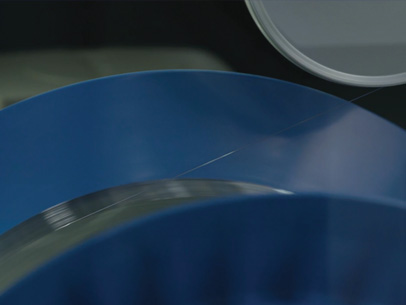
Hollow-core fiber is cutting latency by up to 50% in long-haul networks, with Microsoft and YOFC leading deployment as AI and cloud demand outpaces traditional glass-fiber limits. The technology’s air-core design—confirmed by 2024 Optical Fiber Communication Conference data—reduces signal loss by up to 3.5% while enabling speeds nearly 32% faster than conventional G.652 fibers, according to broadbandlibrary.com.
How Hollow-Core Fiber Solves Critical Bandwidth Bottlenecks for AI and Cloud Networks
Why hollow-core fiber matters now
The race to build next-gen optical networks isn’t just about speed—it’s about survival. AI workloads, cloud computing, and edge technologies are consuming bandwidth at a pace that outstrips even the most advanced solid-core fibers. According to RFS World, hollow-core fiber (HCF) addresses three critical bottlenecks: latency (now as low as 0.11 dB/km attenuation), nonlinear distortion (minimized by air-core propagation), and dispersion (maintained over ultra-long distances). The technology’s breakthrough lies in its photonic bandgap cladding, which traps light in an air-filled core—eliminating the signal drag of glass while reducing Fresnel reflections by up to 3.5%, per broadbandlibrary.com.

Microsoft and Relativity Networks’ Breakthroughs in Photonic Bandgap Design
Microsoft’s Azure division has already adopted HCF in select backbones, citing its ability to handle seamless backups and uninterrupted connections for AI training clusters. Meanwhile, Relativity Networks—backed by a decade of research from the University of Central Florida—has commercialized anti-resonant HCF designs with glass walls so thin they’re "invisible to the human eye," the company claims. These proprietary structures act as mirrors, confining light with near-zero power loss.

The Physics of Faster Data Transmission: Air-Core Propagation vs. Glass Reflection
The physics behind the speed
Traditional fiber optics rely on total internal reflection (TIR) in solid silica cores, where light pulses bounce along a glass pathway. HCF flips this model: 98% of optical power travels through air, cutting latency by up to 50% compared to G.652 fibers. The speed of light in air (≈299,700,000 m/s) is nearly identical to a vacuum, allowing HCF to achieve a group index close to unity—meaning data moves faster with less distortion, as broadbandlibrary.com illustrates in its speed comparison chart.
But the air-core design isn’t without trade-offs. HCF struggles with bend loss: standard versions require a 70 mm radius, while bend-insensitive G.657.B3 fibers handle 5 mm curves—critical for compact installations like multi-dwelling units (MDUs). However, the latency and capacity gains justify the trade-off for hyperscale data centers, where every millisecond of delay compounds in AI inference times.
Deployment Challenges and the Race to Standardize Hollow-Core Fiber
Who’s deploying—and who’s watching
Microsoft isn’t alone in betting on HCF. YOFC, a Chinese fiber manufacturer, has partnered with telecom operators to test HCF in transoceanic cables, where latency-sensitive applications like high-frequency trading and autonomous vehicle networks demand sub-millisecond precision. RFS World reports that HCF’s low nonlinear effects make it ideal for high-power transmissions, a key advantage for next-gen 800G and 1.6Tbps systems.

The technology’s rollout timeline remains fluid. While Relativity Networks’ manufacturing optimizations have made HCF commercially viable, widespread adoption hinges on two factors: cost parity with solid-core fibers and standardization by bodies like the ITU. As of June 2026, no major telco has publicly committed to HCF for consumer broadband—its strengths lie in enterprise and backbone networks. That said, the ITU’s G.654 standard for HCF (finalized in 2024) is accelerating vendor confidence.
What’s next: The HCF vs. solid-core showdown
The coming years will reveal whether HCF becomes the default for long-haul networks or remains a niche solution.
- Hybrid networks: HCF for ultra-low-latency backbones, solid-core for last-mile access.
- Full replacement: If bend-loss improvements (e.g., photonic-crystal cladding) reach G.657.B3 levels, HCF could dominate new builds.
- Stalled adoption: If cost or installation challenges persist, HCF may remain confined to hyperscale deployments.
One certainty: the demand for HCF isn’t going away. RFS World notes that AI’s data hunger is "set to grow even faster" than cloud computing, with 71% of businesses already using generative AI for at least one application. For networks to keep pace, hollow-core fiber may be the only option—even if it means rethinking how we build the internet’s backbone.
| Key figures at a glance | Metric | Hollow-Core Fiber (HCF) | Traditional G.652 Fiber |
|---|---|---|---|
| Latency reduction | Up to 50% | Baseline | |
| Attenuation | 0.11 dB/km | 0.17–0.25 dB/km | |
| Speed of light | ~299,700,000 m/s (air) | ~200,000,000 m/s (glass) | |
| Bend radius | 70 mm | 5 mm (G.657.B3) | |
| Nonlinear effects | Minimal | Higher at high power |
Sources: broadbandlibrary.
Find more reporting in our Health section.
