
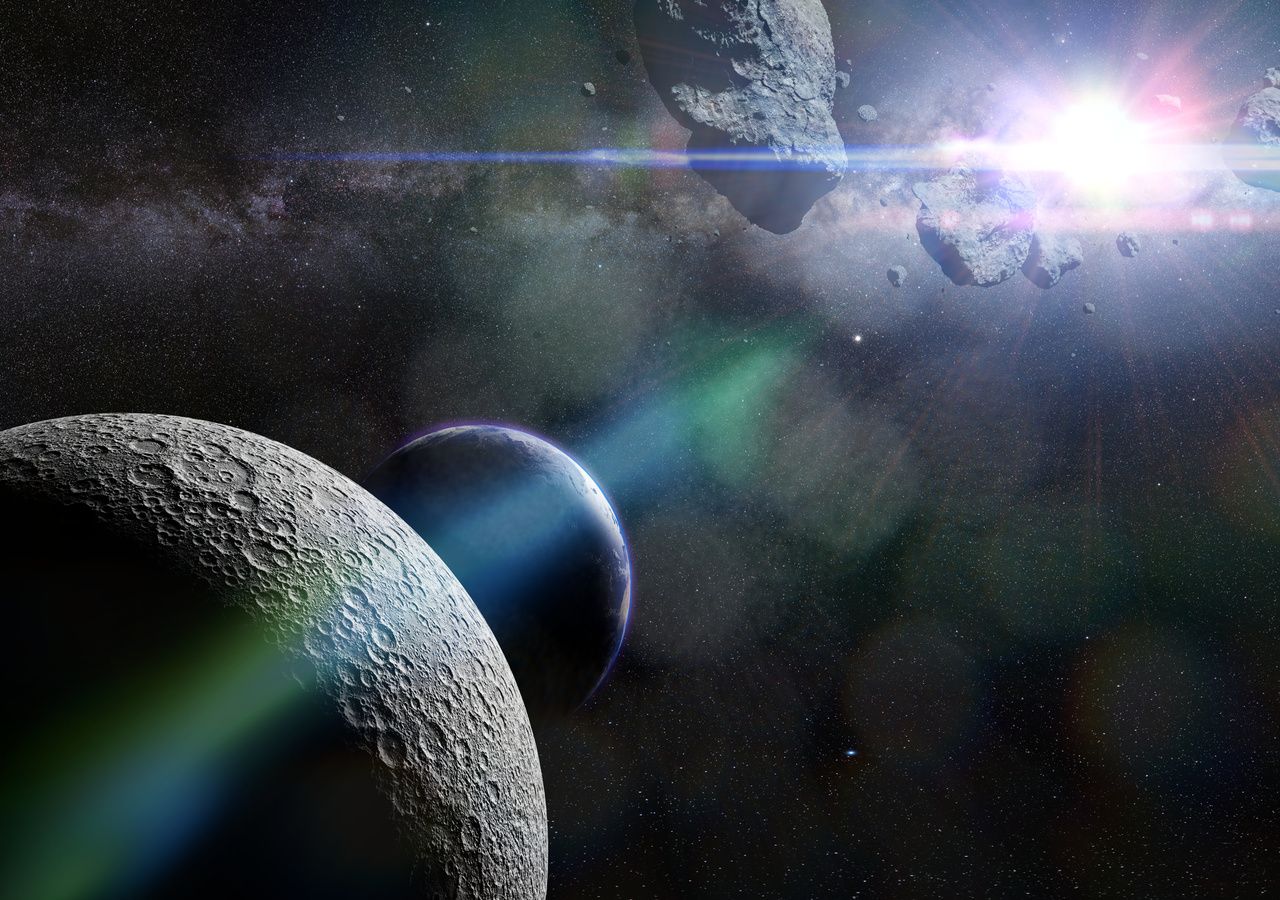
As NASA’s Artemis program moves closer to establishing a sustained human presence on the Moon, a new study highlights a critical, often overlooked challenge: the constant bombardment of micrometeoroids. Research published this week details the sheer volume of these tiny space particles striking the lunar surface – upwards of 15,000 impacts per year on a habitat the size of the International Space Station – adn underscores the need for robust protective measures for future lunar inhabitants and infrastructure.
While appearing serene, the Moon lacks wind or weather to alter its surface. However, beneath this calm exterior, a stream of tiny particles travels at extreme speeds, capable of penetrating metal and equipment in seconds. For NASA engineers, this threat is now a defining factor in the design of any permanent lunar base.
The Artemis initiative aims to establish a prolonged human presence on Earth’s natural satellite, and ensuring the integrity of modules and their inhabitants has become a top priority. Each micrometeoroid, even the smallest, represents a real risk, a stark reminder that the vacuum of space allows for no miscalculations.
A Silent, Yet Constant Bombardment on the Moon
Table of Contents
The Moon’s lack of an atmosphere leaves its surface unprotected against fragments traveling at speeds up to 70 kilometers per second. This rain of particles is almost imperceptible, but its effects can be devastating.
The Moon is our cosmic crash detector
Every day, tiny asteroids and meteoroids hit Earth’s neighbourhood – most too small to notice.
But on the airless Moon, their impacts light up as brilliant flashes ️ESA pic.twitter.com/9sKeA5ckZ2
— Dreams N Science (@dreamsNscience) November 16, 2025
Daniel Yahalomi, from the Department of Astronomy at Columbia University, and his team conducted a detailed study published on arXiv, utilizing NASA’s Meteoroid Engineering Model. The results showed that a habitat the size of the International Space Station would experience between 15,000 and 23,000 impacts per year from micrometeoroids ranging from a millionth of a gram to 10 grams.
Each collision releases enough energy to damage structures, forcing designers to consider specific defensive solutions. Even the smallest particles, invisible to the naked eye, can penetrate walls and critical equipment. This underscores the need for robust shielding in lunar habitats.
Location Matters: Variations Across the Lunar Surface
The risk of impacts isn’t uniform across the Moon. According to Yahalomi’s findings, the poles experience the lowest frequency of collisions, while areas facing Earth are more exposed.
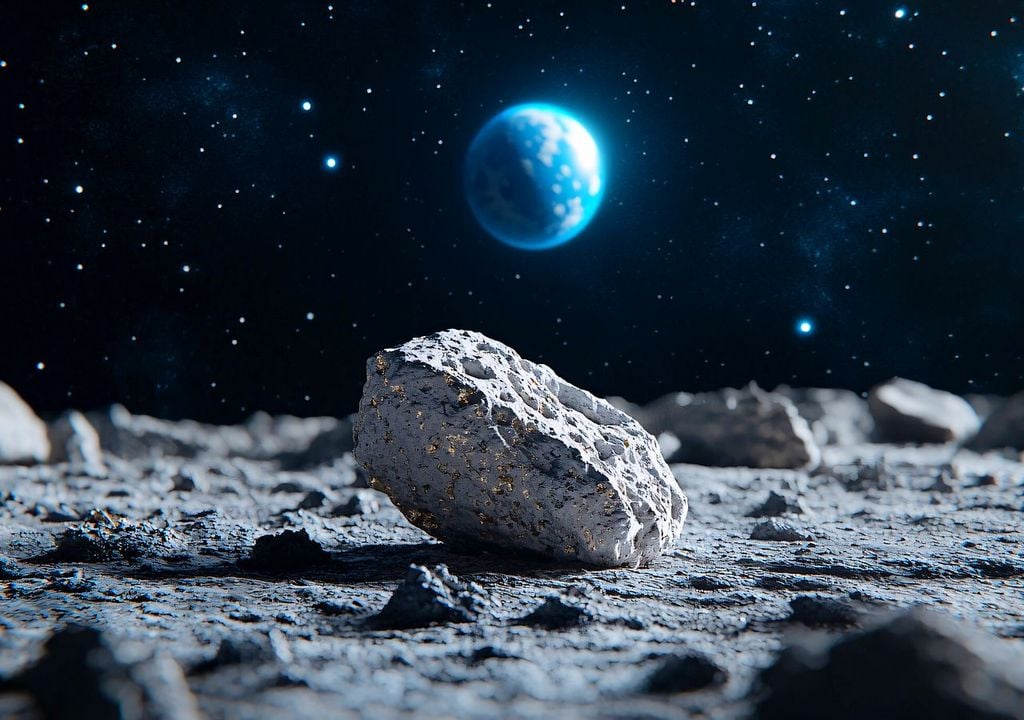
This distribution is due to the dynamic relationship between the Moon, Earth, and Sun. The satellite’s orbit and rotation act as a natural shield, protecting certain areas while leaving others more vulnerable. Understanding these variations is crucial for selecting locations that balance safety and functionality.
The choice of the south pole for the first Artemis base is strategic: it offers lower bombardment rates, access to water ice, and good communications. This careful site selection demonstrates a proactive approach to mitigating risk.
The Nature of the Threat: Micrometeoroid Composition
Micrometeoroids vary greatly in composition. They can be fine or coarse, glassy, scoriaceous, or contain relict crystals. Each type impacts differently and requires detailed analysis to predict its effect on human structures.
Micrometeoroids are tiny fragments of rock or metal, typically millimeter-sized, originating from space. They come from asteroids and comets, resulting from the fragmentation of larger bodies in the solar system. They constantly impact Earth, creating the cosmic dust that settles in the oceans and polar regions.
Unlike Earth, where the atmosphere burns up most fragments, on the Moon all particles strike with hypersonic force. This turns even the smallest micrometeorites into potential threats to habitats, vehicles, and tools.
Knowing the composition and size of these impacts allows for the design of effective defenses, avoiding unnecessary weight from excessive shielding.
Whipple Shields: The First Line of Lunar Defense
One of the most effective solutions is the Whipple shield, a multi-layer aluminum structure that fragments the micrometeoroid in the first layer, dissipating the energy before it reaches the habitat. This design has also been used on the International Space Station.

Yahalomi’s analysis provides formulas that allow engineers to calculate how many impacts could penetrate the shielding based on its thickness and the module’s location. This helps maintain safety without adding excessive weight, which is critical for transport from Earth.
Lunar Routine Under Threat
For astronauts, living with this invisible rain will be part of daily life. Every outdoor activity and every stay in the modules will be marked by the awareness that any fragment, no matter how small, can cause damage.
Protection systems are a necessity for months-long stays on the Moon. From site selection to shielding engineering, everything revolves around minimizing exposure. Even though the lunar surface appears tranquil from a distance, the near-space environment remains a place where human life must confront extreme challenges.
Reference
Daniel A. Yahalomi et al, Micrometeoroid Impact Rate Analysis for an Artemis-Era Lunar Base, arXiv (2025). DOI: 10.48550/arxiv.2511.04740
