
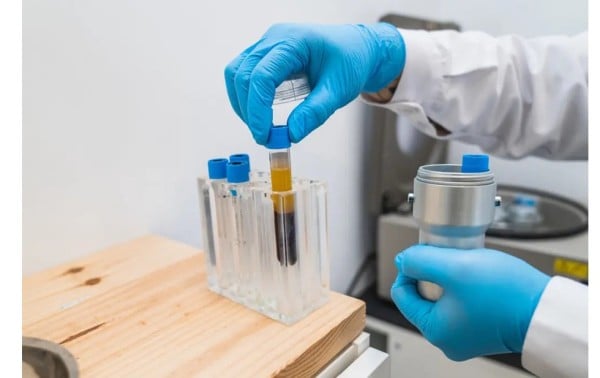
Researchers from the University College London and the Francis Crick Institute have identified a biological signature of 14 proteins in the blood that predicts the risk of lung cancer more than five years before clinical diagnosis. The findings, published in the journal Cell, offer a potential path toward early intervention for high-risk individuals.
A New Biological Signature for Early Detection
The study, which utilized blood samples from over 48,000 participants in the UK Biobank, represents a significant shift in how the medical community approaches lung cancer. By applying machine learning to these samples, scientists isolated 14 specific proteins. When these protein levels are analyzed alongside a patient’s age, smoking history, and record of previous lung disease, they form what researchers describe as a “firma biológica” capable of identifying individuals at high risk long before tumors manifest on standard clinical imaging.
The discovery is not merely about identifying the presence of cancer. Instead, the team found that these proteins reflect an altered inflammatory environment within the lungs. This state of inflammation, often triggered by environmental factors such as air pollution and cigarette smoke, serves as a precursor to the development of malignant cells. This research builds upon earlier work from the same group, which previously established a direct link between air pollution and the development of lung cancer in non-smokers.
The Potential for Targeted Preventive Treatment
Beyond prediction, the research suggests that clinical intervention might be possible before the disease takes hold. The team identified a specific molecule in the immune system, IL-1β, which appears to drive the damage associated with this inflammatory state. According to the researchers from the University College London and the Francis Crick Institute, drugs that block this molecule could theoretically prevent cancer in those who display the high-risk protein signature.

The study was integrated into the TRACERx program, a long-term initiative focused on lung cancer evolution. Dr. Charles Swanton, the lead author of the paper and the director of clinical research at the Francis Crick Institute, emphasized that while the findings are promising, they do not yet constitute a clinical test. The next steps involve further validation and, eventually, randomized clinical trials to see if anti-inflammatory treatments can indeed stop the progression from inflammation to cancer.
“Un estudio muy impresionante sobre cómo podríamos prevenir el cáncer de pulmón más de 5 años antes de su diagnóstico. Mediante aprendizaje automático, se descubrió una firma de riesgo de 14 proteínas plasmáticas que predice la respuesta a una terapia con anticuerpos contra la interleucina IL-1β. Validado en 8 cohortes.”
Eric Topol, Physician, via Infobae
Expert Perspectives on the Future of Oncology
The medical community has reacted with cautious optimism. Dr. Douglas Arenberg, a professor of medicine at the University of Michigan who was not involved in the published study, noted that the identification of a marker that informs both risk and treatment response is a long-sought goal in public health.
“La prevención del cáncer de pulmón ha sido un objetivo anhelado durante muchísimo tiempo.”
Dr. Douglas Arenberg, University of Michigan, via diario.mx
Dr. Swanton compared the potential impact of this discovery to the introduction of statins in cardiovascular health. Just as statins are used to manage cholesterol levels in patients at risk for heart disease, a future test for these 14 proteins could allow clinicians to manage lung inflammation before a tumor forms. As Dr. Swanton noted regarding the shift in focus, “En mi opinión, la prevención es la solución.”
Clinical Hurdles and Next Steps
While the results were validated across eight independent datasets involving more than 80 researchers, the path to a standard diagnostic tool remains complex. The current findings serve as a foundation, but the researchers acknowledge that the transition from a research-based blood analysis to a clinical diagnostic tool requires significant further study. For now, the focus remains on understanding the underlying mechanisms of the inflammatory environment and identifying the most effective ways to intervene.
The study, which received funding from Cancer Research UK and support from the National Institute for Health and Care Research, underscores a shift toward more personalized, preventative oncology. Patients and those concerned about lung health should consult their healthcare providers for the latest guidance on screening, as standard protocols currently rely on imaging rather than blood-based protein signatures. As research continues to evolve, this 14-protein signature may eventually become a cornerstone of early detection strategies.
