
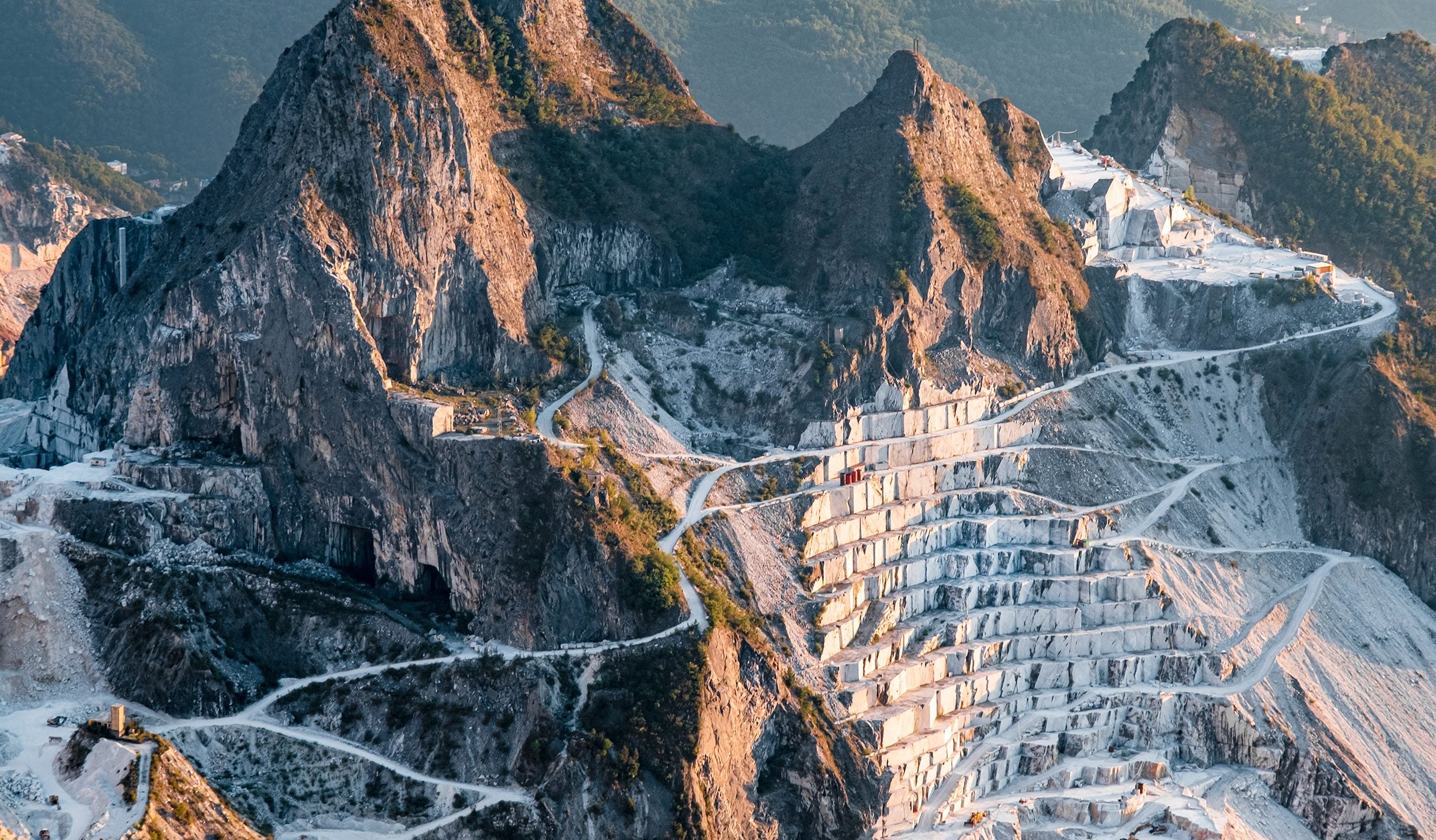
Researchers have identified a previously unknown mineral in the marble quarries of the Apuan Alps in Tuscany, Italy, marking a significant discovery in the field of mineralogy. The latest mineral, named Delchiaroite, is the first naturally occurring copper iodide–methanethiolate ever found, with the chemical formula Cu3I(CH3S)2.
The discovery was made by a team from the University of Pisa’s Department of Earth Sciences, in collaboration with researchers from the National Museum in Prague and Nantes University. The mineral was found in the La Piana quarry within the Colonnata marble basin near Carrara, a region long celebrated for its high-quality marble.
Delchiaroite appears as tiny, needle-like yellow crystals, each smaller than a tenth of a millimeter. Its unique composition combines inorganic copper and iodine with an organic methanethiolate group, representing a rare intersection between mineralogy and organic chemistry in nature.
The mineral was officially approved by the Commission on New Minerals, Nomenclature and Classification of the International Mineralogical Association and the findings were published in the European Journal of Mineralogy on April 1, 2026.
The name Delchiaroite honors Lorenzo Del Chiaro, a longtime mineral collector and collaborator with the University of Pisa, whose decades of operate examining local mine waste helped lay the groundwork for this discovery.
Even as the mineral itself has no known direct application to human health, its discovery underscores the ongoing complexity of Earth’s geological processes and the potential for natural environments to produce novel chemical combinations. Such findings contribute to broader scientific understanding of how elements interact under extreme conditions, which can inform research in materials science and geochemistry.
