
Nex Playground is a home console based on body tracking via an integrated camera: priced at $249, with an optional subscription and a catalog designed primarily for children and party games.
A new, compact gaming console is making waves in the US market, outselling both the Xbox Series X|S and PlayStation 5 during the week leading up to Black Friday. The surprising success belongs to Nex Playground, a Silicon Valley project spearheaded by former Apple executive David Lee, aiming to fill a gap left by major players like Microsoft, Sony, and even Nintendo.
Currently available in the United States and Canada, the Nex Playground retails for $249 – a price point that makes it the most affordable console on the market. Launched during the 2023 holiday season with an initial run of just 5,000 units, the device is now distributed through major online retailers and brick-and-mortar stores across America. The console is expected to arrive in UK stores within weeks, though a European launch is still several months away.
Nex Playground Technical Specifications
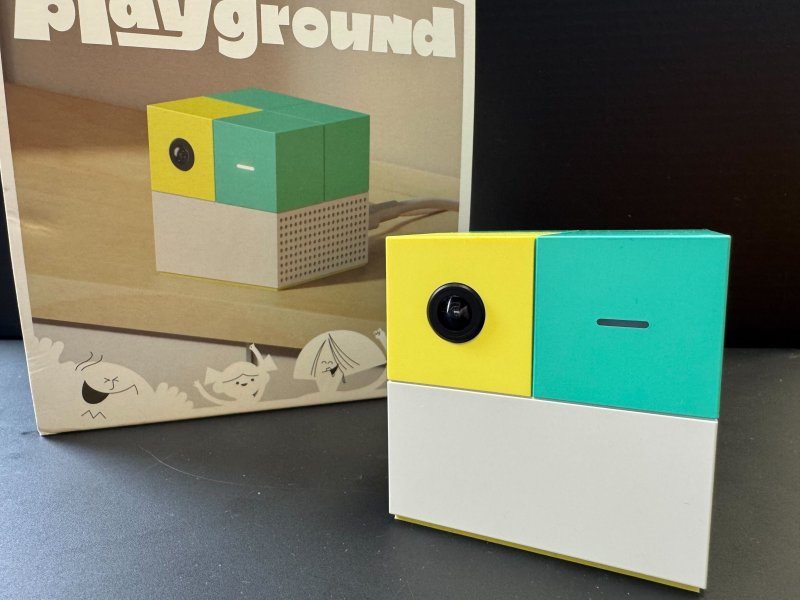
The Nex Playground packaging is minimalist and stylish, reflecting the project’s core principles: a gaming system designed for everyone, offering quick, fun, and mentally undemanding sessions – though it may provide a physical workout for some. This focus on accessibility is a key differentiator in a market often dominated by complex gaming setups.
Alongside the console, a small, approximately 7cm cube, users receive an HDMI cable, a power adapter, and a Bluetooth remote for menu navigation. Under the hood, the Nex Playground is powered by an Amlogic A311D2 SoC, paired with 16GB of RAM and 64GB of internal storage. The integrated GPU is a Mali-G52 MC4, sufficient for the console’s graphically simple and immediately engaging titles.
The operating system is based on Android, customized for a closed ecosystem entirely focused on gaming. A key element of the Playground is its integrated ultra-wide-angle camera with AI-powered tracking, which detects body movements without the need for controllers or wearable sensors.
The console supports Wi-Fi connectivity for downloads and updates, and Bluetooth for the included remote.
The hardware is more than capable of handling the experiences offered by Nex, and can simultaneously process the movements of up to four players.
Design and Connections
Nex Playground features a minimalist, cube-shaped design intended to sit in front of a television, ideally on the edge of a TV stand. The integrated camera is located on the front and requires ample space to accurately track movement. The console also includes a physical privacy shutter to cover the lens when not in use, addressing potential privacy concerns.
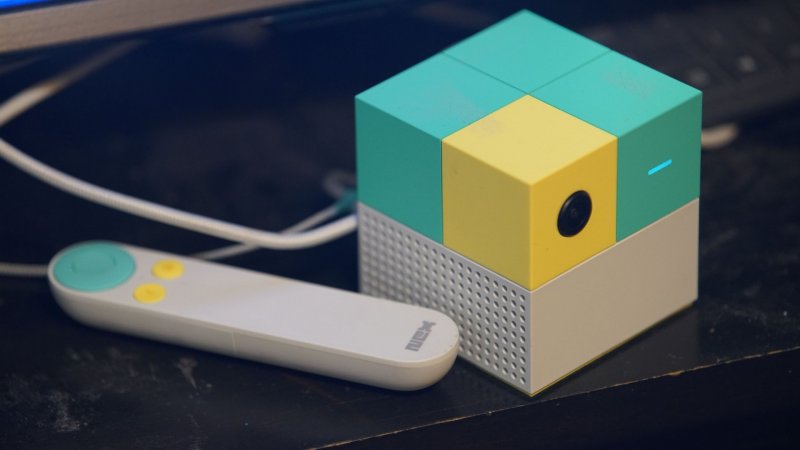
Given its focus on immediacy, the connections are streamlined:
- HDMI for TV connection
- Power input
- Wireless connectivity for networking and the included remote, which is powered by batteries
There are no USB ports for external peripherals or memory expansion slots. This is consistent with the system’s “closed” approach, but limits customization and alternative uses.
User Experience
Installation is straightforward: connect the HDMI cable, configure the Wi-Fi, and complete a brief initial calibration. You’re ready to play in minutes. The most time-consuming step is creating a Nex account, which is essential for purchases and accessing the console.
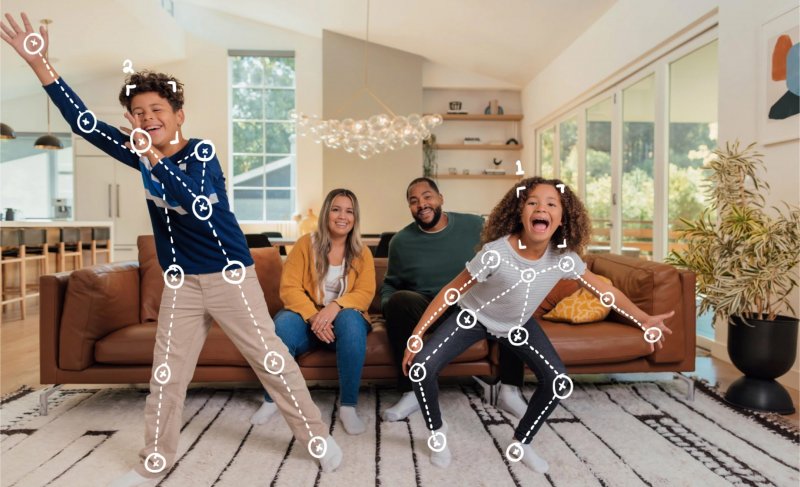
Tracking performs convincingly in well-lit environments with sufficient space in front of the screen. At least a few feet of distance is needed to maintain accuracy. In small rooms or with poor lighting, responsiveness decreases slightly, but in most home settings, the experience remains fluid, thanks to the wide-angle lens, which adapts to the exaggerated movements inherent in these types of games. The camera’s wide field of view allows the Nex Playground to function effectively in both large American living rooms (likely the company’s target audience) and smaller European spaces, such as apartments.
The target audience is clearly families: children, parents, and shared gaming sessions for up to four players. The absence of controllers makes everything more accessible and visceral, but also less precise than systems based on physical input. The remote is used as a pointer only in menus, to build choices faster and more accurate. Once a game starts, though, everything is controlled through hand movements, allowing everyone – even those unfamiliar with controllers or young children – to independently manage the experience.
Play Pass Subscription
The console includes five pre-installed games. To access the rest of the library, you need to subscribe to the Play Pass, a quarterly or annual subscription (approximately $49 every three months or $89 per year).
It is not possible to purchase individual titles separately: the ecosystem is entirely tied to the subscription service. Although this simplifies content management and eliminates the risk of accidental purchases, it also introduces a recurring cost that needs to be carefully considered, especially given the target audience and the competition. Annual subscriptions to PS Plus and Game Pass start at similar prices, but offer a different level of service.
Available Games
The catalog consists primarily of party games, educational titles, and licensed products for children.
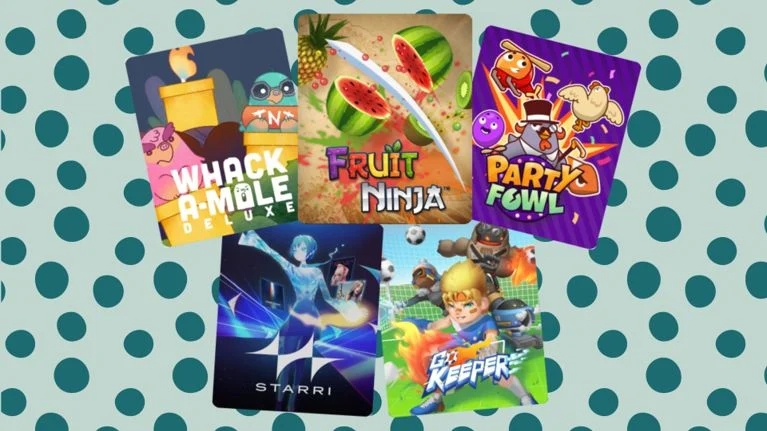
The five games included with the console are:
- Fruit Ninja, undoubtedly the most well-known title in the package
- Starri, a sort of clone of Just Dance
- Whack a Mole, the classic game where you hit moles as they emerge from the ground
- A soccer game where you have to save shots
- A party game based on quick minigames in the style of WarioWare
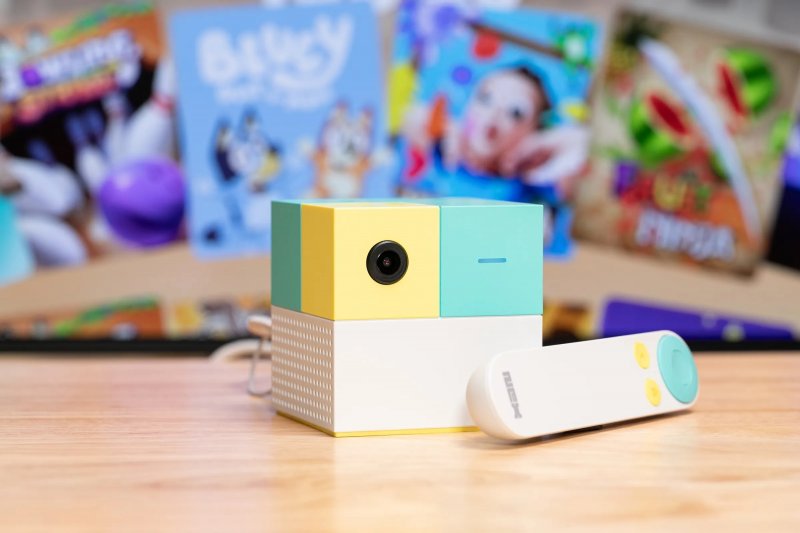
The offering includes experiences inspired by well-known franchises like Bluey or Peppa Pig and reinterpretations of motion-based classics, in a logic reminiscent of the original Nintendo Wii or the Kinect sensor.
The gameplay depth is limited: these are games designed for short, immediate, and physically active sessions. For an adult audience accustomed to structured productions, the catalog may become repetitive in the medium term. This is why the subscription idea clashes somewhat with what seems to be the basic use case: it’s the classic party console, to be taken out when friends are around or for a few afternoons of play. It’s hard to imagine long and continuous sessions, especially living in condominiums or similar places, where noise and jumping are poorly tolerated, especially in the evening.
Software and Dashboard
The interface is simple and linear. The dashboard displays installed games, those available through subscription, and system settings. There are no multimedia applications, streaming services, or extra features: Nex Playground is a console dedicated exclusively to games and quickly gets you to the action. Even subscribing to the service cannot be done on the console, but requires a PC or phone to activate it.
Is it like the Wii or like the Kinect?
Considering the philosophy behind the project, the most immediate comparison that comes to mind is with the aforementioned Nintendo Wii, which, however, used physical controllers with motion sensors, guaranteeing greater precision in input. Nex Playground eliminates controllers altogether, bringing it closer, from a gaming point of view, to the concept introduced by Kinect on Xbox.
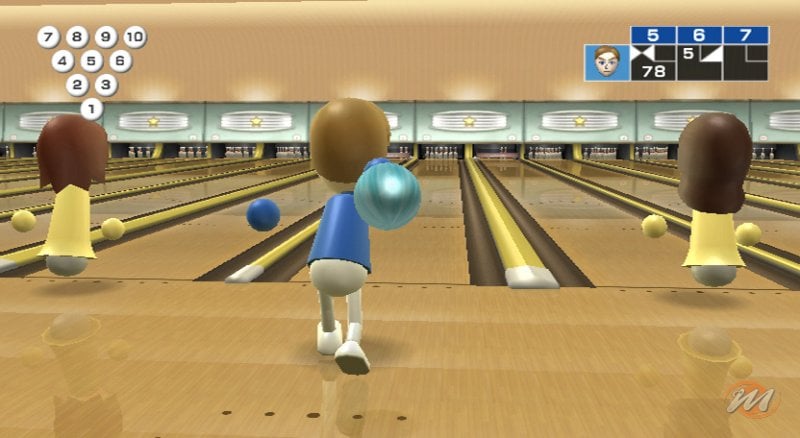
The “magic” of the Nex Playground is something that has been somewhat lost in recent years, a period in which immediacy has been relegated to the background in favor of more advanced graphics and gameplay. Here you have fun without too much fuss: you turn on Nex and after 20 seconds you’re flailing around in front of the TV. As the name suggests, a true home playground, where fun is physical and sweating is just a logical consequence.
Compared to Kinect, Nex Playground has the advantage of being a standalone, compact, and easier-to-configure system. The camera is far superior, both in image quality and in its ability to read movements. It does not have a large ecosystem or the support of major productions, despite the presence of experiences from “sizeable” names like Peppa Pig or Bluey. It is a focused device, especially for the youngest, not a classic gaming platform. And viewed it works great.
Conclusion
Nex Playground is a niche console that focuses on accessibility, movement, and family gaming. The hardware is adequate for the purpose, the design is minimalist, and the tracking works well, even in less-than-ideal conditions. The main limitations are the shallow catalog and the reliance on a subscription to access new games beyond those pre-installed. It’s not a console designed for the traditional gamer, but for young people and those seeking an active and shared experience in the living room, with a reduced level of complexity. However, once approached knowing its limitations, Nex Playground immediately makes you understand why nearly a million American families have purchased it: with its carefree and lighthearted spirit, it will be the heart of many parties.
PRO
- Easy to install and configure
- The minimalist design is pleasing
- Excellent motion tracking capability
- Immediate and physical fun
CONS
- The subscription model is questionable
- Closed system with no experimentation
