
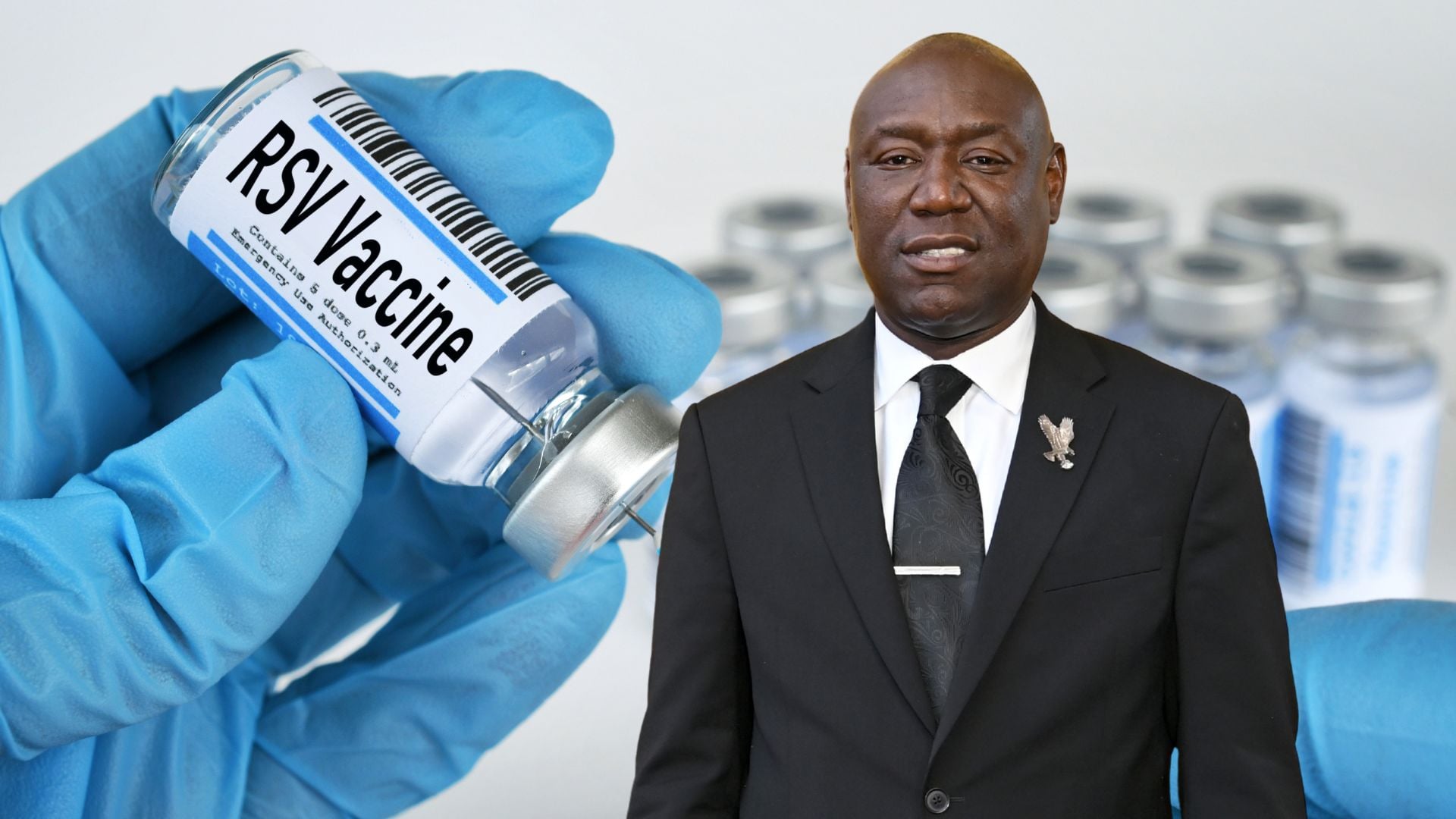
A federal lawsuit filed this week accuses the U.S. government of secretly enrolling two Black infants in a deadly 1960s RSV vaccine trial without their families’ knowledge or consent, a claim that resurfaces long-buried ethical questions about medical experimentation on marginalized communities. The complaint, filed under the Federal Tort Claims Act, names Ross Otto Hambrick and Victor Marcellus King—both deceased in January 1967—and alleges their deaths were linked to a highly concentrated experimental vaccine developed by the National Institutes of Health (NIH).
How the Lawsuit Connects a 60-Year-Old Trial to Today’s RSV Vaccines
The lawsuit, announced by civil rights attorney Ben Crump, alleges that Hambrick and King were part of a secret NIH-sponsored study called “Lot 100” in 1965–66, a program that targeted poor Black infants in Washington, D.C. According to the complaint, the boys received an experimental RSV vaccine that was 100 times more concentrated than earlier versions—and that their deaths in January 1967 were caused by a catastrophic immune response triggered by the vaccine. The filing further claims that tissue samples taken during their autopsies were later used in research that contributed to RSV vaccines approved by the FDA in 2023.
What makes this case explosive is the timeline: the vaccine tested on Hambrick and King was developed after an earlier NIH trial on at least 54 children—most of them Black—resulted in 10 hospitalizations, a rate that the complaint cites NIH respiratory virus researcher Dr. Robert Chanock as calling “possibly outside the range of normal.” Instead of halting the program, the NIH partnered with Pfizer to create Lot 100, which underwent minimal animal testing (just four mice, four guinea pigs, and 25 monkeys) before being cleared for human trials. The lawsuit alleges the trials were conducted almost exclusively on Black infants from low-income families, with no consent or compensation for their families.
“The legal team is seeking justice on behalf of the Hambrick and King families, demanding full accountability from the United States government.”
Why This Case Could Reshape Discussions on Medical Experimentation
The lawsuit raises critical questions about historical medical research practices and their lingering impact. While the NIH has not yet responded publicly, the allegations echo broader concerns about unethical experimentation on vulnerable populations—a legacy that includes the Tuskegee Syphilis Study and the forced sterilizations of Black women in the mid-20th century. The Hambrick and King case, however, adds a new layer: the potential connection between these historical trials and modern medical advancements.
According to the complaint, the tissue samples from Hambrick and King’s autopsies were preserved and later retrieved by NIH researchers to study the immunological mechanisms behind Lot 100’s failure. This raises ethical dilemmas about the use of human remains in research without explicit consent, particularly when those remains belong to individuals from marginalized communities. The lawsuit also highlights a troubling pattern: the same populations targeted for risky experiments often receive the least benefit from the resulting medical breakthroughs.
The Legal Team’s Strategy: Linking Past Harm to Present-Day Accountability
Crump’s legal team is framing this as a case about both historical injustice and modern accountability. The lawsuit was filed in the U.S. District Court for the District of Maryland, where the Hambrick and King families reside, and it invokes the Federal Tort Claims Act—a legal avenue that allows victims of government misconduct to seek compensation. The attorneys are expected to argue that the government’s failure to disclose the trials or provide compensation constitutes a violation of constitutional rights and federal law.
One of the most striking aspects of the case is the timeline of the vaccine’s development and approval. The complaint alleges that Lot 100 was tested on just 25 monkeys before being cleared for human trials—a process that would raise red flags today but was standard practice in the 1960s. The resulting RSV vaccines, now generating billions in revenue, were approved by the FDA in 2023, decades after the original trials. The lawsuit does not accuse the FDA of wrongdoing but instead focuses on the government’s role in the initial experimentation and its failure to inform the families.
What Happens Next: The Road to Justice and Public Scrutiny
The next phase of this case will likely hinge on two key questions: whether the government can be held liable for actions taken in the 1960s, and whether the Hambrick and King families can prove a direct causal link between the vaccine and the boys’ deaths. Legal experts suggest that proving intent—whether the NIH knowingly subjected the children to unnecessary risk—will be a major hurdle. However, the lawsuit’s timing, just weeks before the FDA’s 2023 approval of new RSV vaccines, adds a layer of public pressure.
Beyond the legal proceedings, this case could reignite national conversations about medical ethics, racial equity in healthcare, and the long-term consequences of unethical research. The Hambrick and King families’ demand for accountability is not just about compensation—it’s about forcing the government to acknowledge a dark chapter in medical history and ensuring that similar practices are never repeated. As Crump’s team prepares for a news conference in Washington, D.C., on Thursday, the spotlight will be on whether this lawsuit can bridge the gap between past injustices and present-day justice.
Key Questions Remain Unanswered
While the lawsuit provides a detailed account of the alleged trials, several critical questions remain:
- What evidence exists to link Lot 100 directly to the boys’ deaths? The complaint cites an “immune response that the vaccine had catastrophically misprogrammed,” but medical records from the 1960s may be incomplete or lost.
- Why were Black infants disproportionately targeted? Historical records suggest that marginalized communities were often excluded from ethical oversight, but the NIH’s specific motivations in this case are unclear.
- Will the government acknowledge any wrongdoing? The U.S. has never formally apologized for medical experimentation on Black Americans, though some states have issued partial acknowledgments.
- How will this case impact current RSV vaccine research? If proven, it could lead to stricter ethical guidelines for vaccine trials involving vulnerable populations.
As the legal battle unfolds, one thing is certain: this lawsuit is more than a fight for compensation. It’s a demand for truth—a reckoning with a history that has too often been buried under the weight of progress. For the Hambrick and King families, justice may finally be within reach—but for the broader community, the real question is whether this moment will force a reckoning with America’s medical ethics.
For more on the legal claims, see the complaint filed by Ben Crump Law. For details on the NIH’s historical vaccine trials, read the press release from Crump’s office. The case’s connection to modern RSV vaccines is explored in a recent Revolt TV analysis.
