
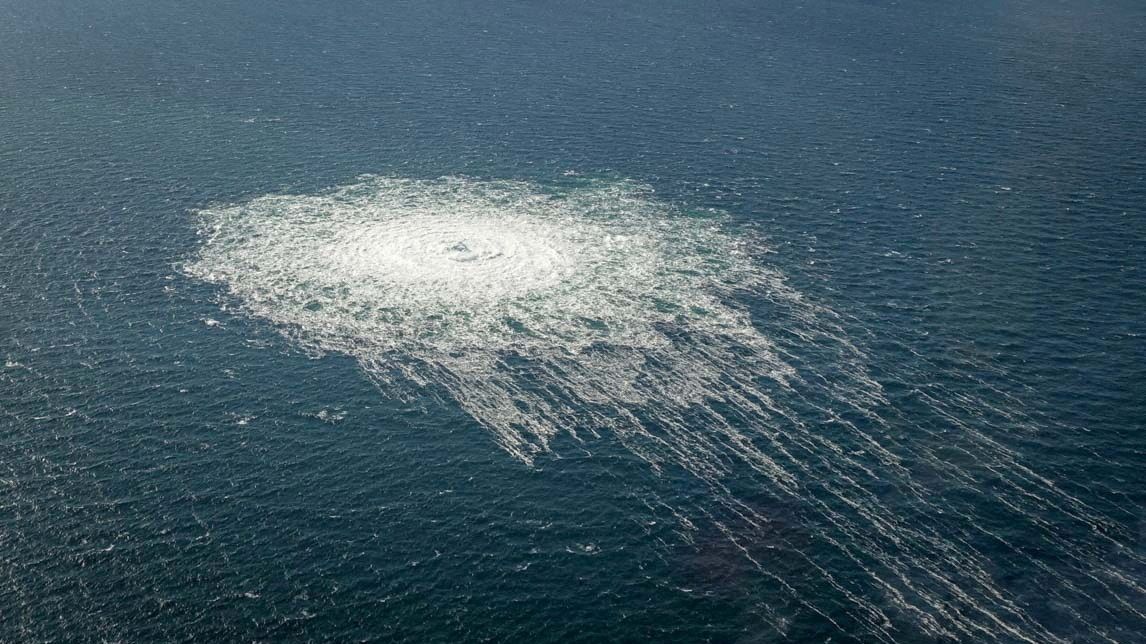
International efforts to determine obligation for the 2022 Nord Stream pipeline explosions continue to face obstacles,as evidenced by evolving extradition battles across Europe. A Ukrainian national, Serhije K., remains in Italian custody facing a German extradition request for his alleged role in the sabotage, which substantially impacted European energy markets [[1]]. This follows a recent decision by a Polish court to refuse extradition of another Ukrainian suspect, Volodymyr Zhuravlov, a case that highlighted political considerations influencing the investigations [[2]], [[3]]. The diverging legal outcomes underscore the difficulties in establishing accountability for the attack, which russia has previously blamed on the West.
A man suspected of involvement in the 2022 explosions that damaged the Nord Stream 1 and Nord Stream 2 pipelines has been fighting extradition to Germany from Italy since his arrest in August.
The alleged suspect, identified by German media as Serhije K., was apprehended in Rimini, Italy, following the issuance of a European arrest warrant.
German prosecutors allege that Serhije K. was part of a group responsible for setting off explosives on the undersea gas pipelines in September 2022, near the Danish island of Bornholm in the Baltic Sea. The incident caused significant damage and raised concerns about energy security in Europe.
According to the German state prosecution, the suspect is accused of coordinating the operation involving divers from a vessel.
Another Ukrainian national, Volodymyr Zhuravlov, was also detained in Poland in connection with the Nord Stream sabotage, based on a European arrest warrant. However, in October, a Polish court rejected Germany’s extradition request and released Zhuravlov from custody. Polish Prime Minister Donald Tusk stated that extraditing Zhuravlov was not in Poland’s interest.
The differing outcomes in the cases of Serhije K. and Volodymyr Zhuravlov highlight the complexities of international cooperation in investigating the Nord Stream pipeline attacks. The development underscores ongoing geopolitical tensions in the region and the challenges of pursuing justice in cases involving alleged state-sponsored sabotage.
