
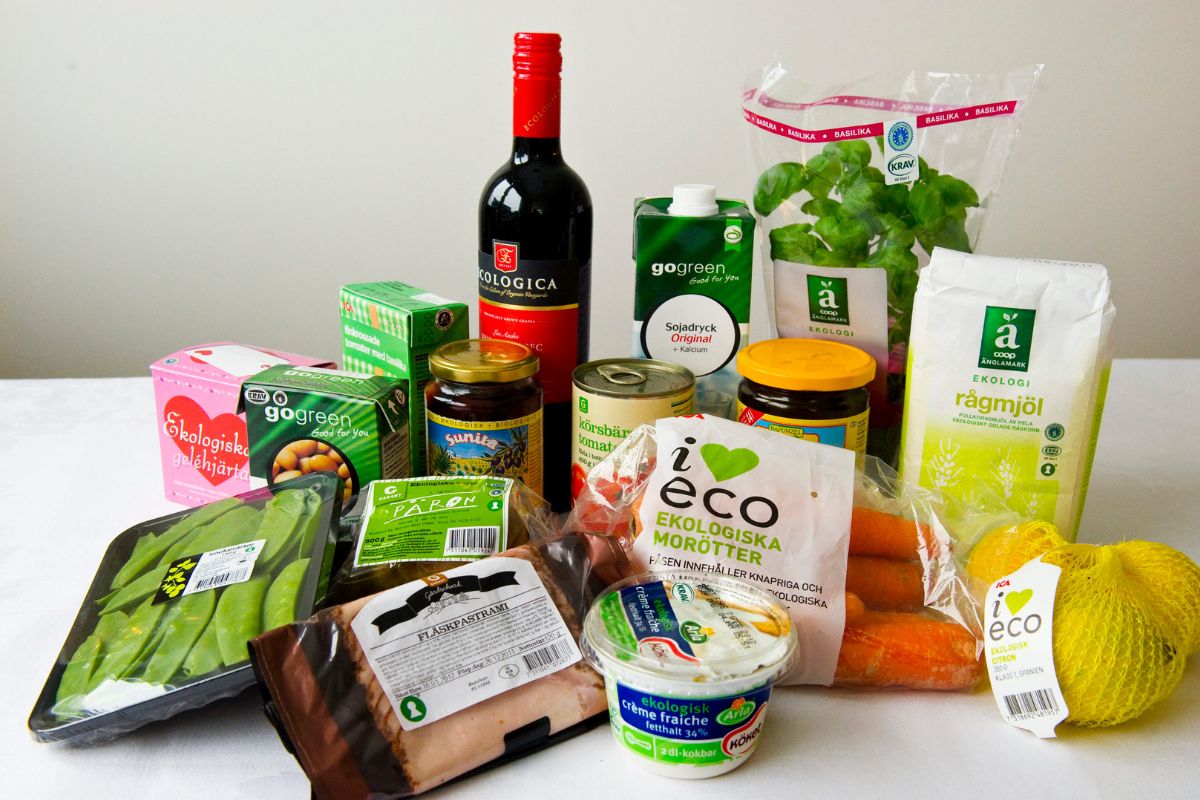
Swedish Retailers Slash Organic Promotions as Market Share Plummets
A new analysis by the Swedish Society for Nature Conservation (Naturskyddsföreningen) reveals a sharp decline in the promotion of organic foods across Sweden’s major grocery chains, a trend that coincides with a significant drop in organic market share. According to the report, the proportion of grocery store campaigns featuring organic products fell from 6.7% in 2018 to just 3.4% in 2025.
The findings indicate that currently, only three out of every 100 promotional campaigns in the grocery sector are dedicated to organic goods. This contraction in marketing visibility appears to be mirroring a broader decline in consumer purchasing patterns. Data from Svensk Dagligvaruhandel shows that organic food’s share of the total market shrank from 6.3% in 2020 to 3.7% by 2025.
Karin Lexén, Secretary General of the Swedish Society for Nature Conservation, suggests a direct correlation between the lack of visibility and falling sales. “Campaigns play a major role in what we buy. When they decrease, the sale of organic products also decreases,” Lexén stated. She further noted that retailers wield substantial influence over both what is sold in stores and, what is produced by suppliers. Lexén warned that the reduction in promotions makes it increasingly difficult for consumers to make choices that benefit nature and pollinators.
The report highlights a stark divide in strategy among the country’s leading retail chains. Hemköp emerged as the industry leader in organic promotion, with 8.9% of its campaigns focused on organic goods in 2025—the highest in the sector. This promotional effort aligns with the highest organic sales share among the tracked retailers at 5.6%.
Conversely, Lidl recorded the lowest engagement, with organic products featuring in only 0.7% of its 2025 campaigns and maintaining an organic sales share of approximately 2.5%. Other retailers fell in the middle, with Willys at 5.5% and Ica at 3.1%.
Coop Sverige has experienced one of the most notable shifts in strategy. The chain previously led the market in 2022 with 9% of its campaigns dedicated to organic products, but that figure dropped to roughly 4.2% by 2025, sliding to third place. Marcus von Greyerz, Sales Director at Coop Sverige, disputed the notion that a lack of campaigns is the primary driver of falling sales. He noted that the market has not responded as strongly to organic promotions in recent years, attributing the shift to economic pressures. “In recent years, prices have increased sharply, and many customers are choosing cheaper alternatives—even if they still want to make sustainable choices,” von Greyerz explained.
The decline in Sweden stands in contrast to broader regional trends. The Swedish Society for Nature Conservation pointed out that whereas Sweden’s organic sales are falling, neighboring Norway has seen organic sales increase by 21%.
The report, based on data from the Matpriskollen database, underscores a period of volatility for organic goods in the Swedish market, as retailers balance sustainability goals against consumer price sensitivity during a period of high inflation.
