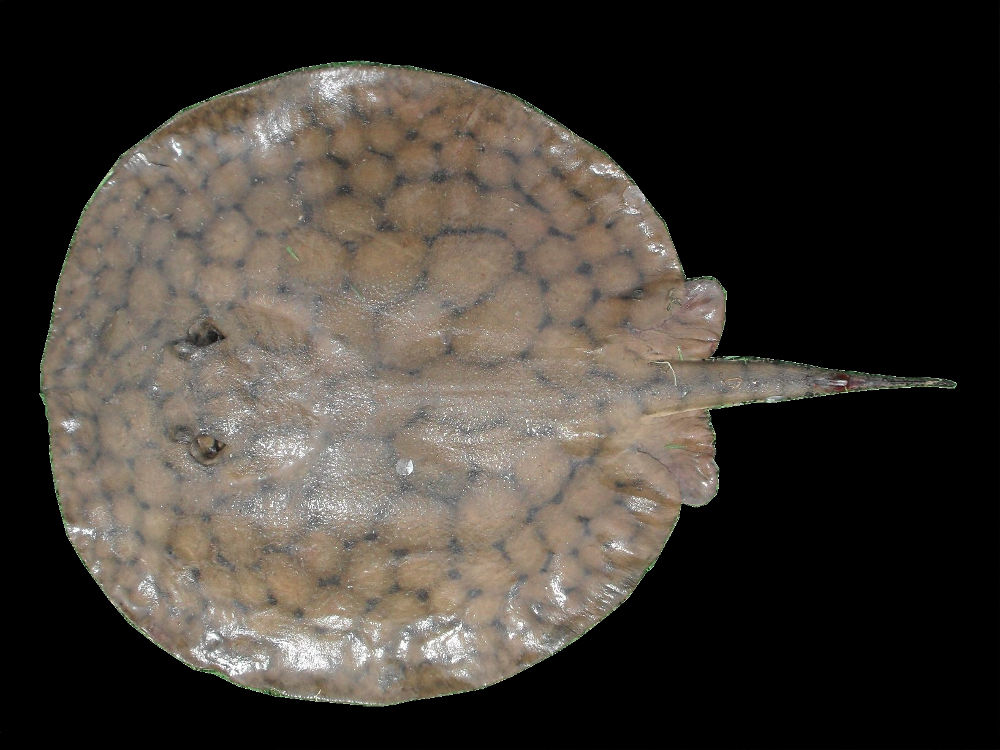
A giant freshwater stingray (Potamotrygon brachyura) traveled 170 kilometers upstream through Argentina’s Paraná River, marking the longest recorded movement for the species. Researchers from the Museo Provincial de Ciencias Naturales “Dr. Ángel Gallardo” confirmed the migration after tracking the animal via acoustic telemetry, establishing a new baseline for the river’s migratory predators.
Tracking the Movement of the Paraná Ray
The stingray, identified by researchers as a large female, was originally tagged near the city of Santa Fe. Over several months, acoustic receivers placed along the riverbed recorded its progression north, covering a total distance of 170 kilometers. This observation provides the first empirical evidence of such extensive migratory behavior for the Potamotrygon brachyura, a species typically thought to occupy more localized territories.
The study, led by biologists at the Museo Provincial de Ciencias Naturales, utilized a network of sensors to monitor the animal’s path through the complex hydrological system of the Paraná. Previous research often characterized these rays as sedentary, but the 170-kilometer transit challenges existing assumptions about their range. Acoustic telemetry works by attaching a small, battery-powered transmitter to the animal, which emits ultrasonic signals that are captured by stationary hydrophones (receivers) moored to the river bottom. This technology allows scientists to reconstruct the path of aquatic organisms without needing to maintain constant visual contact.
The Paraná River, one of the longest in South America, serves as a critical artery for biodiversity. The ability to track a benthic species—organisms that live on or near the bottom of a body of water—over such a distance is technically demanding due to the river’s high sediment load and variable flow rates, which can attenuate acoustic signals.
Scientific Significance of the Migration
The data collected suggests that the Paraná River’s ecological connectivity is more significant for bottom-dwelling species than previously documented. By analyzing the stingray’s path, the research team identified that environmental factors, including water flow and seasonal temperature shifts, likely influenced the animal’s decision to move upstream. In many riverine systems, large fish species undertake migrations to reach spawning grounds, follow nutrient-rich currents, or escape localized fluctuations in water quality.
This finding changes our understanding of how large predators interact with the Paraná basin. We have confirmed that these individuals are capable of traversing vast distances to seek specific habitats or reproductive conditions.
While the 170-kilometer journey is a record, researchers caution that it remains a single-subject observation. Future studies are required to determine if this behavior is common among the wider population or if it represents an isolated response to shifting river conditions. The Potamotrygon brachyura is the largest species within the Potamotrygonidae family, often reaching a disc width of over one meter. Their size and position as apex predators in the benthic zone make them essential indicators of river health. Because they lack the high-speed swimming capabilities of pelagic fish, their transit through 170 kilometers of river suggests a sustained, deliberate movement rather than a brief burst of activity.
Implications for River Management
The movement of this ray highlights the necessity of maintaining free-flowing river corridors in the Paraná basin. As regional authorities consider infrastructure projects that could alter water flow or create physical barriers, the discovery of long-distance migratory patterns in benthic species provides a new metric for environmental impact assessments. Dams and flood-control barriers are known to fragment aquatic habitats, often preventing the gene flow necessary for population stability in large, long-lived species.
According to the research team, the data underscores the importance of regional cooperation in monitoring aquatic wildlife. Because the Paraná traverses multiple jurisdictions, the ability of a single animal to move 170 kilometers means that local conservation efforts must be coordinated across provincial borders to be effective. If a species moves between different regulatory zones, protection must be standardized to prevent “gaps” in habitat preservation.
The tracking program is expected to continue through the end of 2026, with the team aiming to tag additional specimens to confirm if this migration pattern persists across different seasons. By expanding the sample size, the researchers hope to determine if this migration is linked to seasonal flood pulses—the natural, periodic rising and falling of river levels that drive the life cycles of many South American freshwater species. Understanding these triggers is essential for developing predictive models that can guide sustainable land and water management in the Paraná basin for the coming decade.
Sophie Williams is the Tech Editor at Headlinez.News, covering innovation, artificial intelligence, cybersecurity, and emerging technology trends. Before joining the publication, she worked as a technology correspondent and product analyst for multiple tech-focused media outlets. With a background in computer science and digital media, Sophie bridges technical depth with accessible reporting, bringing readers closer to the technologies transforming everyday life.
Expertise: Artificial intelligence, consumer tech, cybersecurity, startups, digital transformation.
Location: San Francisco, California, USA