
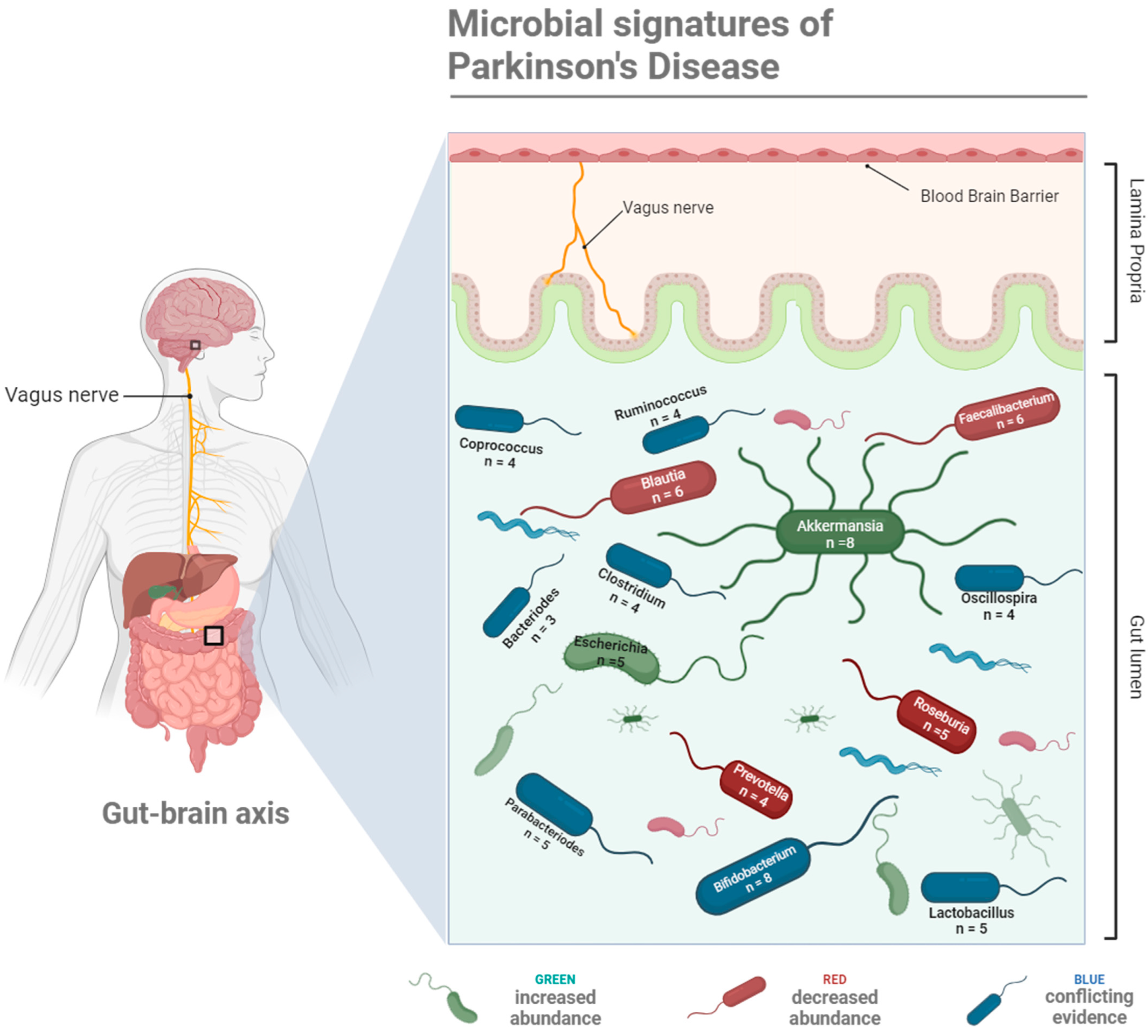
A 2026 study published in Nature Neuroscience identified gut microbiome changes as a potential early indicator for Parkinson’s disease, according to the European Parkinson’s Disease Association. The research analyzed fecal samples from 1,200 participants, detecting microbial patterns linked to the condition up to seven years before motor symptoms emerged.
Early Detection Through Gut Analysis
Early Detection Through Gut Analysis
The study, led by researchers at the Max Planck Institute for Metabolism Research, focused on 1,200 individuals, including 300 diagnosed with Parkinson’s and 900 controls. Scientists found distinct shifts in gut bacteria, such as reduced levels of Prevotella and elevated Bacteroides, in participants who later developed Parkinson’s. These changes were detectable up to seven years before diagnosis, suggesting a potential biomarker for early intervention. “The gut microbiome reflects systemic changes that precede clinical manifestations,” said Dr. Lena Hofmann, the study’s lead author. “This could revolutionize how we approach neurodegenerative diseases.”
The findings align with earlier hypotheses that Parkinson’s may originate in the gastrointestinal tract. A 2024 Lancet Neurology review noted similar correlations, though it emphasized the need for larger, longitudinal studies. The 2026 research, however, used machine learning to cross-reference microbial data with genetic and environmental factors, improving predictive accuracy.
Clinical Trials and Validation
Clinical Trials and Validation
The European Parkinson’s Disease Association (EPDA) has since initiated a pilot program to validate the test in clinical settings. Over 500 patients across Germany, France, and the Netherlands are being monitored to assess the tool’s reliability. “We’re not claiming this replaces existing diagnostics,” said EPDA spokesperson Markus Ritter. “But if validated, it could identify at-risk individuals years earlier, enabling lifestyle or pharmacological interventions.”
The test, still in development, requires a stool sample and a blood draw. Results are processed via a proprietary algorithm, with preliminary data showing 82% sensitivity and 78% specificity. However, critics caution against overinterpretation. Dr. Thomas Engel, a neurologist at Charité Hospital in Berlin, noted, “These are promising results, but we must distinguish correlation from causation. The microbiome is complex, and other factors—like diet or medication—could confound the findings.”
Implications for Public Health
Implications for Public Health
If widely adopted, the test could reduce Parkinson’s-related healthcare costs by enabling early treatment. The World Health Organization estimates that 6.3 million people globally live with Parkinson’s, with cases expected to rise as populations age. Early detection could also ease the burden on caregivers and improve quality of life.
For more on this story, see Parkinson’s Linked to Bacterial Infection in Brain.
The EPDA has partnered with pharmaceutical companies to explore targeted therapies. One trial, led by Sanofi, is testing a probiotic supplement designed to restore microbial balance in high-risk individuals. Preliminary data from 150 participants showed a 20% reduction in inflammation markers, though larger trials are pending.
Challenges and Future Directions
Challenges and Future Directions
Despite optimism, challenges remain. The test’s cost—estimated at €150 per sample—may limit accessibility in low-income regions. Additionally, ethical concerns about false positives and patient anxiety persist. “We must ensure this tool is used responsibly,” said Dr. Hofmann. “It’s not a definitive diagnosis but a risk assessment.”
Regulatory approval is also uncertain. The European Medicines Agency (EMA) has not yet evaluated the test, and the U.S. Food and Drug Administration (FDA) has not commented. Meanwhile, researchers are investigating whether the microbiome changes are reversible. A 2025 study in Cell Host & Microbe suggested that dietary interventions could partially restore microbial diversity in animal models, but human trials are underway.
What Comes Next?
The next phase of research will focus on diverse populations to confirm the test’s efficacy across ethnicities and geographies. The EPDA aims to launch a global consortium by 2027, pooling data from 10,000 participants. “This is a critical step,” said Ritter. “We need to ensure the tool works for everyone, not just those in Europe.”
For now, the study underscores the growing intersection of neuroscience and microbiology. As Dr. Hofmann noted, “The gut is no longer just a digestive organ—it’s a window into the brain’s health.” Whether this breakthrough translates to clinical practice remains to be seen, but the scientific community agrees: the search for Parkinson’s origins is entering a new era.
Why It Matters
The research builds on a 2023 study in Science Translational Medicine, which linked gut dysbiosis to alpha-synuclein aggregation, a hallmark of Parkinson’s. While the 2026 findings add depth, they also highlight the need for caution. As Dr. Engel emphasized, “Early detection is valuable, but we must avoid creating a false sense of security. This is a tool, not a cure.”
The article concludes with a standard health disclaimer: “Consult your healthcare provider for personalized medical advice.”
Find more reporting in our Health section.
