
The global race to build a practical quantum computer is gaining momentum, with European firms emerging as key contenders. This report profiles Pascale Senellart, a scientific advisor at the French startup Quandela, and her family’s multi-generational connection to the evolution of computing technology [[1]]. Quandela is distinguishing itself within the highly competitive field by pioneering a unique photonic approach to quantum computing, recently announcing a roadmap to achieve fault-tolerant quantum computing by 2030 [[2]],and having already secured sales to European clients [[3]].
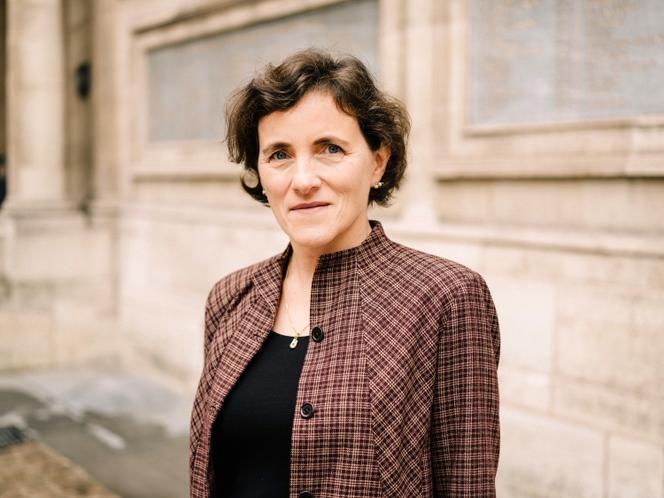
Pascale Senellart, 53, reflects on a family history deeply intertwined with the evolution of computing. “My father didn’t have a high school diploma. He became a technician in the army and then joined IBM, working on massive machines with punch cards. He was part of the dawn of the computer age. And now, sixty years later, I’m continuing that story by building the next generation with quantum computers. The symbolism is beautiful,” she says from the newly established offices of Quandela, the company she co-founded in 2017 in Massy, France.
Quandela, alongside Senellart in her role as scientific advisor, is at the forefront of the burgeoning quantum computing industry. The startup, co-founded with Niccolo Somaschi, now CEO, and Valérian Giesz, the current head of operations, is rapidly gaining international recognition as a key player in this technological revolution.
While competitors are exploring information processing using atoms or electrons to surpass the capabilities of traditional supercomputers, Quandela and Senellart are pioneering a different approach. They are harnessing photons – particles of light – forcing them to interact, overlap, and entangle to generate solutions at unprecedented speeds. This innovative method positions Quandela as a distinctive force in the race to unlock the full potential of quantum computing, a field poised to disrupt industries ranging from pharmaceuticals to finance.
Il vous reste 86.25% de cet article à lire. La suite est réservée aux abonnés.
