
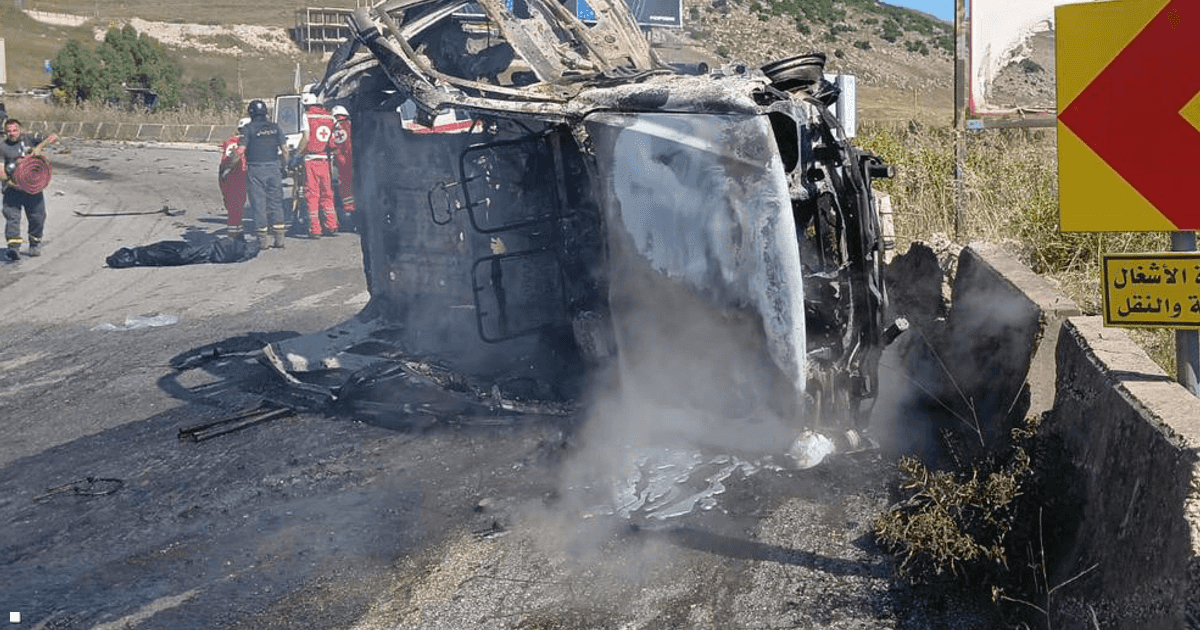
On June 6, 2026, Israeli forces struck a military vehicle in southern Lebanon, killing three Lebanese soldiers, prompting condemnation from Qatar and calls for international intervention, as tensions escalate along the Israel-Lebanon border. The attack, which occurred near Kfar Tabyat in Nabatiye, has intensified regional concerns over the fragile ceasefire and raised questions about the evolving dynamics between Israel and Lebanon.
Israeli Airstrike Kills Three Lebanese Soldiers
The Lebanese army confirmed the deaths of three soldiers, including two officers, in an Israeli airstrike targeting a military vehicle on the Khartoune-Nabatiye road. According to a statement from the Lebanese military, the attack occurred amid ongoing Israeli bombardments across southern Lebanon, which have killed at least 20 people, including a medic, in recent days. The strike also damaged infrastructure and prompted mass evacuations in several towns, as reported by Monte Carlo International. “The attack constitutes a blatant violation of Lebanese sovereignty and international law,” Lebanese President Joseph Aoun stated, condemning the assault as part of a “continuous escalation” that threatens southern stability.
Sky News Arabia reported that Israeli warplanes conducted multiple strikes on southern towns, including Saksika, Jwayya, and Sarafand, following warnings from the Israeli military. The Lebanese army attributed the attack to a “sudden and unprovoked” Israeli operation, while the Israeli Defense Forces (IDF) claimed the vehicle was targeted after being identified as a “threat to its forces.”
Israeli Military Justifies Attack as Self-Defense
The Israeli military stated it had “identified a suspicious vehicle moving toward its forces near Kfar Tabyat in southern Lebanon” and targeted it after receiving “warnings of an imminent attack.” In a statement released by Xinhua, the IDF emphasized that the area was an “active combat zone” that had been evacuated, adding that the strike was a “necessary measure to protect its troops.” The military also reiterated its stance that it is “fighting Hezbollah, not the Lebanese army,” though it acknowledged the incident is under investigation.
However, the Lebanese army disputed this narrative, asserting that the vehicle was a “military patrol” and that the attack was “a clear violation of the ceasefire agreements.” The IDF’s statement noted that “Hezbollah is active in the area,” a claim corroborated by Monte Carlo International, which reported that Hezbollah forces were conducting operations in Zawtah and Chiyah, near the strike site.
Regional Condemnation and Calls for International Action
Qatar joined international condemnation of the attack, with the Qatari Foreign Ministry denouncing the strike as an “aggression” against Lebanon and urging the international community to “hold Israeli authorities accountable.” The statement, cited by Sky News Arabia, called for “immediate action to halt these recurring attacks and ensure respect for international resolutions.”
Lebanese President Aoun echoed these calls, stating that the attack “poses a direct threat to the country’s security and the stability of the region.” He reiterated Lebanon’s appeal to the international community to “enforce existing resolutions and prevent further violations.” The Lebanese military also accused Israel of failing to adhere to the “conditional truce” brokered after recent U.S.-led negotiations, which required Hezbollah to cease fire and withdraw from border areas in exchange for Lebanese army deployments in “experimental zones.”
The incident has reignited fears of a broader conflict, as both sides continue to escalate tensions. Hezbollah, which has been actively engaging in cross-border operations, has not yet issued a formal response, but Monte Carlo International reported that the group has intensified its presence in eastern Zawtah and Chiyah, areas near the strike site.
Implications for the Fragile Ceasefire
The attack underscores the precarious state of the Israel-Lebanon ceasefire, which has been repeatedly tested by sporadic clashes and Israeli airstrikes. While the truce has prevented a full-scale war, it remains a “tenuous arrangement,” according to analysts. The Lebanese military’s statement emphasized that the attack “has undermined the fragile peace” and raised concerns about the effectiveness of U.S.-led diplomatic efforts to stabilize the region.

The international community’s response will be critical in determining the next steps. Qatar’s condemnation, alongside statements from other Arab nations, signals growing regional pressure on Israel to de-escalate. However, the IDF’s insistence on self-defense and its focus on Hezbollah’s activities suggest that Israel may continue its current approach unless there is a significant shift in diplomatic engagement.
As the situation evolves, the potential for further violence remains high. The Lebanese army has warned of “continued vigilance,” while the IDF has reiterated its commitment to “protecting its borders.” For now, the strike serves as a stark reminder of the fragile balance in a region where every action risks tipping the scales toward renewed conflict.
<a href="https://www.skynewsarabia.com/middle-east/1873506-%D8%A7%D9%84%D8%AC%D9%8A%D8%B4-%D8%A7%D9%84%D9%84%D8%A8%D9%86%D8%A7%D9%86%D9%8A-%D9%8A%D8%B9%D9%84%D9%86-%D9%85%D9%82%D8%AA%D9%84-3-%D8%B9%D8%B3%D9%83%D8%B1%D9%8A%D9%8A%D9%86-%D8%BA%D8%A7%D8%B1%D8%A9-%
