
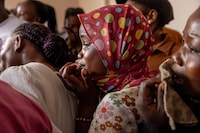
The Centers for Disease Control and Prevention (CDC) warned on June 5, 2026, that the Ebola outbreak in the Democratic Republic of the Congo (DRC) and Uganda could surpass the scale of the 2014-2016 West Africa epidemic if containment efforts fail, citing dire modeling projections. The outbreak, driven by the Bundibugyo virus, has already recorded 378 confirmed cases and 63 deaths as of June 2, with the potential to grow into one of the largest Ebola outbreaks in history under low-isolation scenarios, according to analyses published in the MedPage Today and Washington Post.
CDC Models Project Dire Outbreak Trajectories
The CDC’s modeling, released on June 5, outlined stark possibilities for the outbreak’s progression. Under scenarios where only 20% of Ebola patients isolate—described as a “poor” isolation rate—there is a 65% chance cases could exceed 20,000 within three months, with over 4,000 deaths, the MedPage Today reported. Even with a 50% isolation rate, the agency warned of “very large outbreaks,” with 76% of simulations predicting at least 20,000 cases and 87% forecasting 4,000 deaths by August 2026. These projections, based on data through May 24, highlight the virus’s potential to eclipse the 2014-2016 West Africa outbreak, which claimed 28,000 cases and 11,000 deaths.
“If large-scale and sustained public health interventions are not rapidly implemented to reduce disease transmission, this outbreak could become as large as the 2014-2016 West Africa Ebola virus disease outbreak,” the CDC cautioned in the MedPage Today analysis. The models assume no specific vaccines or treatments for the Bundibugyo strain, which has no approved therapies, and emphasize the critical role of isolation in curbing transmission.
Challenges in Containment and Detection
The outbreak’s trajectory is further complicated by factors in Ituri Province, the epicenter in DRC, where armed conflict, population displacement, and limited healthcare access hinder response efforts. “The scope of the outbreak is likely larger than that represented by available data and might prove challenging to contain and control,” the KGOU reported, citing CDC analyses. Initial response efforts were also hampered by the fact that standard Ebola tests failed to detect the Bundibugyo strain, delaying identification of cases.

For more on this story, see WHO Chief to Meet Congo President Amid Possible Ebola Outbreak..
“Our models today are built on current data and our understanding of current conditions,” said Jason Asher, director of the CDC’s Center for Forecasting and Outbreak Analytics, during a press briefing. “They’re designed to support action, not to generate alarm.” Despite these challenges, the CDC stressed that the outbreak’s future remains “very much within our control” if isolation rates improve, with a 70% isolation rate projected to limit cases to fewer than 10,000 in three months.
Expert Reactions and Global Call to Action
Public health experts echoed the CDC’s warnings, emphasizing the urgency of international intervention. Dr. Krutika Kuppalli, an infectious diseases physician at UT Southwestern Medical Center, called the projections “concerning,” noting that the Bundibugyo outbreak “could grow into one of the largest Ebola outbreaks ever recorded” under worst-case scenarios. She urged the global community to act swiftly, stating, “The findings should serve as a call to action for the international community.”
This follows our earlier report, DRC Ebola hospitals overwhelmed: 60% mortality in North Kivu, Ituri.

Jennifer Nuzzo, director of the Pandemic Center at Brown University School of Public Health, reinforced this sentiment, saying the CDC analysis “affirms what we have worried about since the beginning: This outbreak is following a dangerous trajectory and will get a lot worse unless we do more to stop it at its source.” Lawrence Gostin, director of the World Health Organization Collaborating Center for National and Global Health Law, criticized the CDC’s delayed response but acknowledged the report as a “step in the right direction.”
The World Health Organization (WHO) declared the outbreak a public health emergency of international concern on May 17, 2026, citing its potential to spread across borders. However, the agency’s statement noted that the situation does not meet the threshold for a pandemic emergency under the International Health Regulations (IHR).
What Comes Next?
The CDC’s models underscore the critical importance of rapid, coordinated action to boost isolation rates and improve detection. “The future of this outbreak is still very much within our control,” Kuppalli said, adding that “sustained public health interventions” are essential to prevent a worst-case scenario. However, the outbreak’s location in a conflict zone and the absence of targeted treatments or vaccines complicate efforts. As the WHO and local authorities work to expand containment measures, the coming weeks will determine whether the outbreak remains manageable or escalates into a historic crisis.
