
Meta Quest 3 Surpasses Quest 2 as Most Popular VR Headset on Steam
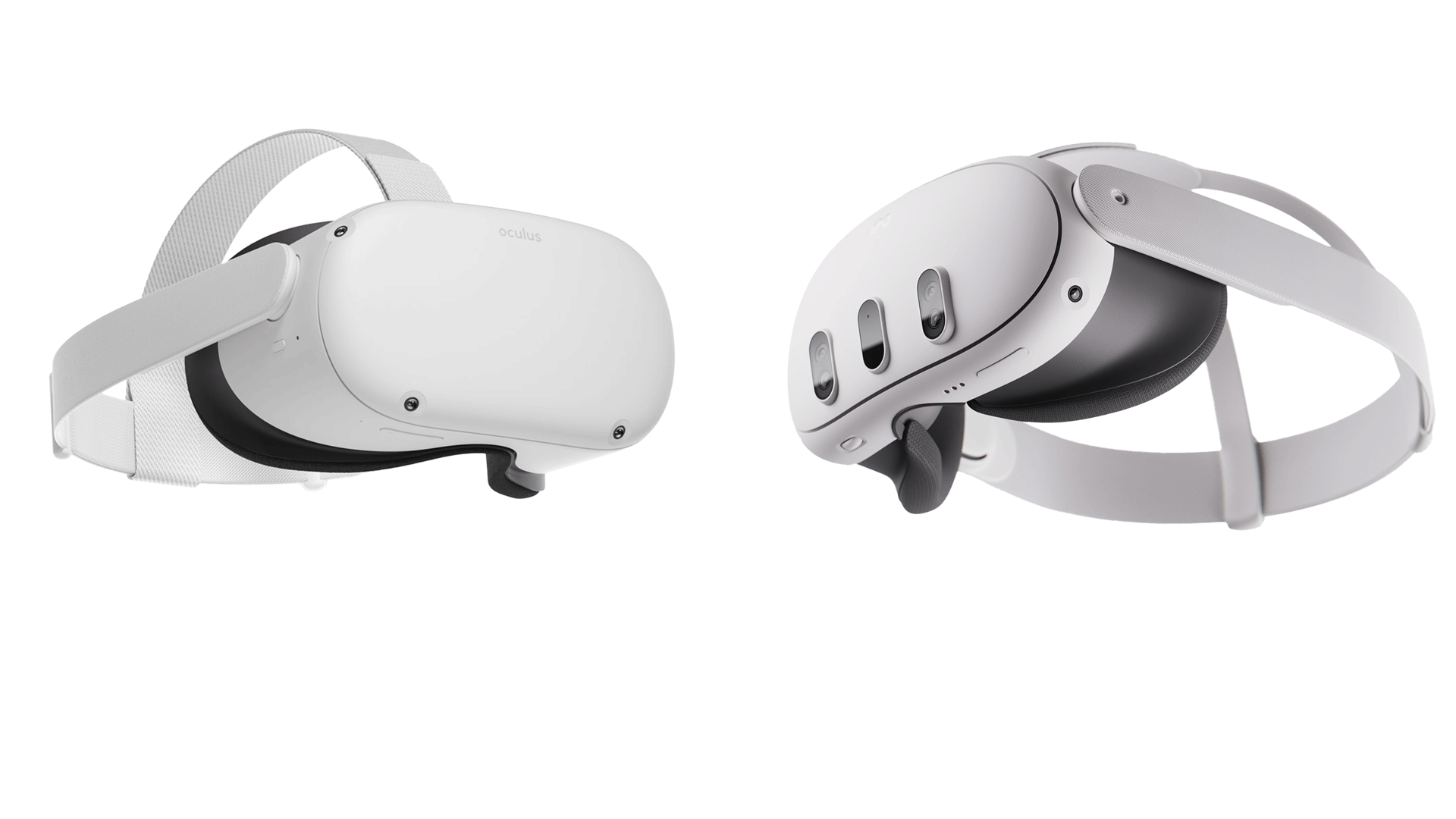
Meta’s Quest 3 has become the most-used virtual reality headset on the Steam platform, ending the four-and-a-half-year reign of the Quest 2.
The latest Steam Hardware & Software Survey data, released today, shows the Quest 3 holding a 26.68% share of monthly-connected VR headsets, slightly ahead of the Quest 2’s 26.17%. The shift marks a significant milestone in the adoption of the newer headset, which launched on October 10th, 2023. Valve’s Index remains a distant third with 13.47% market share.
While the Quest 2 experienced a rapid rise to dominance, particularly during the COVID-19 pandemic when demand for at-home entertainment surged, the Quest 3’s ascent took nearly two years. This slower adoption was partially attributed to a higher price point and the absence of a single, compelling “killer app” for its mixed reality capabilities. The growing popularity of the Quest 3 and its sibling, the Quest 3S (currently at 7.87% share), combined represent over 34% of VR headsets used on Steam, signaling a clear generational shift.
This change in market share is expected to influence developer priorities, potentially leading to increased focus on optimizing content for the Quest 3 and 3S’s advanced features, including its improved mixed reality capabilities. Meta has long positioned mixed reality as a key component of its VR strategy, and this transition could unlock further innovation in that space. You can learn more about the evolution of VR technology at Road to VR.
Meta officials anticipate that developers will now prioritize the newer headsets, paving the way for more immersive and feature-rich experiences tailored to the Quest 3 and 3S platforms.
Nearly two years after its launch, Quest 3 has finally claimed the top spot as the most-used VR headset on Steam. Though the metric is measured by Steam’s stats, the importance of the milestone has little to do with PC VR.
The News
Quest 2’s four-and-a-half year streak as the most-used VR headset on Steam has finally come to an end, dethroned by Meta’s own Quest 3. Fittingly, Quest 3’s ascendance comes almost exactly two years after the headset was first released on October 10th, 2023.
That’s according to the latest Steam Hardware & Software Survey, which reports some baseline statistics about what kind of hardware and software is used by the platform’s population, and to see how things are changing over time, including the use of VR headsets.
The latest data shows that Quest 2 has fallen to 26.17%, while Quest 3 just barely ahead for the first time with 26.68% of the share of monthly-connected VR headsets on the platform.
The next closest headset is Valve’s own Index, coming in at a distant third with 13.47% share.
While it took Quest 3 two years to steal the throne, Quest 2 had a more meteoric rise. It took just a few months after release for Quest 2 to overtake the then-reigning champion, Rift S. And it held onto the #1 spot for a staggering four-and-a-half years… until now.
Released back in October 2020, Quest wasn’t just a more affordable and refined version of Meta’s promising new line of standalone ‘Quest’ headsets. It was also launched right in the midst of the Covid-19 pandemic and the lockdowns that ensued; a time when people were looking for ways to connect and escape without leaving their homes.
While Quest 2 was launched as the company’s most affordable standalone headset to date, Quest 3 launched with a higher price and without the boost of a global pandemic. It may have taken two years for it to take the crown as the most-used VR headset on Steam, but that doesn’t make the moment any less important.
My Take
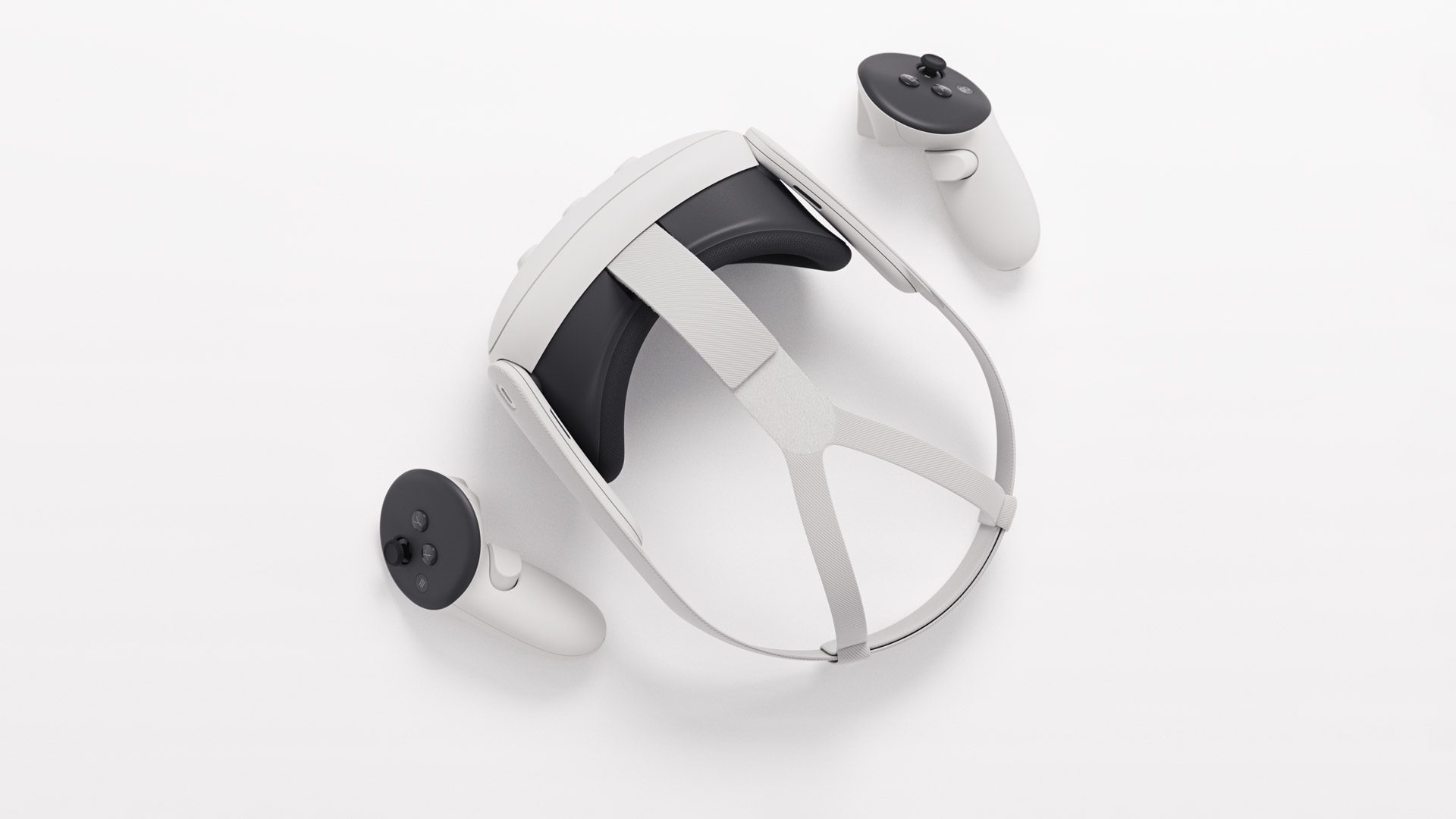
Quest 3’s rise to the most-used headset on Steam actually has little to do with PC VR. More importantly, I see it as the most concrete sign we have that the transition between Quest 2 and Quest 3 is finally tipping toward the latter.
This has important implications for developers and Meta’s VR ecosystem.
At launch, Quest 3 was heavily marketed around its “mixed reality” (AKA passthrough AR) capabilities. Indeed it had significantly higher resolution passthrough cameras with color—a huge improvement over the grainy, black & white passthrough capabilities of Quest 2.
But with such a huge population of Quest 2 headsets, developers had little incentive to build mixed reality content that only worked well on Quest 3. And so most developers stayed focused on building pure VR content that would run just as well on either headset.
Even among the pure VR content, many developers weren’t initially focused on tapping Quest 3’s extra power and resolution; understandably, it was difficult to commit the resources to optimizing for a headset that was just getting a foothold among the Quest population.
That led to a string of major releases that launched either without consideration for Quest 3 at all, or at best, an eventual post-launch patch with improvements for Quest 3. Even Meta’s own major first-party release, Asgard’s Wrath 2 (2023), wasn’t well optimized for Quest 3 at launch; it took five months before the game was finally updated to tap the headset’s greater power and visual quality.
Today, I think we can say the tide has finally shifted. Quest 3 is not only the most used headset on Steam; its sibling, Quest 3S, has nearly the same capabilities, and itself holds a 7.87% share of VR headsets used on Steam. Combined, the two headsets make up 34.55% of the headsets used on Steam.
The shift between generations is undeniably here.
That’s not to say that Quest 2 is out for the count. It’s still the second-most used headset on Steam and surely makes up a huge portion of active Quest users overall. But whereas Quest 2 had clearly been the primary focus for most developers, the time has come for Quest 3 and 3S become the greater priority.
The shift was a long time coming, especially for Meta. The company had been banking on mixed reality as a killer feature for its new headsets; even if it was (and I’d argue the company still hasn’t proven that out), Meta’s own success with the proliferation and longevity of Quest 2 prevented mixed reality from taking center stage. As I wrote back in 2023, a late surge in Quest 2 sales, a higher price point for Quest 3, and a lack of a ‘killer app’ for mixed reality slowed the transition to the next generation seemingly more than Meta would have liked. Hence it taking a whole two years for Quest 3 to finally eclipse Quest 2 as Steam’s #1 headset.
Now as Quest 3 and 3S are ready to take the spotlight among developers, users may start to see more of the mixed reality vision that Meta had promised at the launch of Quest 3.
