
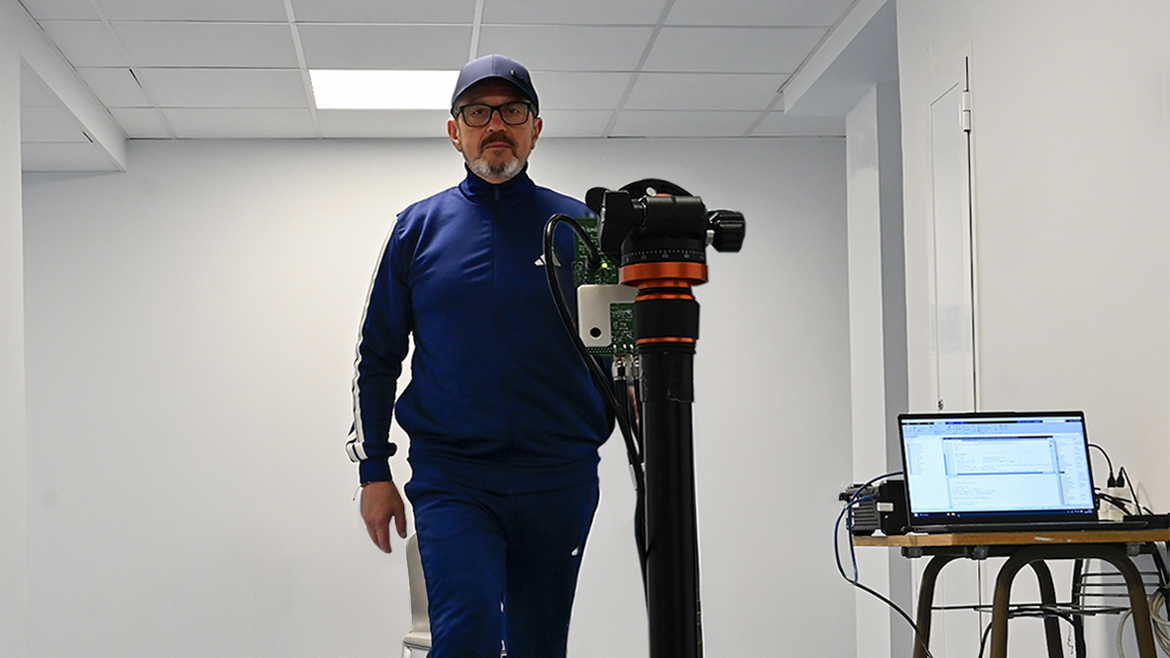
The Gregorio Marañón University Hospital, in collaboration with the Polytechnic University of Madrid, has developed a radar-based system capable of detecting Parkinson’s disease in its early stages by analyzing changes in a person’s gait.
The technology works by emitting radiofrequency waves and analyzing their echoes, using the Doppler effect to monitor subtle movements such as stride length, foot speed, torso motion, and arm swing. This allows for an objective assessment of walking patterns associated with Parkinson’s.
According to Francisco Grandas, head of the Neurology Service at Gregorio Marañón, the system can distinguish between healthy individuals and those with Parkinson’s with accuracy comparable to existing diagnostic methods. He added that the tool opens the possibility of studying gait not only in diagnosed patients but likewise in those at risk due to familial or other factors, even before clinical symptoms appear.
Researchers are currently focused on identifying minute motor alterations in individuals who do not yet meet clinical criteria for Parkinson’s but have an increased risk of developing the disease. The method offers a comfortable, accessible, and non-invasive alternative that could be used in routine clinical settings rather than solely in experimental environments.
The innovation, reported in early April 2026, represents a step forward in the early detection of neurodegenerative conditions, potentially enabling earlier intervention and monitoring for at-risk populations.
