
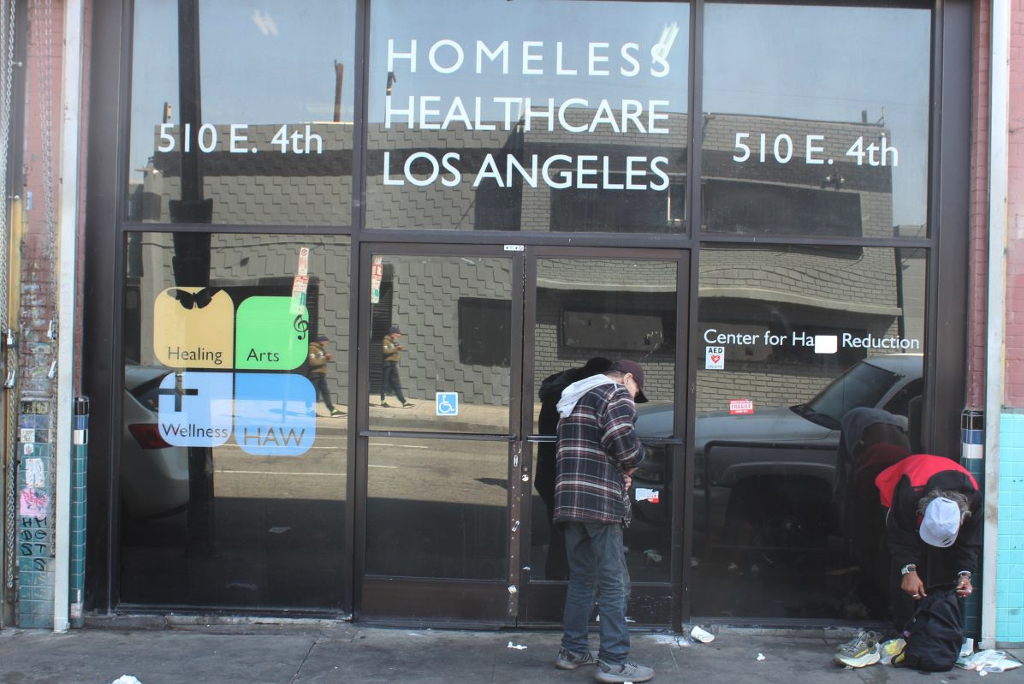
L.A. County Homelessness Policies Lack Empirical Evidence, Report Finds
A new report alleges that key policies guiding Los Angeles County’s approach to homelessness – including Harm Reduction and Housing First – are not supported by robust data demonstrating their effectiveness.
The report, detailed in findings released today, questions the evidence cited by officials like L.A. County Department of Public Health Director Dr. Barbara Ferrer to justify programs such as the distribution of drug paraphernalia in public parks. During an April 2024 public meeting, Dr. Ferrer defended these practices by stating Harm Reduction has a “proven history” of reducing overdose deaths and maintaining housing. However, when asked to quantify the benefits, she responded that public health data relies on “trend lines” and “modeling,” adding, “We want to keep people alive, so they have a second chance, and they can be all they can be.” The report claims she later failed to provide promised supporting documentation.
Concerns extend to the “No Barrier” Housing First policy, which prioritizes providing shelter regardless of mental health or substance abuse status. Critics point to a 2018 report from the National Academies of Sciences, Engineering, and Medicine finding “little evidence” that Permanent Supportive Housing (PSH) improves health outcomes, except in cases involving individuals with HIV/AIDS. Furthermore, the accuracy of Los Angeles Homeless Services Authority’s (LAHSA) annual Point-in-Time (PIT) count is under scrutiny, with a recent LAist report suggesting a potential undercount of as many as 7,900 people – a figure exceeding reported decreases in the homeless population. This data is crucial as it directly impacts the allocation of Measure A funding.
The report’s author, Tim Campbell, a veteran public servant with a background in municipal performance auditing, argues that rhetoric is being substituted for proof and calls for leaders to demand change if current strategies aren’t working. The findings come as Los Angeles continues to grapple with a significant homelessness crisis, and the debate over effective solutions intensifies.
Officials have stated they will continue to evaluate programs and adjust strategies based on available data, but have not yet responded directly to the report’s specific criticisms.
