
Economic hardship is increasingly top of mind for Russian citizens, with a recent survey revealing it’s now among the leading concerns they would raise with president Vladimir Putin. The shift in public sentiment – fueled by ongoing geopolitical factors adn western sanctions – signals growing pressure on the Kremlin as everyday Russians grapple with a worsening economic climate. Recent polling data indicates rising pessimism about future living standards and a deepening sense of financial insecurity across the country.
Foto:afp/scanpix/leta
Growing economic concerns are increasingly weighing on the minds of Russian citizens, with a deepening crisis becoming a central question they would pose to President Vladimir Putin, according to reports. The shift in public focus highlights the impact of ongoing geopolitical events and Western sanctions on everyday life in Russia.
VIDEO. “Many leave their carts and leave.” Self-checkout lanes create chaos and confuse shoppers
Kokteilis
These zodiac signs will receive a clear hint “from above” and completely change their lives next year
TV24
“Wailing that everyone is sinking into poverty is untrue, Latvians have more and more money,” Bergs on “difficult” life in Latvia
Read other news
For the first time since the start of the war in Ukraine, the economic situation ranked as one of the top three issues Russians would like to address with Putin, according to a recent survey by the Levada Center. Eight percent of respondents indicated they would ask the president about the state of the economy, specifically when the current economic downturn will end, why prices continue to rise, and why the government is increasing the value-added tax (VAT).
Concerns about personal finances are also prominent, with 16% of respondents expressing interest in when incomes, pensions, and overall living standards will improve. This focus on personal well-being represents the second most popular topic Russian citizens want to discuss with Putin.
Further confirming the growing sense of unease, other sociological studies echo these findings. According to data from the Public Opinion Foundation, a polling organization close to the Russian government, the proportion of Russians who believe life in the country will worsen next year has reached 17%, the highest level since the beginning of Russia’s full-scale invasion of Ukraine. This increasing pessimism suggests a growing disconnect between official narratives and the lived experiences of Russian citizens.
“Gallup” research paints an even more sobering picture: 39% of Russians report a deterioration in the economic situation in their regions. For comparison, 33% thought so a year ago, 34% in 2023, and 29% in 2022. The current mood represents one of the worst levels in the last 20 years, with more negative assessments only recorded during the 2009 global financial crisis and the Covid-19 pandemic.
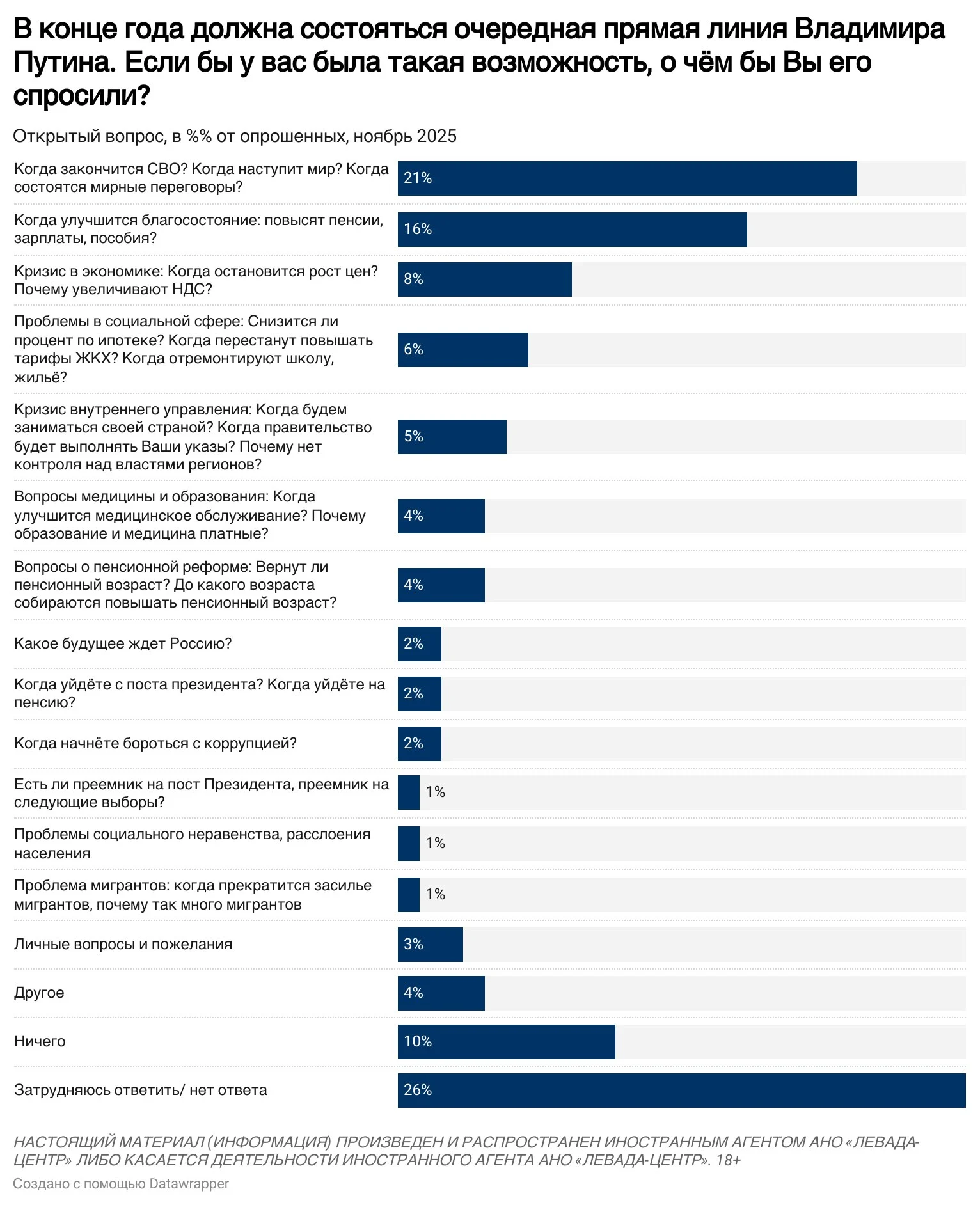
Foto: dialog.ua.
Topics
FB.init({ appId: '', cookie: false, xfbml: true, version: 'v3.1' });
FB.AppEvents.logPageView();
FacebookIsReady = true; if (typeof FacebookIsReadyCallback != 'undefined') { FacebookIsReadyCallback(); } };
(function(d, s, id){ var js, fjs = d.getElementsByTagName(s)[0]; if (d.getElementById(id)) {return;} js = d.createElement(s); js.id = id; js.src = "https://connect.facebook.net/en_US/sdk.js#xfbml=1&version=v3.2"; fjs.parentNode.insertBefore(js, fjs); }(document, 'script', 'facebook-jssdk'));
