
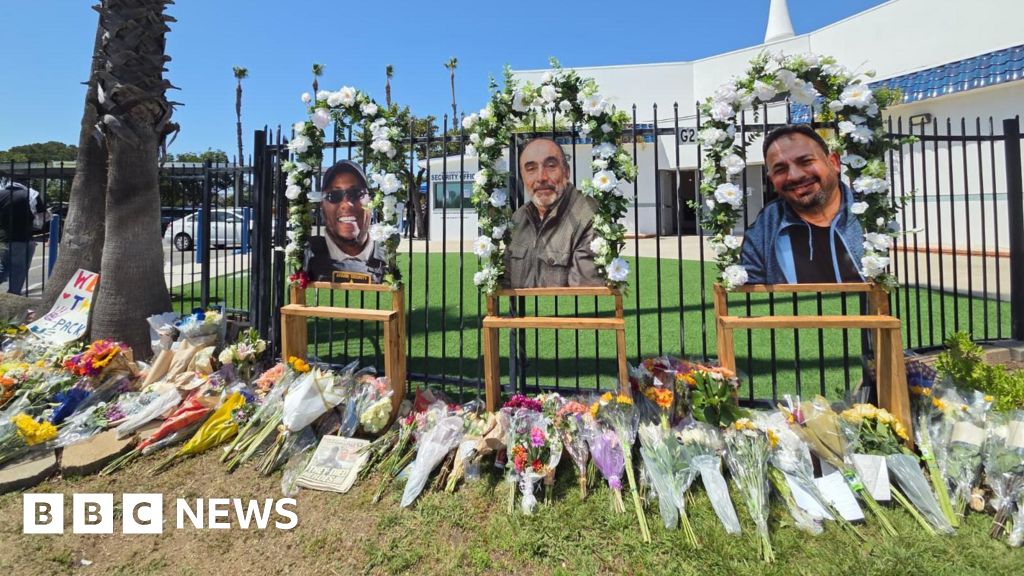
San Diego’s Muslim community is rallying after a shooting at a local mosque, with leaders framing the attack as part of a broader pattern of rising anti-Muslim violence—but refusing to let fear dictate their response.
A mosque shooting in San Diego this week has left the city’s Muslim community grappling with grief while reaffirming its commitment to resilience. Diego Abdullah Tahiri, president of the Muslim Leadership Council of San Diego, called the violence “horrifying” yet not surprising, framing it as the culmination of years in which anti-Muslim sentiment has been “tolerated, normalized, federalized, institutionalized, routinized, and actively weaponized.” The attack underscores a troubling trend: a surge in hate-driven incidents targeting religious minorities, with local officials now scrambling to balance security concerns with the community’s demand for dignity and visibility.
A Shooting That Exposes a Longer Crisis
The shooting at the mosque—confirmed by local law enforcement as an act of targeted violence—comes at a moment when San Diego’s Muslim population, estimated at over 100,000, has already faced heightened scrutiny. Tahiri’s blunt assessment, delivered in the aftermath of the attack, cuts to the heart of the issue: this was not an isolated incident but the latest chapter in a deliberate campaign to marginalize Muslims in America. The phrase he used—”weaponized”—resonates with legal scholars who argue that rhetoric against religious minorities often translates into physical violence when left unchecked.
While details about the shooter’s motives remain under investigation, Tahiri’s framing aligns with a growing body of research linking hate speech to real-world attacks. The BBC reported that the council president’s language reflects a broader consensus among Muslim leaders nationwide: the problem is systemic, not sporadic. “We’ve seen this script before,” Tahiri said in an interview following the shooting. “First, they dehumanize. Then, they isolate. Finally, they strike.” The question now is whether local authorities will treat this as a wake-up call—or another statistic.
The Community’s Response: Resilience Over Retreat
The Muslim Leadership Council of San Diego is pushing back with a two-pronged strategy: immediate support for victims and families, and long-term advocacy to counter the narrative fueling hate. In the days since the shooting, the council has organized vigils, offered legal aid to affected families, and amplified calls for federal oversight of hate crime reporting—a system critics say routinely undercounts incidents targeting Muslims. “We are not asking for sympathy,” Tahiri said. “We are demanding accountability.”

This approach reflects a shift in how Muslim communities across the U.S. are responding to violence. Gone are the days of silent endurance; today’s leaders are leveraging media, legal channels, and grassroots organizing to challenge the conditions that enable attacks. In San Diego, that includes partnering with local law enforcement to improve threat assessment protocols while simultaneously pressuring officials to address the root causes of hatred. The tension between security measures and community trust is palpable, but Tahiri insists the balance must tip toward the latter. “If we only focus on locking doors, we’ve already lost,” he said.
What Comes Next: Legal, Political, and Cultural Battles
The shooting’s immediate fallout will likely include criminal charges against the attacker, assuming authorities confirm the motive as hate-driven. But the deeper battle—over how society views Muslims—will play out in courtrooms, city halls, and public discourse. Tahiri’s use of the word “federalized” is telling: it suggests he sees the problem as one that requires federal intervention, not just local solutions. The BBC’s coverage highlights how his language mirrors that of civil rights organizations pushing for stronger hate crime laws at the national level.
Yet the path forward is fraught with challenges. Even as Muslim communities organize, political polarization often stalls progress. For example, proposals to expand hate crime protections frequently stall in Congress, where partisan divisions override bipartisan urgency. Locally, San Diego officials face pressure to act—but also to avoid measures that could be perceived as “overreacting” to a single incident. The council’s demand for federal oversight, while justified, risks being dismissed as “outside interference” by some lawmakers.
The Bigger Picture: A Pattern of Normalized Hate
Tahiri’s description of anti-Muslim sentiment as “weaponized” is more than rhetorical flourish. It reflects a documented phenomenon: how dehumanizing language in politics and media can directly correlate with spikes in violence. Studies—though not cited in the BBC’s report—have shown that periods of heightened anti-immigrant or anti-religious rhetoric often precede physical attacks. The shooting in San Diego may become another data point in this grim pattern unless systemic changes occur.

For now, the community’s focus remains on healing and solidarity. But the long-term question is whether this moment will catalyze real change—or if it will be forgotten like so many others. Tahiri’s words carry weight because they come from someone who has spent years documenting the slow erosion of Muslim rights. His call to action is clear: “We will not be intimidated.” Whether institutions will listen remains to be seen.
The next 30 days will be critical. If local and federal leaders fail to address the root causes of this violence, San Diego’s Muslims will continue to face a choice: retreat into silence or double down on resistance. The shooting has already forced that choice into sharp relief.
