
NATO Allies Clash Over Response to Russian Airspace Incursions
Disagreements are surfacing among NATO members regarding how to respond to a recent increase in Russian military incursions into allied airspace, exposing rare public divisions within the treaty organization.
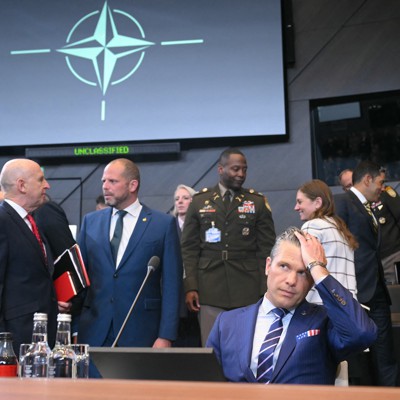
The debate centers on whether to actively intercept and potentially shoot down Russian aircraft and drones violating NATO airspace. Secretary-General Mark Rutte reportedly argued to colleagues yesterday that shooting down crewed Russian aircraft would project weakness, while Danish Army chief Maj. Gen. Peter Harling Boysen advocated for a more assertive stance: “Shoot down Russian drones, period.” These differing views were highlighted ahead of a defense ministers’ meeting in Brussels. Recent incidents include two dozen unarmed Russian drones entering Polish airspace last month, some of which were downed by Poland, and Russian fighter jets briefly crossing the Estonian border, prompting only an escort response from Tallinn.
The lack of a standardized NATO policy for such incursions means each nation is handling incidents on a case-by-case basis. Czech President Petr Pavel has urged allies to demonstrate a greater willingness to intercept both drones and planes, a sentiment that drew a visible reaction from Estonian Defense Minister Hanno Pevkur. Several officials believe these incursions are a deliberate Russian tactic to exploit divisions within the alliance, as described by Norwegian Lt. Gen. Pasi Välimäki, who stated Russia is “trying to undermine the aligned cohesion, and also to undermine the support to Ukraine.” This comes as NATO continues to bolster its eastern flank following Russia’s invasion of Ukraine – you can learn more about NATO’s response on the official NATO website.
Despite the disagreements, several nations pledged increased military aid to Ukraine at Wednesday’s summit, including Germany’s commitment of €2 billion for interceptors and ammunition, and Lithuania’s $30 million contribution to purchase U.S. weapons. The United States is also facing scrutiny over its future commitment to European security, with concerns that a potential shift in focus towards the Western Hemisphere could lead to reduced troop deployments, a possibility that has spurred increased defense spending among European allies.
Officials anticipate further discussion and potential policy adjustments in the coming weeks as NATO seeks to present a unified front against continued Russian provocations.
