
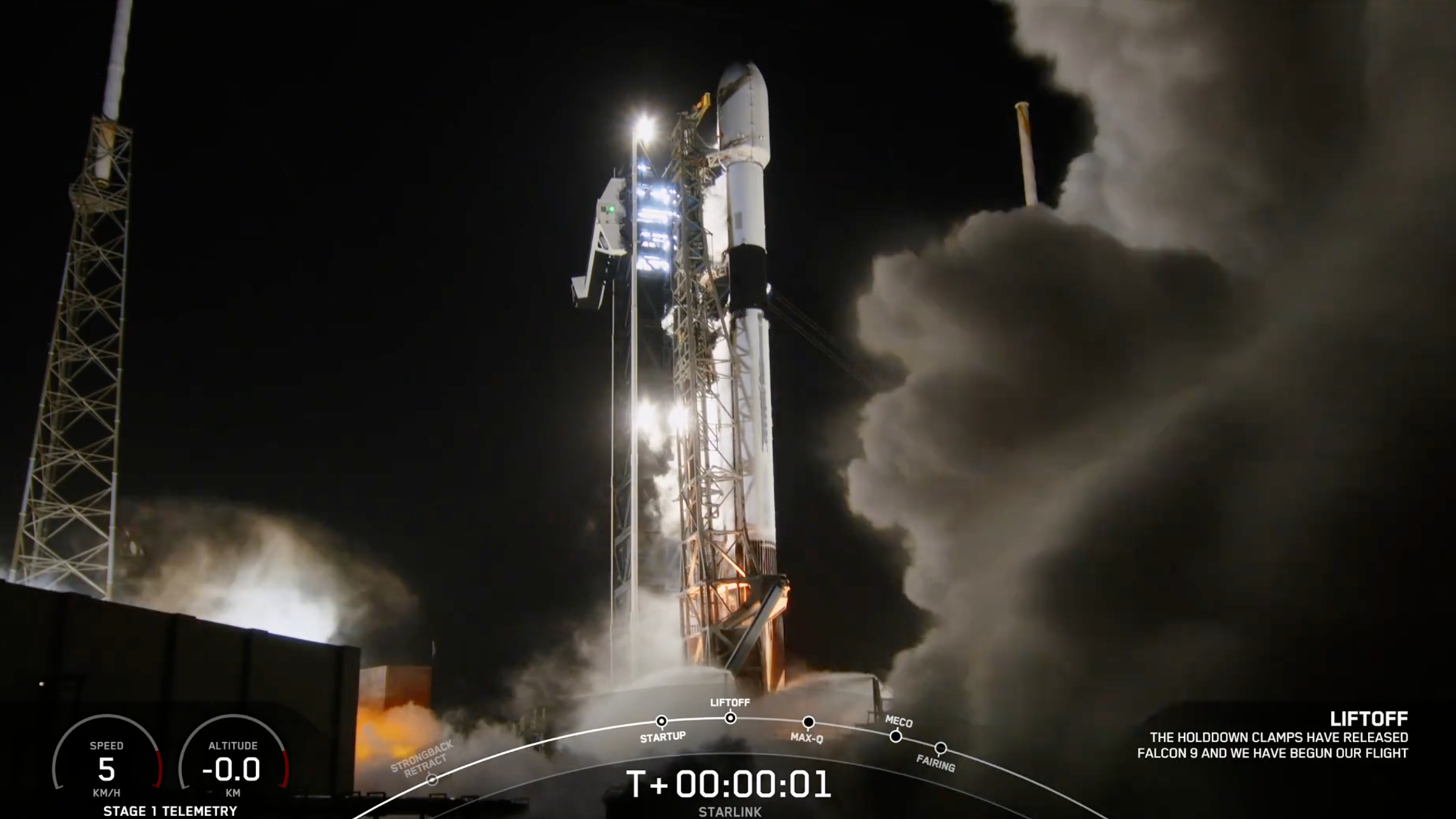
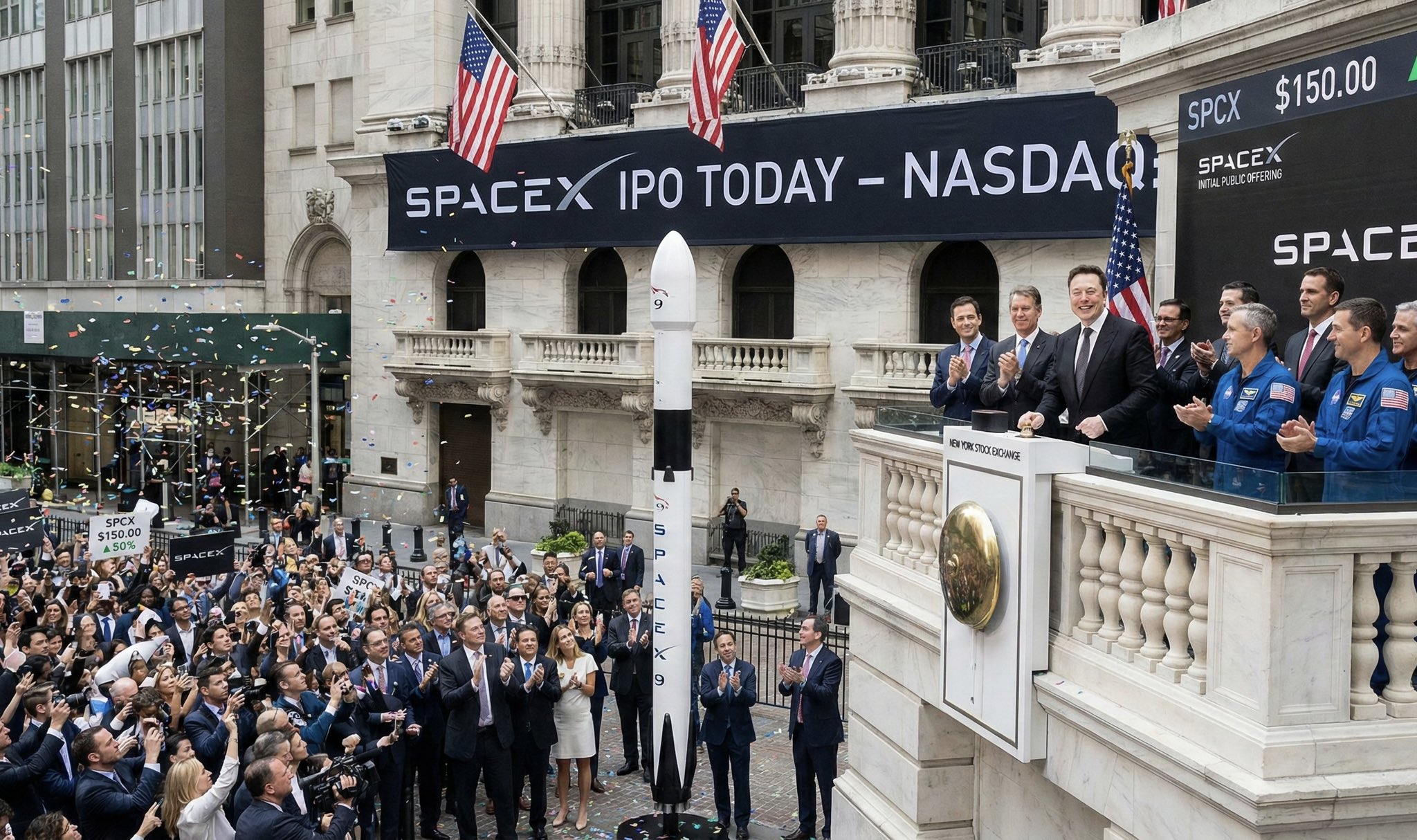
SpaceX filed confidentially for an initial public offering in April 2026, with sources indicating a potential valuation exceeding $1.75 trillion—making it the largest IPO in history. The move follows the company’s February 2026 merger with Elon Musk’s AI firm xAI, creating a combined entity valued at $1.25 trillion.
A Trillion-Dollar Valuation and the IPO Race
SpaceX’s confidential IPO filing, first reported by Bloomberg and later confirmed by CNBC, marks a pivotal moment for the aerospace giant. If the company proceeds with a valuation north of $1.75 trillion, it would not only surpass Tesla’s current market cap of approximately $1.4 trillion but also cement Elon Musk’s position as the first individual to lead two publicly traded trillion-dollar companies simultaneously. Musk’s net worth, already near $840 billion according to Forbes, would balloon further if the IPO materializes, though the exact timing and structure remain undisclosed.
The filing comes after SpaceX’s merger with xAI in February 2026, a transaction that created a combined entity valued at $1.25 trillion. While the merger’s financial details were not disclosed publicly, the move underscored SpaceX’s strategic shift beyond satellite launches and crewed missions—now intertwined with Musk’s AI ambitions. The IPO, if approved, would allow SpaceX to access capital on an unprecedented scale, potentially accelerating its plans for Mars colonization, Starlink expansion, and next-generation rocket development.
Industry analysts note that SpaceX’s valuation reflects its dominance in the commercial space sector. Since NASA ended its space shuttle program in 2011, SpaceX has become the agency’s primary launch partner, handling missions for government satellites, crewed flights to the International Space Station (ISS), and upcoming lunar programs. The company’s reusable rocket technology—particularly the Falcon 9 and Starship systems—has slashed launch costs, making space access more viable for both private and public entities.
What the Filing Reveals (and What It Doesn’t)
The confidential nature of the IPO filing means most financial details remain under wraps. However, sources suggest the company is targeting a June 2026 listing, aligning with a period of heightened investor interest in space and AI sectors. Unlike traditional IPOs, where companies disclose revenue, profit margins, and growth projections, SpaceX’s filing is expected to focus on its long-term vision—particularly its role in enabling off-world infrastructure and Musk’s broader technological ambitions.
One critical question is how SpaceX’s valuation will reconcile with its operating losses. While the company has secured billions in contracts—including NASA’s Commercial Crew Program and Starlink’s global broadband expansion—its path to profitability remains uncertain. Analysts at Morgan Stanley and Goldman Sachs have previously highlighted SpaceX’s reliance on government and high-margin commercial contracts, with net income fluctuating based on mission success and production scaling.
Another layer of complexity is the merged entity’s structure. The xAI integration suggests SpaceX may leverage AI-driven automation in manufacturing, mission planning, or even satellite operations. However, without public disclosures, it’s unclear how much of SpaceX’s valuation is tied to its traditional aerospace business versus Musk’s AI ventures. The SEC’s review process, which could take months, will determine whether investors gain clarity on these distinctions.
Regulatory and Market Challenges
SpaceX’s IPO faces regulatory scrutiny, particularly given its reliance on government contracts and its status as a private entity with limited transparency. The SEC’s review will examine whether the company has adequately disclosed risks, including dependencies on NASA, the U.S. Space Force, and international partnerships. Additionally, Musk’s dual leadership of Tesla and the merged entity could raise governance questions, though SpaceX has not yet named an independent board.
Market conditions also play a role. The IPO is occurring in a volatile environment, with tech valuations under pressure from interest rate hikes and geopolitical tensions. SpaceX’s success hinges on whether investors view it as a growth play in space infrastructure or a speculative bet on Musk’s long-term vision. Comparisons to Tesla’s 2010 IPO—where the company’s valuation was criticized as unsustainable—may resurface, though SpaceX’s revenue streams are more diversified.
Legal challenges could further complicate the process. SpaceX has faced lawsuits over competition concerns, particularly from United Launch Alliance (ULA) and Blue Origin, which have accused the company of receiving unfair advantages in NASA contracts. While these disputes are ongoing, they could influence how regulators and investors perceive SpaceX’s market position.
The Broader Implications for Space and AI
Beyond its financial implications, SpaceX’s IPO signals a broader shift in the aerospace industry. The company’s dominance in reusable rockets and satellite deployments has forced competitors to innovate or risk obsolescence. Rivals like Blue Origin and Relativity Space are scaling their own launch capabilities, but none have matched SpaceX’s pace or cost efficiency.

The merger with xAI also blurs the line between space exploration and AI development. Musk has framed xAI as a research lab focused on artificial general intelligence (AGI), but the integration with SpaceX suggests practical applications—such as using AI to optimize rocket trajectories, predict equipment failures, or even design new spacecraft. If successful, this synergy could redefine how space missions are planned and executed.
For investors, SpaceX’s IPO represents a bet on Musk’s ability to execute on multiple fronts simultaneously. The company’s track record—from the Falcon 9’s first successful landing in 2015 to the Crew Dragon missions in 2020—has demonstrated its capacity to achieve ambitious milestones. However, the road to profitability remains unproven, and the merged entity’s focus on AI introduces new uncertainties.
What’s Next for SpaceX
- SEC Review Completion: The regulatory process could take until late 2026, with investors awaiting details on financial health, governance, and risk factors.
- Starship Development: SpaceX’s next-generation rocket, Starship, is pivotal to its Mars ambitions. Successful test flights and FAA approval for operational launches will be key to maintaining investor confidence.
- Starlink Expansion: The broadband division’s global reach—now serving over 1.5 million users—could be a major revenue driver post-IPO, though regulatory hurdles in some markets persist.
- xAI Integration: The merged entity’s AI capabilities will be scrutinized, particularly if SpaceX begins incorporating AGI into its operations.
The IPO itself may not be the endgame but a stepping stone. Musk has hinted at using proceeds to fund Mars colonization, with SpaceX’s long-term goal of establishing a self-sustaining city on the red planet. Whether the public markets will support such a vision remains an open question—one that could redefine not just SpaceX’s future, but the entire trajectory of human spaceflight.
For now, the company’s move into the public eye underscores a simple truth: SpaceX is no longer a scrappy startup. It is a trillion-dollar enterprise with the potential to reshape industries—and the planet itself.
