

A striking visual anomaly recently caught the attention of fishermen in the Aegean sea: unusually formed,square-shaped waves. This rare phenomenon, also known as cross seas, occurs when opposing wave systems collide, creating a grid-like pattern on the water’s surface and posing potential hazards to maritime activity. While visually captivating, these waves have a history of contributing to shipwrecks and require heightened awareness from those on the water.
Jakarta –
Fishermen off the coast of Turkey were startled by a rare and potentially dangerous phenomenon: square waves. The unusual sight, captured on video in the Aegean Sea, highlights the unpredictable power of the ocean and the importance of understanding maritime conditions.
These square, or grid-like, waves are created when two wave systems travel at different speeds and directions, colliding on the water’s surface. The resulting interference pattern creates the illusion of a checkerboard-like structure.
SCROLL TO CONTINUE WITH CONTENT
Experienced sailors and surfers know to avoid areas exhibiting this rare wave pattern, as square waves have been linked to numerous shipwrecks and pose a significant risk to swimmers. The conflicting wave directions can create a sensation of battling opposing currents, potentially sweeping swimmers out to sea and causing navigational difficulties for vessels.
Navigating these conditions can be particularly challenging, as sailors are advised to remain in shallow waters if they encounter square waves. The phenomenon, also known as cross waves, has been observed in various locations around the globe, including Lisbon, Portugal, and the Hawaiian Islands.
|
Fenomena laut kotak-kotak. Foto: JAM Press
|
The phenomenon isn’t limited to Turkish waters. Square waves have also been spotted near Isle de Re, off the coast of La Rochelle, France, where tourists can safely observe them from the local lighthouse.
“Growing up in Hawaii, we were always taught to be wary of ‘squares.’ Those grids can pull you back and forth for hundreds of meters and make it hard to stay oriented,” one social media user commented on a video of the phenomenon.
A similar, though generally less hazardous, phenomenon known as internal waves also occurs in locations like the Strait of Gibraltar. Formed approximately 100 meters below the surface, these waves are caused by changes in water density, often where different ocean currents meet. Because of their depth, they typically do not pose a threat to swimmers or boats.
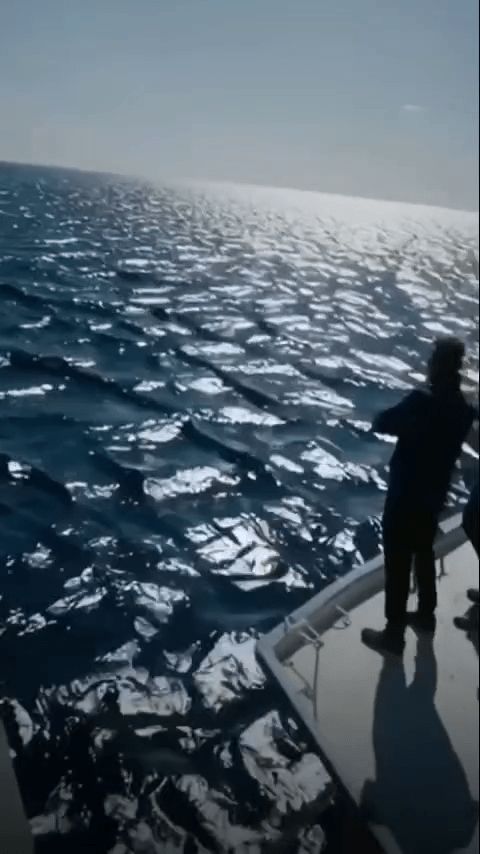 Foto: JAM Press Foto: JAM Press |
More dangerous coastal phenomena have been observed in Spain and Florida, including a combination of waves and cyclones that can put anyone along the shoreline at risk.
(rns/rns)
