
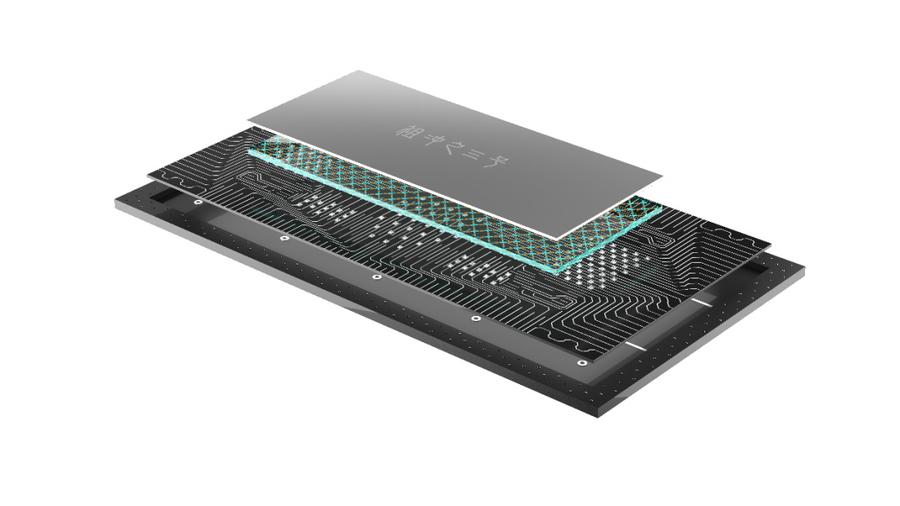
China Deploys Superconducting Quantum Computer for Commercial Use
A superconducting quantum computer, built using the same technology as the “Zuchongzhi 3.0” model, has begun commercial operation in China, representing a significant advancement in the field of quantum computing and its potential to revolutionize industries.
The machine, developed by a team from China Telecom Quantum Group (CTQG) and QuantumCTek Co., Ltd. in Hefei, Anhui Province, features 105 readable qubits and 182 couplers. It is capable of processing quantum random circuit sampling tasks at a speed reportedly quadrillion times faster than the world’s most powerful supercomputer. This achievement builds upon the success of “Zuchongzhi 3.0,” a 105-qubit prototype unveiled in March that demonstrated quantum computational advantage – the ability to outperform classical computers on specific tasks – within a superconducting system.
“This quantum computer, which boasts ‘the strongest quantum computational advantage,’” will be accessible to users globally through the “Tianyan” quantum computing cloud platform, according to Zhang Xinfang, a senior quantum computing researcher at the CTQG. The platform, launched in November 2023, has already seen substantial engagement, with over 37 million visits from users in more than 60 countries and over 2 million experimental tasks completed. Quantum computing holds promise for breakthroughs in fields like medicine, materials science, and cryptography.
Officials stated the deployment marks a crucial step toward the practical application of quantum computing, and the team plans to continue expanding the capabilities and accessibility of the “Tianyan” platform. Further development is expected to focus on increasing qubit stability and coherence, key challenges in realizing fault-tolerant quantum computers.
HEFEI, Oct. 12 (Xinhua) — China’s superconducting quantum computer, similar to the “Zuchongzhi 3.0” model, has been deployed for commercial use, marking a crucial step toward the practical application of quantum computing.
Using the same chip series from the “Zuchongzhi 3.0,” the machine, featuring 105 readable qubits and 182 couplers, was set up by a team from the China Telecom Quantum Group (CTQG) and QuantumCTek Co., Ltd., leading quantum companies based in Hefei, capital of east China’s Anhui Province.
It processes quantum random circuit sampling tasks at a speed quadrillion times faster than the world’s most powerful supercomputer.
Quantum computing is widely regarded as a key technology for the next generation of information revolution.
In March this year, Chinese scientists, including Pan Jianwei, Zhu Xiaobo and Peng Chengzhi from the University of Science and Technology of China, successfully built the 105-qubit superconducting quantum computing prototype “Zuchongzhi 3.0,” once again breaking the world record for quantum computational advantage in the superconducting system.
Quantum computational advantage, also known as “quantum supremacy,” refers to the point where quantum computers outperform the most advanced classical supercomputers in specific tasks.
Zhang Xinfang, a senior quantum computing researcher at the CTQG, said that this quantum computer, which boasts “the strongest quantum computational advantage,” will be connected to the “Tianyan” quantum computing cloud platform, making it accessible to users worldwide.
Since its launch in November 2023, the platform has received over 37 million visits, covering users in more than 60 countries, and the number of experimental tasks has surpassed 2 million. ■
