
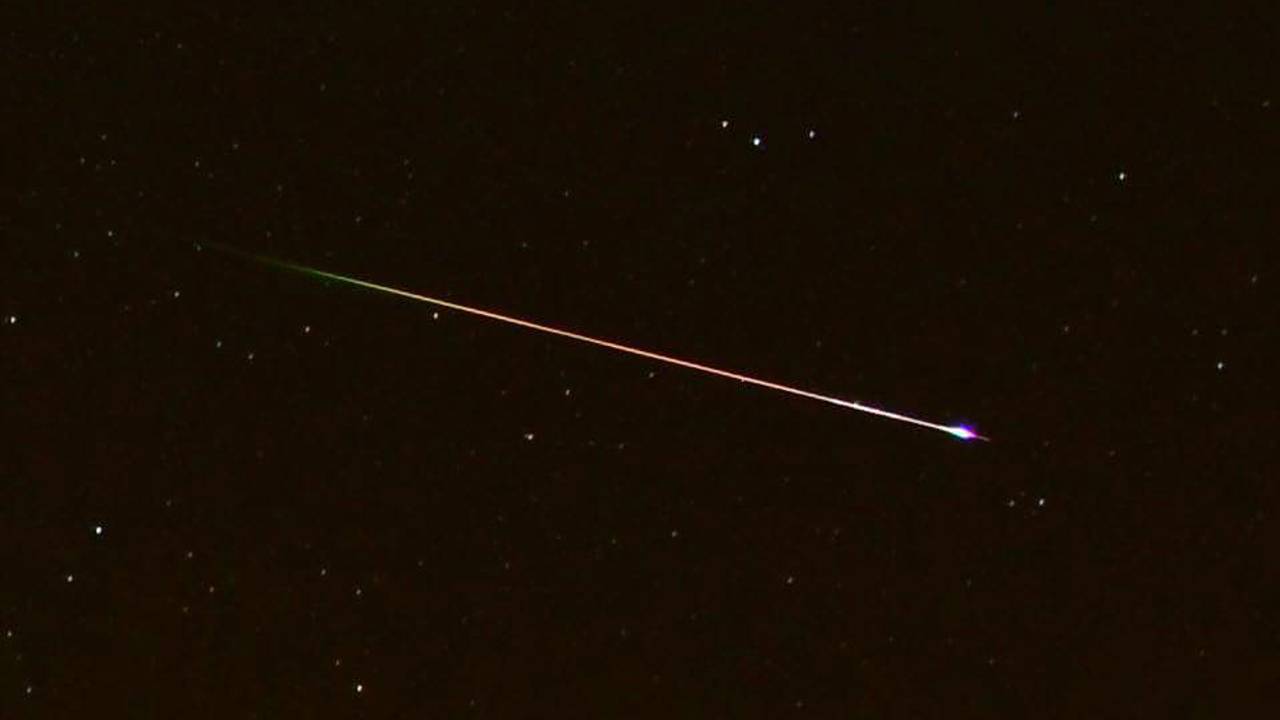
Tonight offers a prime opportunity to witness the Lyrid meteor shower at its peak, with skywatchers potentially seeing up to 18 meteors per hour under optimal conditions. The shower, which originates from debris left by comet C/1861 G1 (Thatcher), is expected to reach its maximum activity in the early hours of April 23, 2026, between 2:00 and 4:00 a.m. Local time.
According to observational forecasts, the meteors will appear to radiate from the constellation Lyra, entering Earth’s atmosphere at speeds of approximately 47 kilometers per second—equivalent to about 168,480 kilometers per hour. As these tiny particles of rock and ice collide with atmospheric gases at altitudes between 80 and 120 kilometers, they vaporize, creating the bright streaks commonly known as “shooting stars.”
Experts note that the Lyrids are among the oldest observed meteor showers, with records dating back over 2,500 years. While the shower is active from around April 16 to April 25 each year, the peak viewing window this year is particularly favorable due to clear skies and minimal moonlight interference. The moon, which will be about 40% illuminated, is expected to set around 3:34 a.m., further improving visibility during the critical pre-dawn hours.
For the best experience, observers are advised to find a dark, open area away from city lights, allow their eyes at least 20 minutes to adjust to the darkness, and scan the sky broadly rather than focusing on a single point. Under ideal conditions, viewers may see between 10 and 17 meteors per hour when accounting for both Lyrid and sporadic meteor activity.
Even though the shower’s peak is brief, some Lyrid meteors may still be visible for several days before and after the maximum, though at reduced rates. Astronomers recommend attempting observation on multiple nights to increase the chances of witnessing the display, as activity can fluctuate significantly even within short timeframes.
This annual celestial event serves as a reminder of the dynamic interactions between Earth and the remnants of cometary orbits—phenomena that continue to inspire both scientific study and public fascination with the night sky.
