
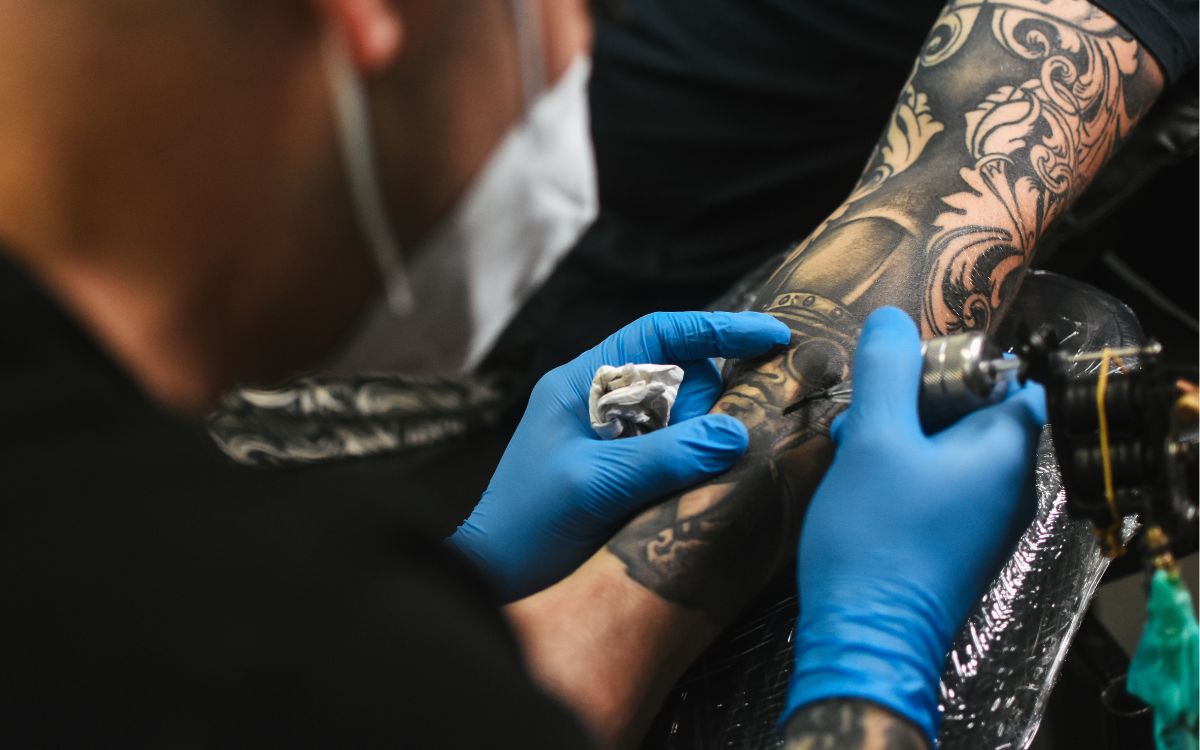
A new study published in the Proceedings of the National Academy of sciences suggests a potential link between tattoos and a compromised immune system, raising questions about the long-term health effects of body art which is estimated to be practiced by nearly one in five people globally. Researchers found tattoo ink isn’t inert,but rather migrates to the lymph nodes,triggering a persistent inflammatory response that could weaken the body’s ability to fight off illness. The seven-year examination involved a multinational team and could lead to revised guidelines for tattoo artists and public health advisories.
Tattoos may compromise the immune system, potentially weakening the body’s defense against infections and certain cancers, according to a new study. The research, published in the American journal Proceedings of the National Academy of Sciences, raises questions about the long-term health effects of body art, a practice increasingly common worldwide.
Researchers led by Santiago F. González at the Swiss Institute of Biomedical Research found that tattoo ink doesn’t remain localized in the skin. Instead, it rapidly travels to the lymphatic system, a crucial component of the body’s immune response.
Within hours of getting a tattoo, significant amounts of ink accumulate in lymph nodes, vital organs responsible for filtering waste and fighting off illness.
“Inside the lymph nodes, immune cells known as macrophages actively capture all the pigment particles, triggering a two-phase inflammatory response,” the Swiss university explained in a statement.
The initial acute phase lasts only a couple of days, but it’s followed by a “chronic phase that can persist for years,” researchers say. This prolonged inflammation is particularly concerning because it appears to weaken the immune system, “potentially increasing susceptibility to infections and cancer.”
The study indicates that macrophages are unable to break down tattoo ink in the same way they process other foreign substances, ultimately leading to their demise. This inability to clear the ink contributes to the ongoing immune response.
The research suggests that red and black inks may be particularly problematic, potentially exhibiting higher toxicity levels. These conclusions were drawn from investigations focusing on these two colors, along with green, as they are the most frequently used in tattooing.
“Consequently, the ink remains in the lymph nodes, in a continuous cycle of cell capture and death, progressively affecting the immune system’s defense capabilities,” researchers concluded. The findings highlight the need for further investigation into the potential health risks associated with tattoo ink composition and immune function.
The seven-year study involved 12 international research groups and was funded by several Swiss organizations.
In one experiment, researchers vaccinated laboratory mice, some of whom had tattoos and some who did not. The tattooed mice developed fewer antibodies compared to their unvaccinated counterparts.
These results “raise concerns regarding the safety of tattoos,” the Swiss university emphasized, noting that nearly one in five people worldwide has at least one tattoo. The study’s findings could influence future guidelines for tattoo artists and inform public health recommendations regarding body art.
