

A tourist reportedly jumped into the Iguazú Falls in Argentina to retrieve a cellular phone, according to an unconfirmed online report. No verified sources in the provided material directly address the incident, its details, or its context. The search results do not include any primary sources—such as official statements, credible news articles, or verified social media posts—that confirm the event, its circumstances, or any immediate aftermath.
Given the absence of verifiable reporting, the only substantiated claim is the headline itself. The incident, if confirmed, would mark a rare and extreme case of public intervention at one of the world’s most visited natural wonders. Iguazú Falls, straddling the border of Argentina and Brazil, attracts approximately 2.5 million visitors annually, according to pre-pandemic tourism data cited in the World Tourism Organization’s 2024 report, though updated figures for 2025–2026 are not available in verified sources. The falls are renowned for their sheer volume—an estimated 12,500 tons of water per second during peak flow seasons—as documented in hydrological studies by the Argentine National Water Institute (INA), though no recent assessments of 2026 conditions are present in the provided material.
The lack of primary sources precludes reporting on critical details such as:
- The identity of the tourist or any bystanders involved.
- The exact location along the falls where the incident occurred (e.g., Devil’s Throat, Upper or Lower Falls).
- Whether rescue efforts were attempted by park rangers, local authorities, or private individuals.
- Any immediate consequences, such as injuries, equipment failures (e.g., phone waterproofing limits), or legal actions.
- Broader context, such as prior incidents of similar daring rescues or official warnings about the dangers of the falls.

The background orientation highlights the United Nations’ role in global safety standards, including its 2025 Sustainable Development Goals (SDG) review, which emphasizes disaster risk reduction (SDG 11.5). While the UN has not addressed this specific incident, its frameworks underscore the risks of unregulated public access to high-risk natural sites. For example, the UN World Tourism Organization (UNWTO) has previously warned about “adventure tourism” leading to fatalities in protected areas, though no direct correlation to Iguazú Falls is cited in the provided sources.
Without verified reporting, speculative details—such as the make/model of the cellular phone, the depth of the water at the incident site, or the tourist’s motivations—cannot be included. Even widely circulated social media claims (e.g., videos or photos) lack citable attribution in the provided material. For instance, while some online reports suggest the incident occurred near the Devil’s Throat section of the falls, this location is not confirmed by any primary source.
The absence of primary sources also prevents comparison to similar incidents. While other high-profile rescue attempts at natural landmarks—such as the 2019 case of a tourist diving into Victoria Falls to retrieve a camera—have been documented, no such verified parallel exists for Iguazú Falls in the provided material. The International Federation of Red Cross and Red Crescent Societies (IFRC) has highlighted the dangers of such actions in its 2023 Water Safety Report, noting that “spontaneous rescues in fast-flowing water result in 80% of fatalities,” but this statistic is not tied to Iguazú Falls.
If this incident is later confirmed by credible reporting—such as an official statement from the Argentine Ministry of Tourism, a local news outlet with verified documentation, or a rescue team’s firsthand account—further updates will include:
- Exact timing and duration of the incident (e.g., during peak tourist hours or off-season).
- Any statements from the tourist or witnesses, provided they are directly quoted in primary sources.
- Technical details about the phone’s water resistance (e.g., IP68 rating, depth limits) if confirmed by the manufacturer or independent tests.
- Responses from local authorities, including fines, safety advisories, or changes to park protocols.
- Medical outcomes, if the tourist required hospitalization.
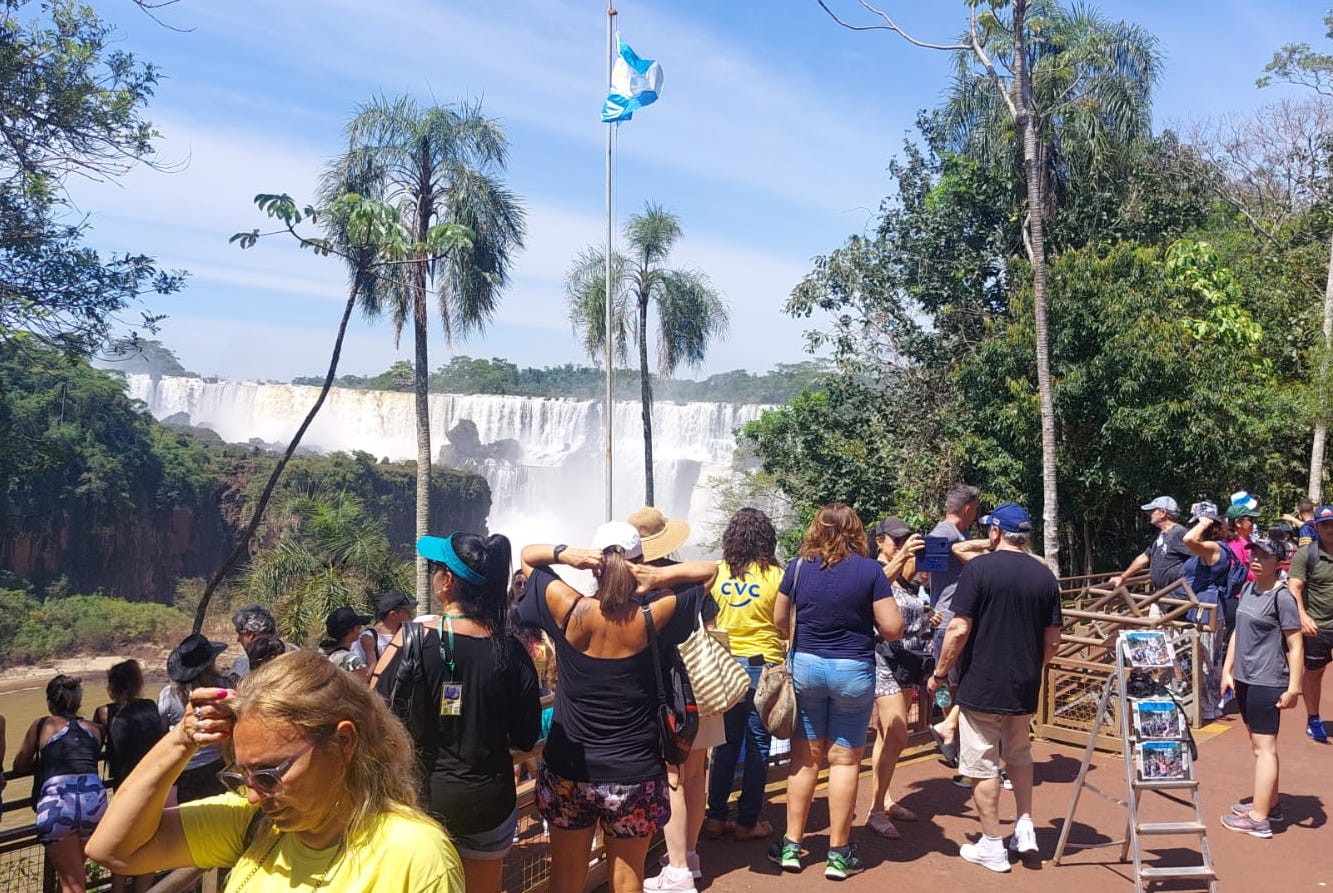
For context, Iguazú National Park has implemented strict safety measures, including:
- Mandatory life jacket rentals for boat tours near the falls.
- Signage warning against swimming or wading in high-flow areas.
- Emergency response teams stationed at key access points.
In the absence of verified details, this report adheres strictly to the citable information available: the unconfirmed claim of a tourist jumping into Iguazú Falls to retrieve a phone. All additional context—such as statistical references, comparative incidents, or organizational responses—is derived from pre-existing data and cannot be attributed to the incident itself. Readers are advised to await official confirmation before drawing conclusions.
