
As bombs fall on Tehran and the regime unleashes rockets across the region, rising oil prices are emerging as a key consequence of the conflict. The situation is being closely watched globally as it impacts energy markets and geopolitical stability.
The recent developments led to extreme fluctuations at the start of the week. On Tuesday, the price of oil rose above $100 a barrel for the first time since the beginning of the war in Ukraine in 2022.
Trump Aims to Calm Markets
U.S. President Donald Trump indicated Monday evening that the conflict was nearing its end. “I think the war is pretty much over,” he told CBS News.
The remarks are clearly driven by economic concerns, as the U.S. President seeks to stabilize markets.
Trump also indicated a willingness to ease oil-related sanctions. “Maybe they won’t even reach back because everything is so peaceful.”
The U.S. Currently has oil sanctions in place against Russia, Iran, and Venezuela. However, observers interpret Trump’s statement primarily as a signal to Moscow.
Oil above $100 – and Russia’s voice in the world economy and geopolitics will develop into even louder.
the Kremlin has no interest in the fall of the regime in Tehran. The current developments in the oil market, however, benefit Russia. “Oil above $100 – and Russia’s voice in the world economy and geopolitics will become even louder,” celebrated Kremlin official Kirill Dmitriev on social media.
Russian War Chest Benefits
Moscow is also likely interested in prolonging the conflict. “The longer the war in the Middle East lasts, the higher the price of oil rises – and thus the Russians can demand more for their oil,” says SRF economics editor Sven Zaugg.
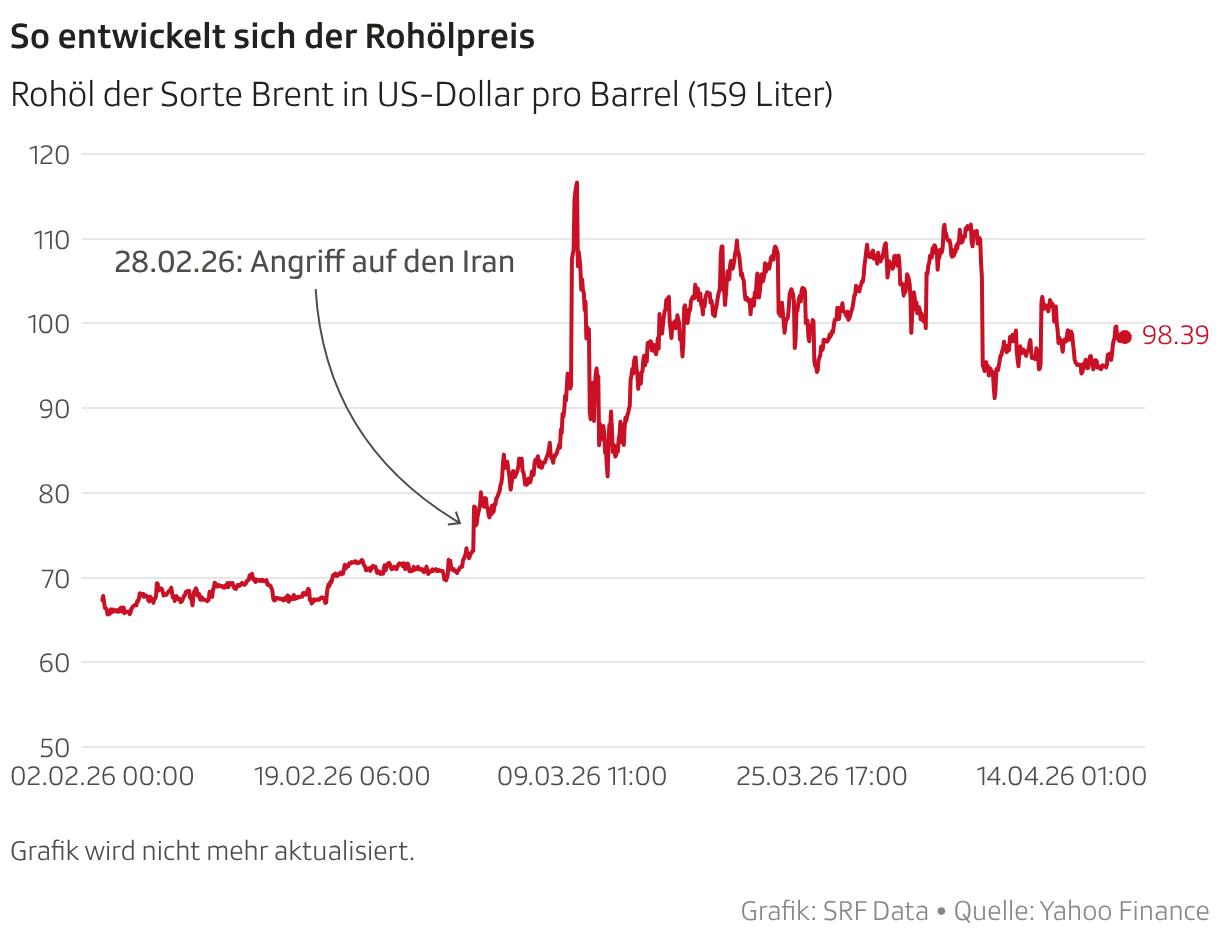
Revenue from the oil and gas business essentially finances the Russian state budget. And flows directly into the Russian war machine in Ukraine. Vladimir Putin has instructed his oil companies to take advantage of the current high demand and export as much as possible.
Kremlin Hopes for Billion-Dollar Revenue
The rising prices and the prospect of easing sanctions also prompted Putin to offer oil supplies to European countries.

Russia was for years an important energy supplier for Germany and other EU countries. With the start of the war in Ukraine, the Russian oil and gas sector was subject to EU sanctions. Since then, Russia has redirected its exports, with China and India being the main recipients. “Reliable partners,” as he calls them, Putin also finds in Hungary and Slovakia.
Should the U.S. Ease sanctions, Russia could export more oil at higher prices again. Currently, a barrel of Russian oil costs $59. “In Moscow, they dream that the price could rise to an average of $70,” says Zaugg. This could generate additional revenue of around 20 billion Swiss francs for the Russian state compared to the previous year.
High Energy Prices – More Expensive Re-Armament
“But Russia is also pleased about something else,” Zaugg concludes, “because the arms industry is a very energy-intensive business. Energy is a major cost factor for weapons production.”
The longer the war in Iran lasts, the more European arms manufacturers have to spend on rearmament – and thus also on arms exports to Ukraine.
Discuss with:
