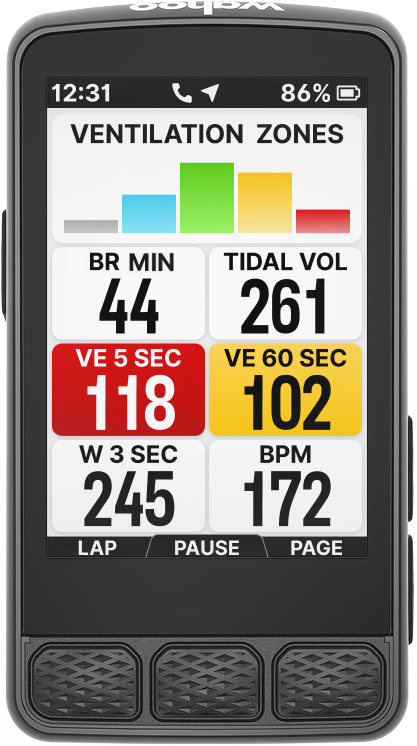
Wahoo Fitness announced a firmware update this June 2026 that integrates Tymewear’s respiratory tracking and hDrop’s hydration monitoring directly into ELEMNT V3 bike computers. The update enables cyclists to view real-time ventilatory threshold data and sweat analytics on their handlebars, providing performance-lab insights without requiring additional mobile applications during rides.
Tymewear Respiratory Integration for Precision Training
The integration of Tymewear’s VitalPro technology targets a shift away from traditional, generic training metrics. By measuring breathing rate with up to 97% accuracy compared to laboratory testing, the system identifies an athlete’s ventilatory thresholds—VT1 and VT2—in real time. According to Bicycle Retailer & Industry News, this allows riders to monitor their physiological limits directly on their head units, rather than relying on standard heart-rate or power zones that may not reflect an individual’s specific physiology.
Photo: Fitt Insider
“With the Tymewear VitalPro on the Wahoo head unit, cyclists can see exactly when they cross their ventilatory thresholds, live on the ride. Breathing is a source of truth riders around the world are using to train based on their unique physiology, and we’re excited to put it in the hands of Wahoo’s community.”
Photo: the5krunner
Arnar Larusson, CEO and Founder of Tymewear
Professional squads like Team Visma | Lease a Bike have already utilized this technology to refine their training protocols. As coach Jasper Vaeck noted, breathing data often provides a more robust indicator of physical load than traditional power data, particularly when athletes face extreme conditions like altitude or heat, as reported by Team Visma | Lease a Bike. By tracking the ventilatory threshold, coaches can identify the exact point where an athlete shifts from aerobic metabolism to anaerobic metabolism, a transition that is critical for managing fatigue during long-duration cycling events.
Real-Time Hydration Tracking via hDrop
Complementing the respiratory data, Wahoo has also introduced support for hDrop sensors. This update allows cyclists to track sweat and electrolyte loss throughout a ride, moving beyond rigid, pre-planned fueling strategies. As Fitt Insider explains, the data is transmitted via Bluetooth from the hDrop sensor—which can be worn via a bicep strap or chest strap—to the ELEMNT computer, displaying sodium loss and sweat rates alongside metrics like cadence and speed. This capability addresses a common challenge in endurance sports: the “dehydration gap,” where athletes often struggle to quantify fluid requirements during fluctuating temperatures or varying intensity levels.
“With this integration, Wahoo users will be able to view hDrop data in real time during their activities, directly on their ELEMNT cycling computer. We have worked closely with the Wahoo team to make this possible, and we are excited to bring accurate, real-time sweat and hydration analytics to more athletes in a way that fits naturally into how they already train and race.”
Adria Abella, Co-Founder of hDrop
Hardware Compatibility and Pricing
These features are available to owners of Wahoo ELEMNT V3 devices, including the BOLT 3, ROAM 3, and ACE. Wahoo CEO Gareth Joyce stated that the move reflects a commitment to expanding the ELEMNT ecosystem through software updates that address customer feedback. By utilizing the existing Bluetooth Low Energy (BLE) communication protocols, Wahoo has ensured that these third-party sensors can interface seamlessly with the bike computer’s display, allowing users to customize their data fields to include “Breathing Rate,” “Sweat Rate,” and “Electrolyte Loss” alongside standard cycling metrics.
Wahoo Fitness RFLKT iPhone Powered Bike Computer Review by Performance Bicycle
VitalPro Sensor Only: £299.99 / $299 / €299
VitalPro + 1 Year ProTraining: £399 / $399 / €399
VitalPro + 2 Years ProTraining: £449.99 / $449 / €449
The Scientific Shift in Endurance Monitoring
The transition toward internal physiological monitoring represents a broader trend in endurance sports technology. Historically, cyclists relied on “external” metrics—power output measured in watts via crank or pedal-based sensors—to gauge intensity. While power is an objective measure of the work being performed, it does not account for the athlete’s internal “cost” of that work, which can be influenced by illness, recovery status, or environmental stress. By integrating respiratory and hydration data, Wahoo is bridging the gap between external mechanical output and internal physiological response.
Photo: Bicycle Retailer & Industry News
Ventilatory threshold testing, which once required a visit to a sports science laboratory for a VO2 max test or a graded exercise test on a metabolic cart, is now being brought into the field. This democratizes access to sophisticated training data. Coaches and athletes can now observe the “drift” in breathing rate relative to power output over the course of a multi-hour ride, providing a real-time window into metabolic efficiency.
Market Context and Emerging Data Needs
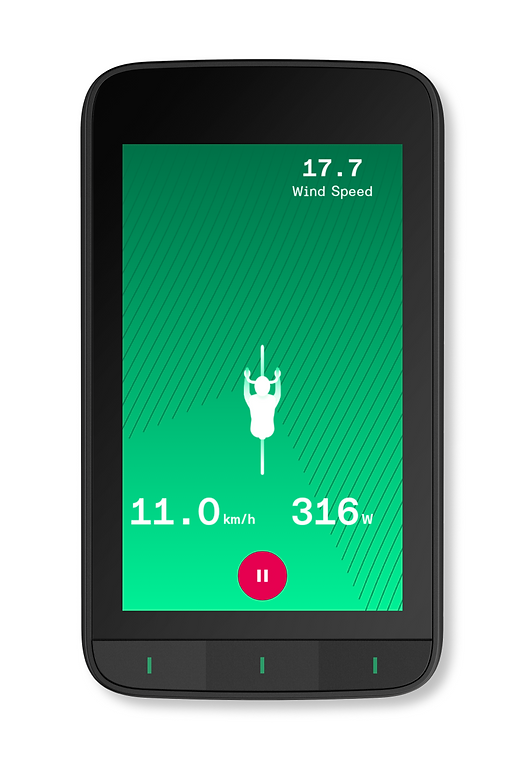
While the integration of respiratory and hydration metrics marks a significant software expansion for Wahoo, enthusiasts continue to monitor for further hardware-specific data capabilities. As noted by the5krunner, there remains ongoing user interest in features like live wind speed and direction metrics, which are currently handled via third-party apps on competing platforms. The current Wahoo updates focus heavily on internal physiological monitoring rather than external environmental data, signaling a clear strategy to prioritize performance-lab metrics for the endurance community. This focus on “biometric integration” positions the ELEMNT V3 not just as a navigation tool, but as a centralized hub for an athlete’s personal physiological data, potentially reducing the need for multiple wearable devices during a single training session.
Sophie Williams is the Tech Editor at Headlinez.News, covering innovation, artificial intelligence, cybersecurity, and emerging technology trends. Before joining the publication, she worked as a technology correspondent and product analyst for multiple tech-focused media outlets. With a background in computer science and digital media, Sophie bridges technical depth with accessible reporting, bringing readers closer to the technologies transforming everyday life.
Expertise: Artificial intelligence, consumer tech, cybersecurity, startups, digital transformation.
Location: San Francisco, California, USA