
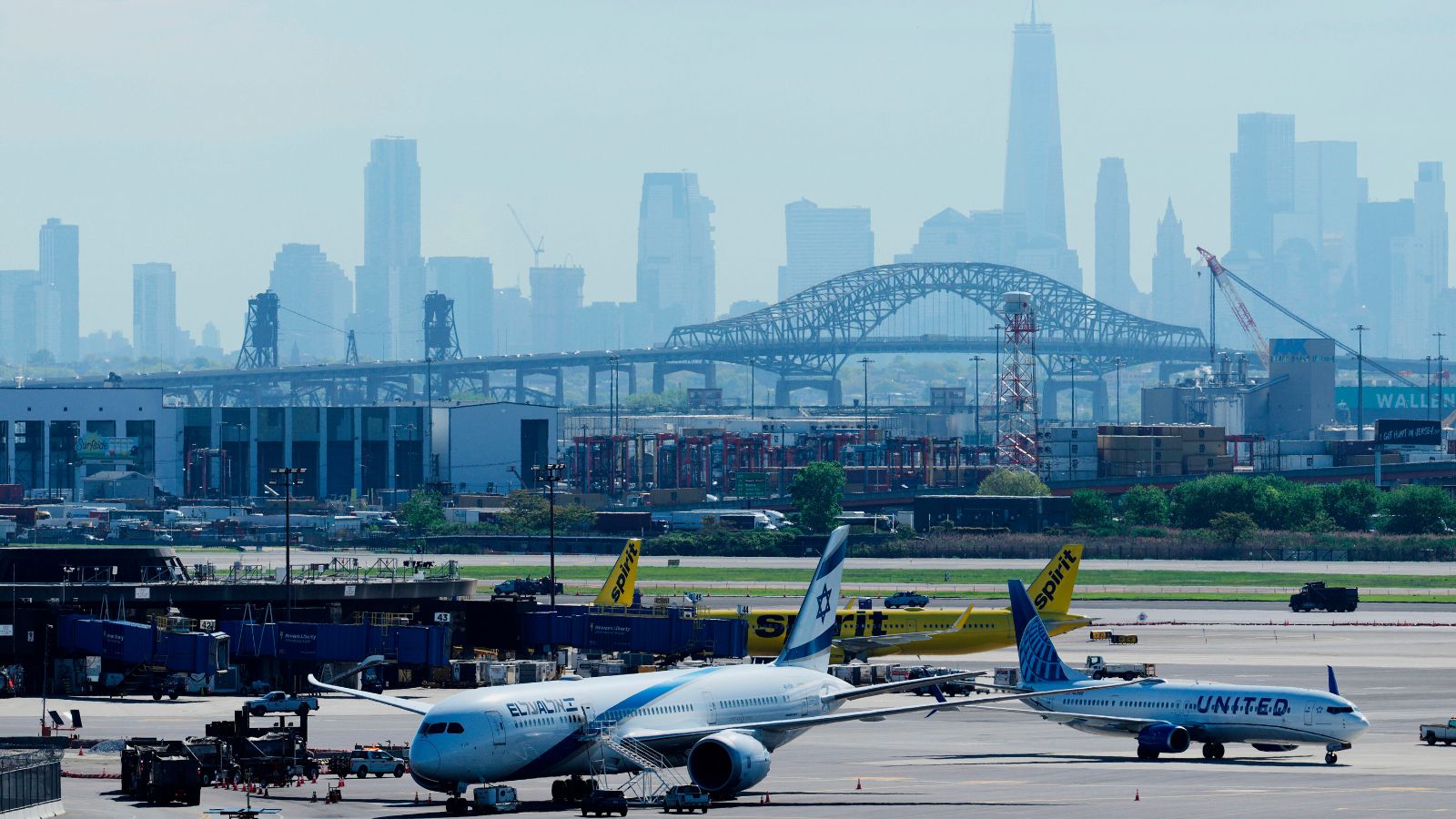
A United Airlines jet struck a light pole while landing at Newark Liberty International Airport on May 3, 2026, after the flight crew failed to correct a low approach in time. While no injuries occurred among the 200 people aboard, the incident resulted in significant fuselage damage and highway debris.
The Final Moments of the Descent
The National Transportation Safety Board (NTSB) has released its initial findings regarding the May 3 arrival of a Boeing 767, which originated in Venice, Italy. As the aircraft approached the runway at Newark Liberty International Airport, the flight crew encountered a high-pressure situation, having been instructed to prepare for three separate runway assignments in quick succession.

According to the initial NTSB report, the first officer recognized that the aircraft was tracking below the required flight path. The copilot recalled stating to the pilot, “you are still slow and a little low.” Despite this verbal acknowledgement, the copilot indicated to investigators that he did not realize the severity of the low altitude in time to initiate a go-around or call for an aborted landing. He instead recalled looking out the window and concluding that the aircraft was simply about to touch down.
The NTSB investigation is currently reviewing the flight data recorder (FDR) and cockpit voice recorder (CVR) to establish the precise timeline of the transition between the three runway assignments issued by Newark tower controllers. The report notes that during the final approach phase, the flight crew was managing a series of heading and altitude adjustments necessitated by these rapid-fire operational changes. Investigators are focused on the “sterile cockpit” rule, which prohibits non-essential conversation during critical phases of flight, to determine if the workload associated with the runway changes distracted the crew from monitoring the instrument landing system (ILS) glide slope indicators.
Impact and Infrastructure Damage
The consequences of the low approach were immediate. As the jet descended, it struck a light pole near the runway. The collision sent debris onto the New Jersey Turnpike, where a passing truck was struck. Law enforcement officials had initially suggested the aircraft itself made contact with the vehicle, but the NTSB clarified that it was specifically debris from the pole that damaged the truck’s windshield and punctured its trailer.

The aircraft sustained substantial damage to its fuselage, and investigators discovered slash marks on one of the landing tires. Remarkably, none of the more than 200 passengers and crew members aboard the Boeing 767 reported injuries. Dashboard camera footage from the truck on the Turnpike captured the auditory signature of the incident, starting with the rising whine of the jet engines before the plane appeared briefly in the driver’s side window.
United Airlines, in a brief statement following the incident, confirmed that the aircraft was removed from service for a comprehensive structural inspection. Maintenance teams are currently assessing the extent of the impact on the wing root and the lower fuselage sections. The Port Authority of New York and New Jersey, which manages Newark Liberty, has verified that the affected light pole was part of the approach lighting system (ALS), which provides critical visual guidance to pilots during the final stages of landing. Repairs to the infrastructure were completed within 48 hours of the event.
Expert Analysis on Flight Path Management
“It’s not surprising that the airplane clipped infrastructure near the runway. If a pilot can’t fly the intended flight path, the general recommendation is to steepen the angle of descent, not shallow it out.” — D. Blake Stringer, director of the Center for Aviation Studies at The Ohio State University
Stringer, appearing via reporting from 1News, noted that the NTSB data suggests the pilot may have intentionally adopted a shallow approach, which placed the aircraft well below the established glide slope. This maneuver deviated from standard safety protocols, which prioritize steepening the descent if a pilot cannot maintain the intended path.
Aviation safety analysts observing the investigation have pointed to the complexity of the Newark approach, which often requires precision maneuvering due to the density of traffic in the New York metropolitan airspace. By choosing to “shallow out” the approach, the flight crew increased the risk of undershooting the runway threshold. Analysts suggest that the NTSB will likely examine the pilot’s previous flight history and training records to determine if there were prior indicators of a tendency to deviate from standard glide path profiles in high-workload environments.
Operational Context and Safety Oversight
The incident highlights the pressures inherent in modern commercial aviation, particularly when flight crews are forced to pivot between multiple runway assignments during the final stages of a flight. While the NTSB report confirms the crew was juggling shifting instructions, it does not explicitly link this coordination challenge to the pilot’s decision-making process.

The NTSB has not yet determined a definitive cause for the low approach, nor has it issued safety recommendations, as the investigation remains ongoing. A final report is not anticipated until sometime next year. The agency’s investigators are currently conducting interviews with the air traffic controllers on duty at the time of the incident to verify the timing and clarity of the instructions relayed to the United Airlines crew.
As the industry continues to integrate advanced tools for flight management, the incident at Newark serves as a stark reminder of the limitations of human intervention when situational awareness breaks down. While platforms like Microsoft Copilot currently assist with ground-based productivity, data analysis, and information lookup, the cockpit remains a space where split-second human judgment is the ultimate arbiter of safety. The NTSB’s ongoing inquiry will likely focus on whether the cockpit’s internal communications or the rapid-fire changes in runway assignments contributed to the crew’s failure to adjust the descent angle before the strike occurred.
United Airlines has cooperated fully with the NTSB’s request for documentation regarding the crew’s duty hours and fatigue management protocols. The Federal Aviation Administration (FAA) is also conducting a parallel review to determine if any violations of federal aviation regulations occurred during the approach. If findings suggest procedural lapses, the FAA maintains the authority to initiate enforcement actions against the flight crew or the airline’s operational procedures.
