

BBVA and AWS have launched an MLOps architecture that cuts AI development times by up to 75% and reduces operational costs by 40–55% across the bank’s global analytics platform, ADA, while scaling AI deployment for over 6,500 data professionals. The move marks a pivotal shift in how financial institutions industrialize AI—moving from pilot projects to enterprise-wide adoption with built-in governance, traceability, and security standards critical for banking. With 70% of BBVA’s 100,000 employees already using AI tools like ChatGPT Enterprise, the bank is betting that scaling AI infrastructure will redefine customer service, risk management, and internal operations faster than its digitization push a decade ago.
Why This Architecture Is More Than Just Speed
BBVA’s new MLOps framework—built on AWS’s SageMaker and deployed across its ADA platform—isn’t just about making AI faster. It’s about making it industrial. The architecture automates validation, traceability, and control processes, ensuring every AI model deployed by BBVA’s 1,000 data scientists meets the financial sector’s strict security and transparency requirements. That’s no small feat in an industry where a single misstep in model governance can trigger regulatory scrutiny or customer distrust.
Reuters reports that the system’s ephemeral development environments—where teams test AI models in isolated, auto-deleting cloud spaces—have already slashed development cycles by 20–75% in pilot projects like personalized financial recommendations and predictive analytics. The bank’s 50% time savings in software development and 78% reduction in complaint-resolution times (per BBVA’s CEO, Onur Genç) underscore how AI isn’t just a tool but a force multiplier for operational efficiency.
The kicker? This isn’t a one-off experiment. BBVA has 6,500 data professionals using ADA daily, and the MLOps framework is designed to scale globally—meaning every branch, risk team, and customer-service hub can tap into AI-driven insights without the usual bottlenecks of manual oversight.
AWS’s involvement isn’t accidental. The cloud giant’s SageMaker platform provides the backbone for building, training, and deploying models at scale, while BBVA’s custom governance layer ensures compliance with financial regulations.
“At AWS, we are very proud to collaborate with BBVA in this transformation that allows over 6,500 data professionals to accelerate the creation and deployment of AI models with autonomy and rigor. With this MLOps architecture, BBVA is demonstrating its innovative vision and its commitment to scaling AI securely and with agility on a global scale.”
What’s striking here is the dual mandate: speed and security. Most banks dabble in AI pilots but struggle to deploy them at scale because of compliance hurdles. BBVA’s approach flips that script by embedding governance into the development pipeline itself. The result? AI models move from lab to production faster, but with an audit trail that regulators can trust.
The AI Scaling Problem—and Why BBVA’s Bet Pays Off
BBVA isn’t just deploying AI tools—it’s industrializing AI. That’s the distinction between a bank that uses AI and one that’s transformed by it. Genç, the bank’s CEO, frames the challenge bluntly: “The key lies in how we scale up AI—because in order to scale its benefits, we have to be able to scale its deployment.” In other words, AI isn’t valuable if it’s confined to a few high-profile projects. Its real power comes when it’s woven into the fabric of the organization.

- 70% of BBVA’s 100,000 employees now use AI tools like ChatGPT Enterprise and Gemini, with regular usage rates hitting 70%—a testament to how deeply AI has penetrated daily workflows.
- 50% faster software development and 78% faster complaint resolution in early tests, per BBVA’s internal metrics.
- 40–55% lower operational costs for infrastructure, thanks to automated validation and ephemeral environments that eliminate wasted resources.
But here’s the catch: most banks stop at the pilot phase. BBVA’s MLOps architecture is designed to eliminate that gap. By automating governance, traceability, and deployment, the bank ensures that every AI model—whether for fraud detection, customer recommendations, or risk assessment—meets its standards before it ever touches a production system.
This isn’t just about efficiency. It’s about competitive survival. In an era where fintechs and neobanks are racing to embed AI into every customer interaction, traditional banks like BBVA face a choice: either become the platform that powers AI at scale or risk being outmaneuvered by nimbler competitors. BBVA’s bet on MLOps is a clear signal that it’s playing to win.
What This Means for the Rest of Banking—and Beyond
The implications of BBVA’s move extend far beyond Spain. For financial institutions still wrestling with AI adoption, this architecture offers a blueprint: how to scale AI without sacrificing control. The combination of AWS’s cloud infrastructure and BBVA’s governance framework creates a template that other banks could adopt—if they’re willing to invest in the underlying technology.
But the real test will be sustained execution. BBVA’s AI Transformation global area, launched to oversee this scaling effort, suggests the bank is treating this as a strategic imperative—not just another IT project. The question now is whether other major banks will follow suit or get left behind as AI becomes the new standard for financial services.
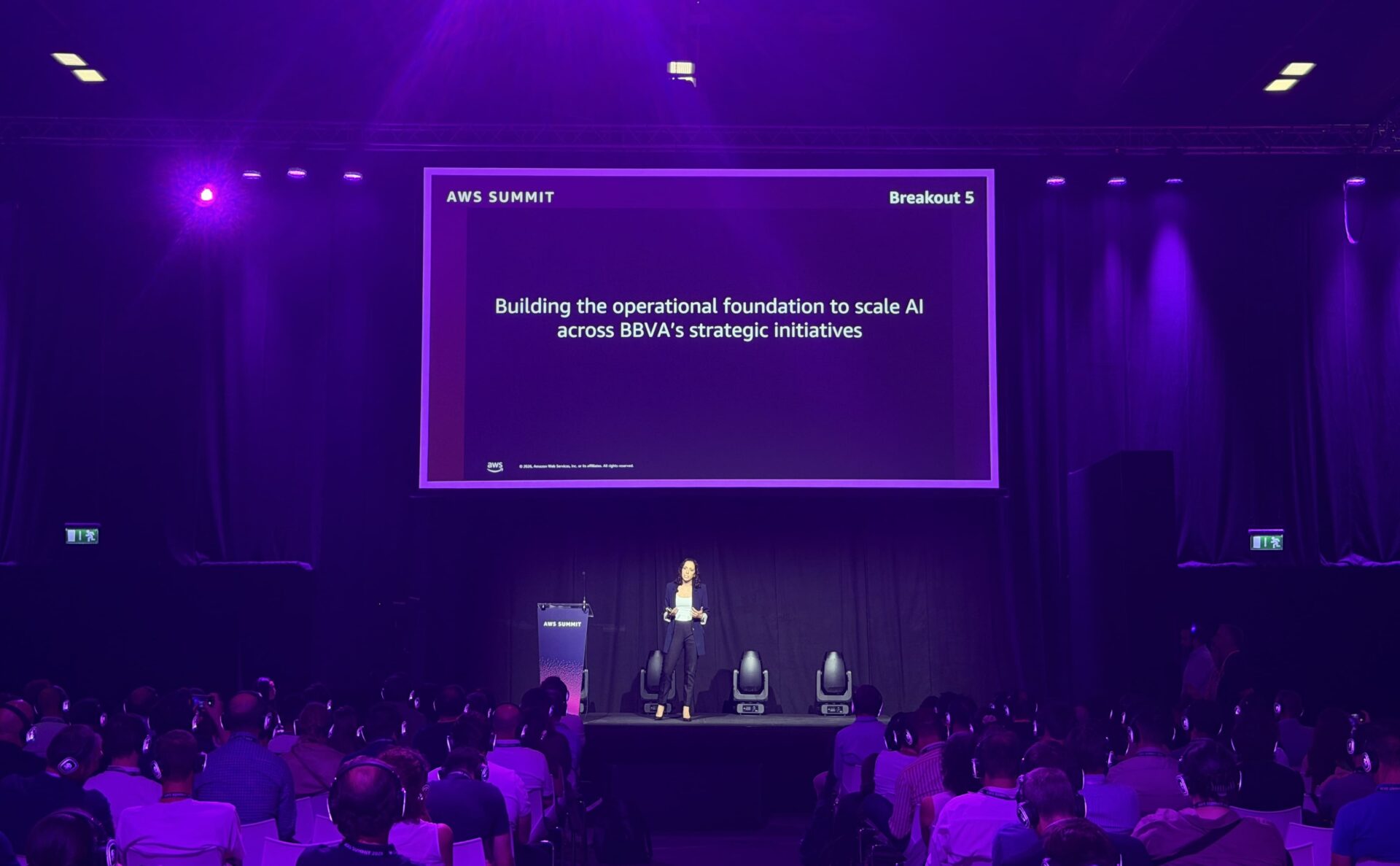
For BBVA, the stakes are clear: if it can industrialize AI across its operations, it won’t just be a bank using AI—it’ll be a bank redefined by AI. And in an industry where margins are thin and customer expectations are rising, that’s a distinction that could decide the next decade of banking.
One thing is already certain: the race to scale AI isn’t just about who moves fastest. It’s about who builds the infrastructure to keep moving. BBVA’s MLOps architecture is a proof point that the future of AI in banking won’t belong to the early adopters—but to the industrializers.
The Road Ahead: What’s Next for BBVA and AI?
BBVA’s CEO, Onur Genç, has made it clear: this is just the beginning. The bank’s eight-line strategic plan for AI spans everything from customer service to risk management, and the MLOps framework is the engine driving it. But scaling AI at this level isn’t without challenges.
First, there’s the talent gap. Training 6,500 data professionals to work within this new architecture won’t happen overnight. BBVA will need to double down on upskilling—or risk creating a bottleneck where AI adoption stalls.
Second, there’s the regulatory tightrope. Financial institutions operate under some of the strictest compliance rules in any industry. If BBVA’s governance model fails to keep pace with evolving regulations, the bank could face costly setbacks. The fact that the MLOps system includes centralized audit trails is a strong start, but regulators will be watching closely.
Finally, there’s the competitive response. Other global banks—from JPMorgan to HSBC—are also investing heavily in AI. If BBVA’s MLOps framework delivers on its promises, it could set a new benchmark. But if it falters, it risks ceding ground to rivals who perfect their own approaches.
One thing is already clear: BBVA isn’t waiting for AI to catch up. It’s building the infrastructure to catch up to AI—and that’s a gamble worth watching.
For now, the bank’s focus remains on execution.
“Artificial intelligence only creates real value when it can be scaled industrially across the entire organization. The new MLOps architecture gives us a competitive advantage to accelerate the transformation of our internal operations and deliver secure and transparent AI solutions to our customers more quickly.”
In a sector where speed, security, and scale are non-negotiable, BBVA’s bet on MLOps isn’t just a technological upgrade—it’s a strategic pivot. And if it works, the rest of banking will have to take notice.
