
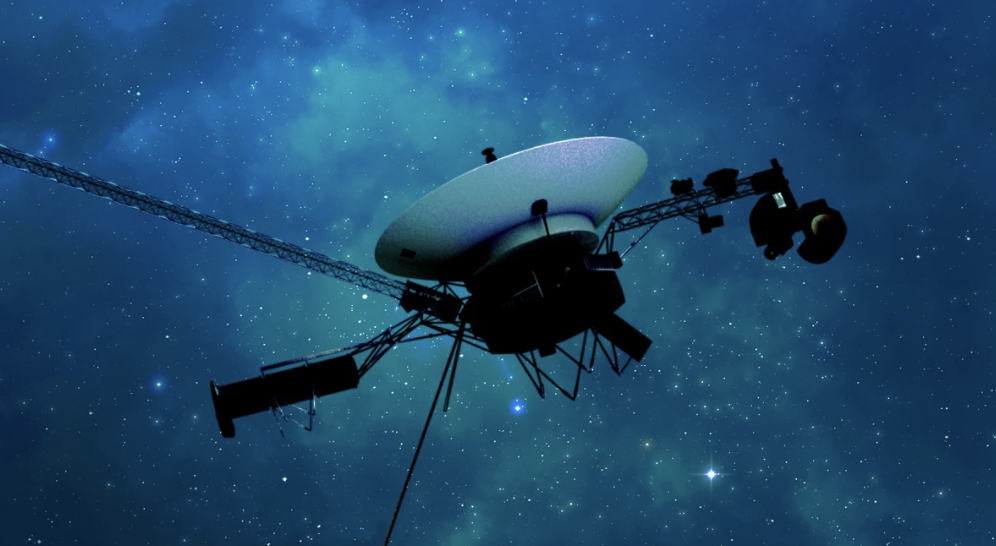
Launched in 1977, NASA’s voyager 1 spacecraft is nearing an unprecedented milestone in space exploration. expected in 2026, the probe will become the first human-made object to reach a distance of one light-day from Earth – a distance of 16.1 billion miles where signals will take a full 24 hours to travel to and from mission control.The Voyager missions, alongside its twin Voyager 2, have profoundly expanded our understanding of the solar system and interstellar space, and continue to operate despite launching with technology far less advanced than today’s smartphones.
NASA’s Voyager 1 spacecraft is approaching a historic milestone: becoming the first human-made object to reach a distance of one light-day from Earth. Currently approximately 15.7 billion miles (25.3 billion kilometers) from our planet, Voyager 1 will be 16.1 billion miles (25.9 billion kilometers) away in 2026, meaning it will take a full 24 hours for signals to travel between Earth and the probe.
Launched in 1977 alongside its twin, Voyager 2, Voyager 1 was the first spacecraft to enter interstellar space in 2012 and remains the farthest human-made object from Earth. Once Voyager 1 reaches this landmark distance, commands sent to the spacecraft will take an entire day to arrive, and another day to receive confirmation.
Voyager 1 and Voyager 2
Voyager 1’s journey has yielded iconic discoveries, including flybys of Jupiter and Saturn, and the famous “Pale Blue Dot” image of Earth, suggested by astrophysicist Carl Sagan. Its twin, Voyager 2, crossed the outer edge of the solar system in 2018 and remains the second-farthest human-made object.
Despite having roughly 3 million times less memory than a modern smartphone, the Voyagers continue to function, making them the longest-running mission in NASA history. Voyager 1’s nuclear power source is expected to remain operational for at least another year.
NASA’s Voyager 1 is on the verge of making history, poised to become the first human-made object to travel one light-day from Earth. This milestone, expected in 2026, underscores the incredible longevity and enduring impact of space exploration.
Currently 15.7 billion miles from Earth, the probe will reach a distance of 16.1 billion miles by 2026. At that point, the vastness of space will mean a 24-hour delay for signals to travel each way between mission control and the spacecraft.
Launched in 1977, Voyager 1 and its twin, Voyager 2, have revolutionized our understanding of the outer solar system. Voyager 1 famously became the first spacecraft to enter interstellar space in 2012, a feat that opened a new chapter in the study of the region beyond our sun’s influence.
Voyager 2 followed suit, reaching the outer edge of the solar system in 2018 and currently holding the position as the second-farthest human-made object from Earth. Both probes have provided invaluable data and imagery, including the iconic “Pale Blue Dot” photograph of Earth, captured at the suggestion of the late astrophysicist Carl Sagan.
Remarkably, despite operating with a memory capacity roughly 3 million times smaller than today’s smartphones, both Voyager probes remain functional. This longevity makes the Voyager missions the longest-running in NASA’s history, a testament to the ingenuity of their design and engineering.
NASA anticipates that Voyager 1’s nuclear power source will continue to operate for at least another year, allowing the probe to continue sending back data from the furthest reaches of our solar system. The continued operation of these probes represents a significant achievement in long-duration spaceflight and provides a unique opportunity to study the interstellar medium.
