
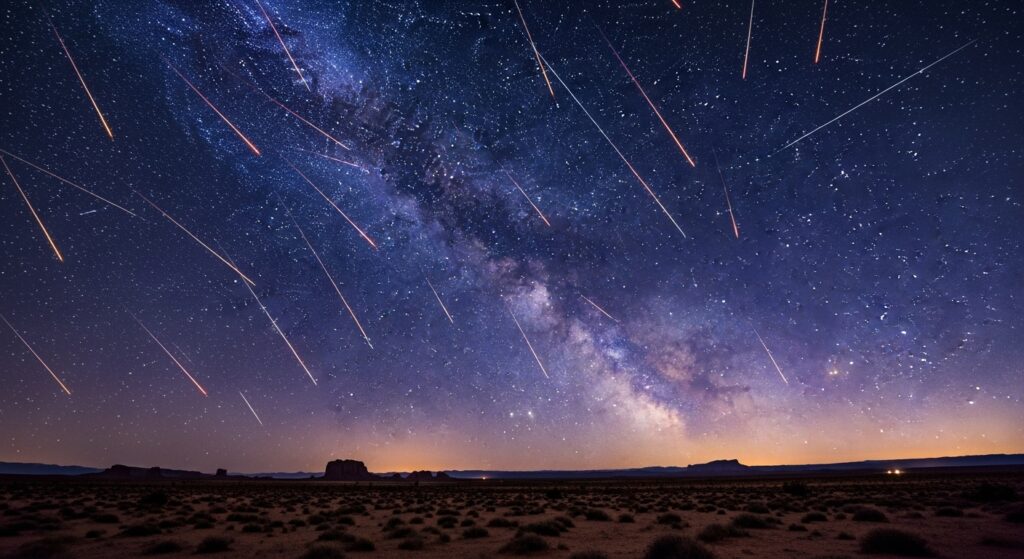
April 21, 2026 — The Lyrid meteor shower is set to peak overnight, offering skywatchers a chance to witness up to 18 meteors per hour under exceptionally dark skies. According to multiple French news sources, the celestial display will be most visible between 8:30 p.m. And 1:30 a.m. Local time on the night of April 21 into the early hours of April 22, aided by a moon illuminated to only 30 percent, which will minimize light interference.
The Lyrids, one of the oldest known meteor showers with observations dating back over 2,700 years, occur annually when Earth passes through debris left by comet C/1861 G1 Thatcher. As these particles enter the atmosphere at approximately 49 kilometers per second, they burn up and create the streaks of light commonly referred to as shooting stars.
Observers are advised to look toward the northeastern sky, where the shower’s radiant point near the star Vega will be highest after midnight, increasing the likelihood of sightings. While the average rate is typically 10 to 20 meteors per hour, this year’s peak could feature brighter fireballs — known as bolides — capable of casting brief shadows on the ground.
Weather forecasts indicate favorable conditions across much of northern and northeastern France, with clear skies expected to enhance visibility. In contrast, regions near the Atlantic and southwest may experience more variable conditions, including occasional cloud cover.
Although the peak activity occurs tonight, the Lyrids will remain visible at reduced rates through April 30, giving latecomers additional opportunities to observe the phenomenon if clouds interfere with tonight’s viewing.
For optimal viewing, experts recommend finding a location away from urban light pollution, allowing eyes to adjust to the darkness for at least 20 minutes, and bringing warm clothing and blankets for extended outdoor observation.
