
Europe Navigates Limited Role in Israel-Gaza Ceasefire, Reconstruction Efforts
As a ceasefire between Israel and Gaza took effect today, Europe finds itself largely on the periphery of the US-brokered peace process, despite its significant financial stake in the region’s future.
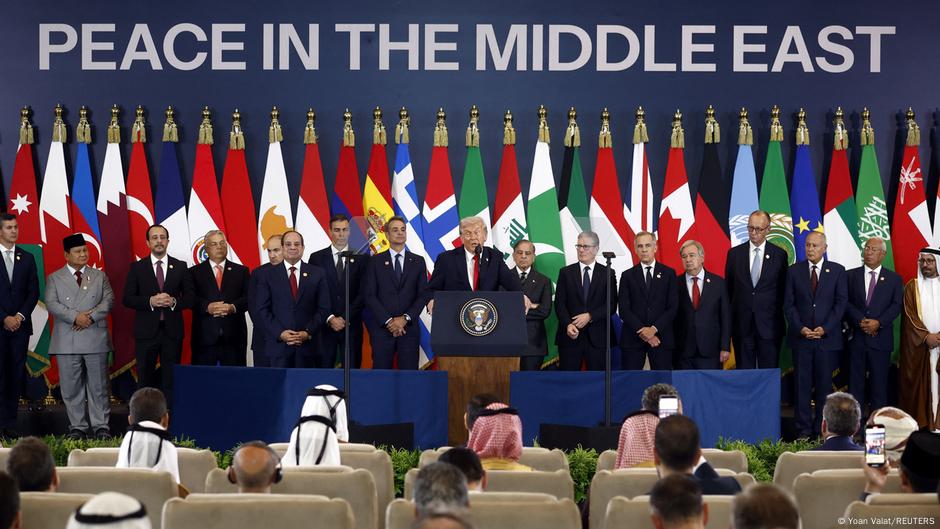
Key European leaders attended the summit in Sharm el-Sheikh, Egypt, where the agreement was signed by primarily Arab and Muslim nations, but played a minimal role in the negotiations. The European Union is the largest aid provider to the Palestinian Authority (PA) and has pledged substantial funds for Gaza’s reconstruction, estimated to exceed $50 billion. EU Commission President Ursula von der Leyen posted on X, stating, “We will be an active force within the Palestinian Donors Group, and we will provide EU funding for the reconstruction of Gaza.”
President of the European Council Antonio Costa, representing the bloc in Egypt, outlined the EU’s willingness to contribute beyond financial aid, expressing readiness to support the next steps in the plan for a temporary transitional governance by a technocratic Palestinian committee. France has indicated its readiness to contribute to a temporary International Stabilization Force (ISF) expected to train and equip Palestinian security forces, but many European nations will deliberate before committing troops. Jean Loop Samaan, a senior research fellow at the Middle East Institute of the National University of Singapore, noted that European involvement in a stabilization force would depend on the role other nations in the Arab and Muslim world would play, and cautioned that domestic political considerations, such as the current government crisis in France, could complicate decisions. The potential deployment of European forces raises complex questions about the mandate of the ISF, with some analysts suggesting that enforcing Hamas disarmament against its will would be a non-starter for European participation – learn more about the history of the Israeli-Palestinian conflict here.
Reports suggest that Germany, France, and the UK – known as the European Three (E3) – have expressed interest in securing a seat on the Board of Peace led by former US President Trump, but no invitations have been extended thus far. Avi Nir-Feldklein, Israel’s envoy to the EU, signaled hopes for a reset in the EU-Israel relationship, suggesting it was time to “overcome this short, uncomfortable situation” and resume good relations. The EU had previously proposed suspending trade concessions to Israel and sanctioning some of its ministers to pressure the country to increase aid and end its military campaign, but a review of those proposals is now possible. This shift comes as Europe seeks continued US support in the ongoing war in Ukraine, creating a delicate diplomatic balance. The EU’s long-held commitment to a two-state solution also differs from the Trump administration’s approach, potentially creating further divergence in the path to lasting peace – you can find more information on the EU’s foreign policy here.
European officials indicated that any talk of sanctioning Israel at the EU level is likely over, and further discussions will focus on aligning with the framework established by the US-led initiative.
