
The year 2026 is poised to be a pivotal moment in space exploration, with a robust schedule of missions planned by NASA, China, and the European Space Agency. From returning humans to lunar orbit with the delayed Artemis 2 mission to ambitious scientific endeavors at the Moon’s south pole and beyond, the coming year promises meaningful leaps in our understanding of the solar system and our place within it. These planned missions represent a considerable global investment in space science and technology, building on decades of research and paving the way for potential long-term extraterrestrial habitation.
2026 is shaping up to be a landmark year for space exploration, with a series of ambitious missions planned. From a renewed focus on the Moon to groundbreaking investigations of our solar system, the coming year promises significant advancements in our understanding of the cosmos. These missions represent a substantial investment in scientific discovery and could pave the way for future long-duration space travel.
In December 2024, NASA Administrator Bill Nelson announced that the Artemis 2 program, originally slated for September 2025, has been delayed to sometime after April 2026. This mission aims to be the first crewed lunar flyby since 1972.
According to Euronews, the first half of 2026 will see four astronauts orbit the Moon, marking the first such flight since the Apollo missions. The Orion spacecraft will be tested in preparation for a future lunar landing.
‘The Year of the Moon’
Table of Contents
Monica Grady, a planetary and space science professor at the Open University in the UK, describes 2026 as “the Year of the Moon.” Two major lunar missions are scheduled to take place during the year.
The first is the Artemis II mission, which will take three American and one Canadian astronaut on a 10-day journey around the Moon. This mission is a crucial step in preparing for crewed lunar landings.
During the flight, astronauts will test Orion’s critical life support systems in preparation for future missions.
China’s Lunar Mission
The second lunar mission will involve Chinese astronauts exploring the Moon’s south pole. Chinese researchers will utilize a “hopping” spacecraft to search for ice, water, or other “volatile substances,” according to a press release. This mission could significantly reduce the cost and time associated with bringing water from Earth for longer missions to Mars and beyond.

Tang Yuhua, a lead designer of the ‘Chang’e-7’ mission, emphasized the importance of finding ice at the Moon’s south pole.
Peking also stated that the ‘Chang’e 7’ mission will carry six payloads from Egypt, Bahrain, Italy, Russia, Switzerland, Thailand, and the International Lunar Observatory Association.
‘Review’ for Planetary Defense
The European Space Agency (ESA) will examine an asteroid in the autumn of 2026 as part of a defense system against objects that could collide with Earth. This mission builds on the success of a 2022 test where a spacecraft intentionally collided with an asteroid.
A rocket will arrive at the “crash site” in November to measure the size of the crater left by the spacecraft on Dimorphos. The goal of the mission is to understand how effectively rockets can protect humanity from incoming objects.
According to ESA, the new information scientists gather will be used to develop asteroid deflection technologies.
Measuring Earth’s ‘Magnetosphere’
The magnetosphere protects Earth and everyone on it from charged particles from the Sun, known as solar wind. As ESA explains, “Without a magnetosphere, life on Earth would not exist.”
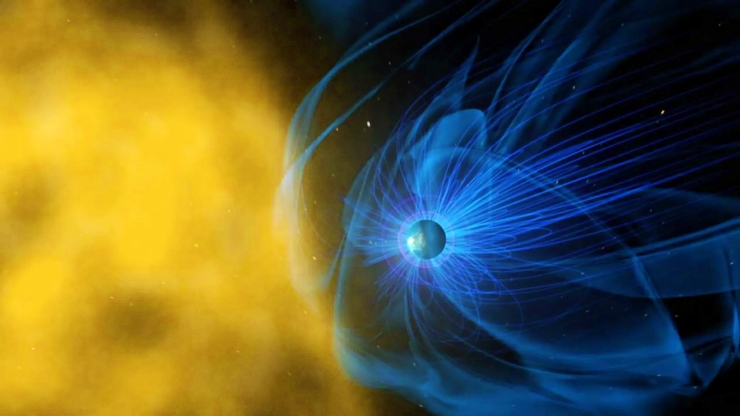
European scientists are conducting a mission to produce detailed X-ray images of Earth’s magnetic atmosphere.
With the ‘SMILE’ mission, ESA will launch a 3-meter-long spacecraft equipped with monitoring devices and built-in antennas. The spacecraft will track how and where the solar wind interacts with Earth.
The spacecraft will rise to 121,000 kilometers above the North Pole – about a third of the distance to the Moon – and collect continuous data on soft X-rays and ultraviolet light for up to 45 hours per orbit.
Final Mission to Mercury
In 2026, spacecraft from Europe and Japan will enter Mercury’s orbit for the first time.
ESA reports that Mercury is the least explored planet, as it is difficult to reach a planet so close to the Sun without being destroyed by the star’s gravitational pull.
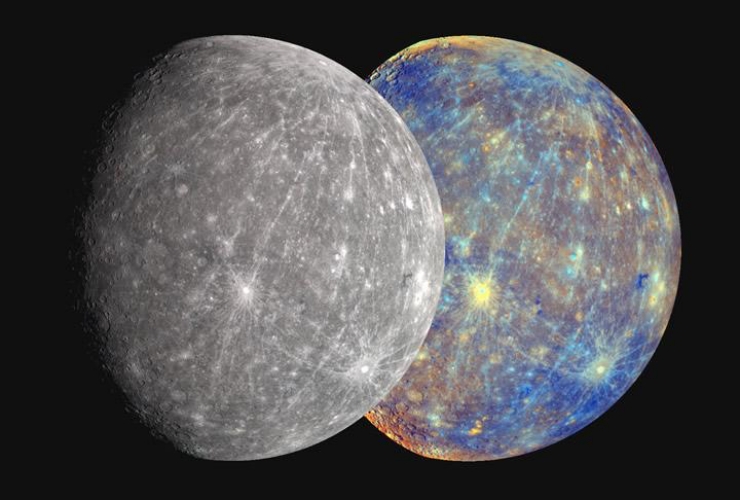
The spacecraft, launched in 2018 as part of the ‘BepiColombo’ mission, is expected to enter the planet’s orbit this year.
The data collected from Mercury is expected to shed light on the “history” of the entire Solar System.
