

The U.S. has activated airport Ebola screening for travelers from Congo and Uganda, while Europe’s response remains fragmented—leaving Brussels Airlines operating flights to Kinshasa without mandatory health checks despite a WHO-declared public health emergency. As of May 26, 2026, the Bundibugyo virus has spread to urban centers like Bunia and Goma, with over 900 suspected cases and 101 confirmed infections, yet European airports lack unified protocols. The question isn’t just about screening—it’s about whether piecemeal vigilance can contain a virus that thrives on gaps.
The U.S. Moves First: Screening, Restrictions, and a 30-Day Lockdown
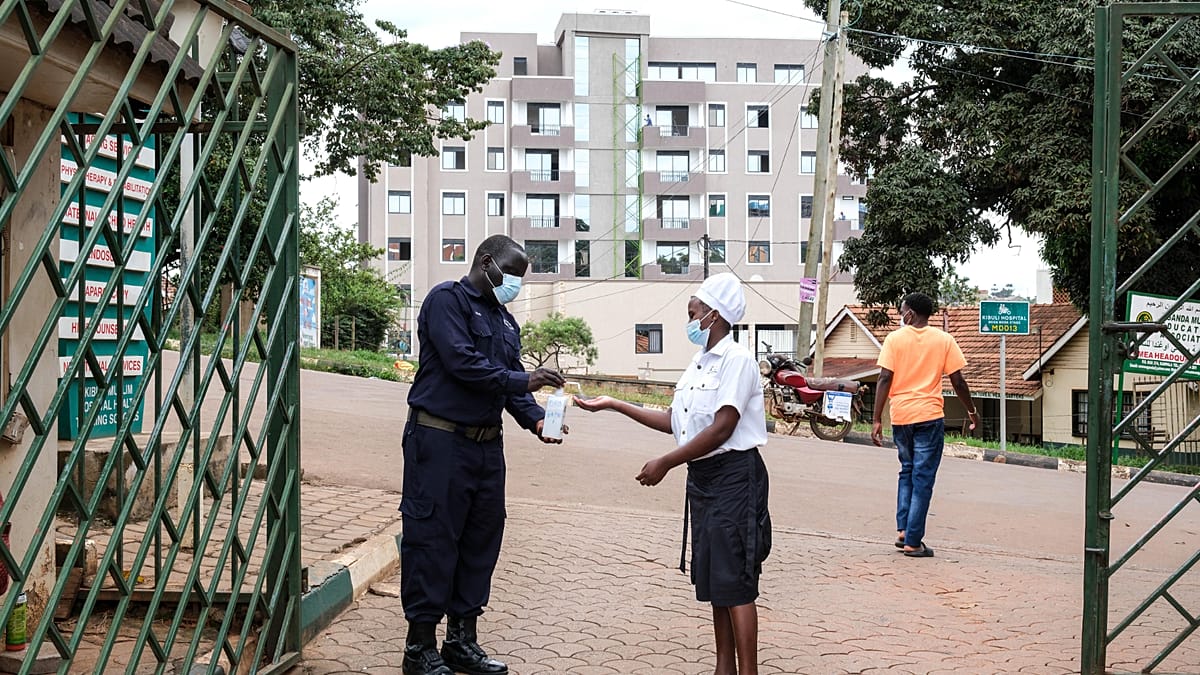
The U.S. Centers for Disease Control and Prevention (CDC) didn’t wait for Europe to act. On May 18, 2026, the agency invoked Title 42—an emergency authority last used during the COVID-19 pandemic—to impose **21-day entry bans on non-U.S. passport holders** who’ve visited Congo, South Sudan, or Uganda. The order, effective immediately for 30 days, also mandates **public health screening at all ports of entry** for travelers from affected regions. Visa services at the U.S. embassy in Kampala were suspended the same day, a move that signals the administration’s zero-tolerance stance on Ebola’s spread. The CDC’s justification? **”Current epidemiological evidence”** and the **”highly serious nature”** of the Bundibugyo virus strain, which has already jumped from rural outbreaks to major cities.
What’s striking isn’t just the speed—it’s the **scale of the U.S. response compared to Europe’s**. While the CDC coordinates with airlines, local health departments, and port officials to **identify exposed travelers**, Europe’s approach is a patchwork. Brussels Airlines, which operates **seven daily flights to Kinshasa**—Europe’s primary gateway to Congo—has **no additional screening** despite serving a hub where Ebola cases have surged. A spokesperson told reporters: **”All flights are operating as scheduled, and no protective measures are in place.”** The airline’s crews *do* follow hygiene protocols, but the absence of systematic checks at arrival stands in sharp contrast to the U.S. model.
The discrepancy isn’t just procedural—it’s **epidemiological**. The Bundibugyo virus, though less deadly than the Zaire strain, spreads through **direct contact with bodily fluids**, not airborne transmission. Yet its incubation period (2–21 days) means asymptomatic carriers can slip through temperature checks. **”A traveller in the incubation period does not yet have a fever and will therefore not be detected,”** explained **Steven Van Gucht**, Belgium’s top virologist. His assessment—**”the risk to Belgium and Europe is low”**—clashes with the U.S. CDC’s proactive stance. The tension reveals a **fundamental divide**: Should Europe rely on **post-hoc containment** (testing symptomatic cases) or **preemptive barriers** (screening all arrivals)?
Europe’s Divided Response: Why Brussels Isn’t Screening (Yet)
Brussels’ hands-off approach isn’t recklessness—it’s **calculated risk assessment**. The city’s direct flight route to Kinshasa carries **~290 passengers per Airbus A330**, but Van Gucht’s team emphasizes that **Ebola’s transmission chain is broken without symptomatic contact**. **”Experience from previous outbreaks shows the risk is low,”** he told reporters, citing historical data where European cases remained isolated. Yet the **WHO’s May 17 declaration** of a **Public Health Emergency of International Concern (PHEIC)**—paired with Dr. Tedros Adhanom Ghebreyesus’ warning about the **”scale and speed”** of the epidemic—suggests the situation is **evolving faster than Europe’s protocols**.

The **data gap** is glaring. The WHO reports **220 deaths** (per its estimates), while Congolese authorities cite **131 deaths and 500 cases**. These discrepancies highlight how **local underreporting** could undermine Europe’s confidence. Meanwhile, the U.S. CDC’s **30-day Title 42 order**—a blunt instrument—reflects a **worst-case scenario mindset**. Europe’s **wait-and-see approach** may work if the outbreak stabilizes. But if Bundibugyo mutates or spreads to new regions, the **lack of unified screening could become a liability**.
**”The situation in the DRC is serious and must be tackled decisively there. Brussels does indeed have direct links with Kinshasa, which justifies vigilance.”** Steven Van Gucht, Belgium’s top virologistVan Gucht’s caution is telling. While he downplays Europe’s risk, he **acknowledges the need for vigilance**—a term that could easily morph into **screening requirements** if cases rise. The **timing of Europe’s response** hinges on two factors: 1. **Will the DRC’s outbreak peak soon?** If cases plateau, Europe may avoid stricter measures. 2. **Will the U.S. pressure allies to align?** The CDC’s aggressive stance could force EU health agencies to **reassess their protocols**.
The Screening Debate: What Science Says vs. What Politicians Fear
The **effectiveness of airport screening** is debated. Temperature checks catch **symptomatic travelers** but fail during incubation. The **U.S. model**—combining **entry bans, screening, and contact tracing**—mirrors its COVID-19 playbook. Yet critics argue it **disproportionately affects visa holders** from low-income nations. Europe’s reluctance may stem from **avoiding travel bans’ economic and diplomatic fallout**.
Historically, **Ebola’s containment has relied on ground-level measures**: isolating patients, tracing contacts, and strengthening rural health systems. The **2014–2016 West Africa outbreak** showed that **airport screening alone isn’t enough**—it’s the **combination of screening, local surveillance, and rapid response** that works. Europe’s **fragmented approach**—where airlines monitor but governments don’t mandate—leaves **critical gaps**. If a single infected traveler reaches Europe undetected, the **lack of a unified protocol could turn vigilance into chaos**.
The **WHO’s PHEIC declaration** is a **red flag**. While not a “pandemic emergency,” the label triggers **global coordination**. Dr. Tedros’ May 24 update—**”more than 900 suspected cases”**—underscores the **urgency**. Yet Europe’s response remains **reactive**. The **U.S. has acted**; Europe is **observing**.
What Happens Next: 3 Scenarios for Europe’s Ebola Response
1. **Status Quo (Low Risk)**: If cases in Congo/Uganda decline by June 2026, Europe may **maintain its current approach**, relying on **voluntary airline protocols** and **local health monitoring**. Risk: **A single undetected case could reignite debates**. 2. **Partial Measures (Moderate Risk)**: If outbreaks persist, Europe may **adopt targeted screening** (e.g., for high-risk routes) without full bans. **Brussels Airlines could face pressure** to align with U.S. standards. 3. **Full Lockdown (High Risk)**: If Bundibugyo spreads to new regions or mutates, Europe may **mirror the U.S. model**—**entry restrictions, mandatory screening, and contact tracing**. This would **disrupt travel** but **minimize domestic spread**. **Key Wildcard**: **Political pressure**. If the U.S. or WHO escalates warnings, Europe’s **Schengen Zone cohesion** could force a unified stance. As of now, **Brussels is waiting**. But the **clock is ticking**.
The **stakes aren’t just medical**—they’re **geopolitical**. Congo is a former Belgian colony; Kinshasa is a **strategic hub**. A **travel ban could strain relations**, while **inaction risks a public backlash** if Ebola reaches Europe. The **U.S. has chosen decisiveness**; Europe’s bet is on **calculated caution**. For now, **Brussels Airlines’ “monitoring” is Europe’s Ebola strategy**. Whether that’s enough remains **unanswered**.
One thing is clear: **The U.S. isn’t waiting**. And if history repeats, **Europe will follow—just not today**.
