
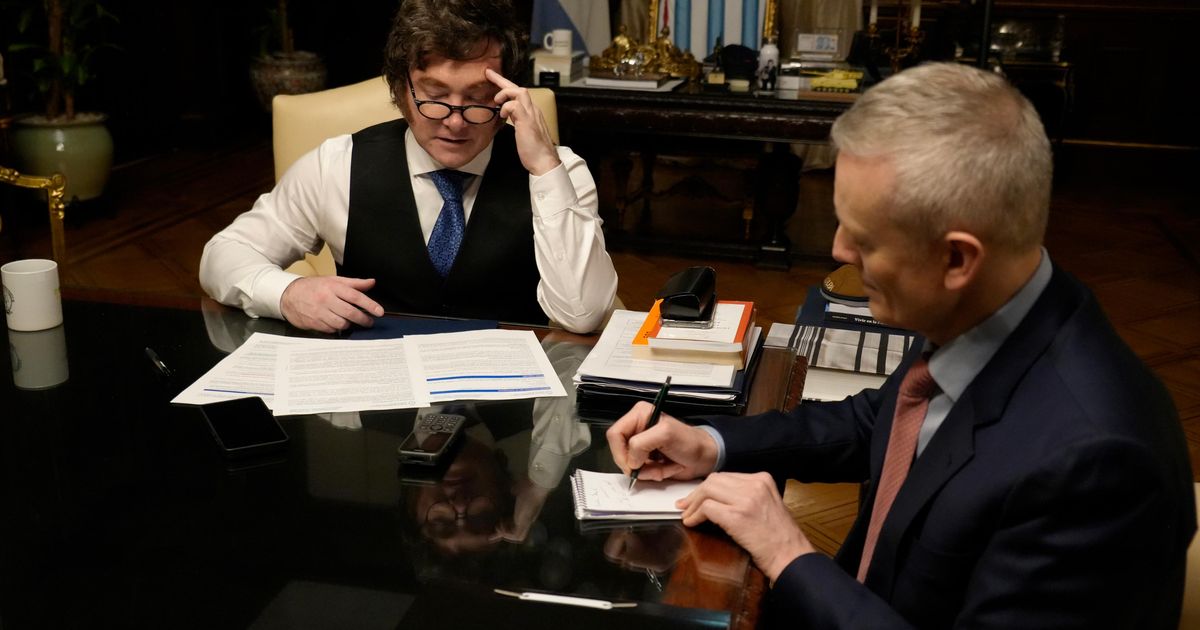
President Javier Milei’s administration is racing against time to push through a legislative blitz—from controversial judicial appointments to a $171 million debt deal—even as internal divisions and legal pressures threaten to derail his ambitious 2026 reforms. With the president publicly dismissing accusations of paralysis while his cabinet scrambles to regain momentum, the next 30 days will determine whether Milei can restore his narrative or if the scandals engulfing his top aides will force a reckoning.
Milei’s “Paralysis” Jibe: A Desperate Rebranding or Genuine Push Forward?
Milei’s latest public appearance at the Latam Economic Forum on June 5 was less a policy address and more a defensive counterpunch. Standing before a skeptical audience, he mocked critics who framed his government as “paralyzed,” declaring, “The supposed government that doesn’t move, that doesn’t take initiative—what a joke.” But the irony wasn’t lost on observers: just days earlier, his chief of cabinet, Manuel Adorni, had been forced to suspend high-profile meetings after revelations about his presumed illicit enrichment dominated headlines. The president’s attempt to pivot—listing economic and legislative “achievements”—fell flat, underscoring how deeply the Adorni scandal has eroded public trust.

Behind the scenes, the administration is desperate to regain control. Adorni, now under judicial scrutiny, has resumed meetings with ministers—including Justice chief Juan Bautista Mahiques and Defense Minister Carlos Presti—after a three-week hiatus. But the damage is done: the reunionism (constant photo ops and public appearances) that once symbolized unity now reads as damage control. Even Milei’s allies admit the strategy has failed. “The intention is that these objectives be long-term, so they can be fulfilled independently in the future,” one official told Infobae, revealing a shift from short-term fixes to a desperate bid for sustainability—a far cry from the radical overhaul Milei promised.
The Judicial Showdown: Michelli’s Plight and the Court’s Power Grab
A far more consequential battle is brewing in the courts, where Milei’s veto of María Verónica Michelli—a candidate for federal judge in La Plata—has sparked a constitutional crisis. The president blocked her nomination after learning she was related to Hugo Alconada Mon, a journalist for La Nación. But the real story isn’t the veto—it’s the legal backlash.
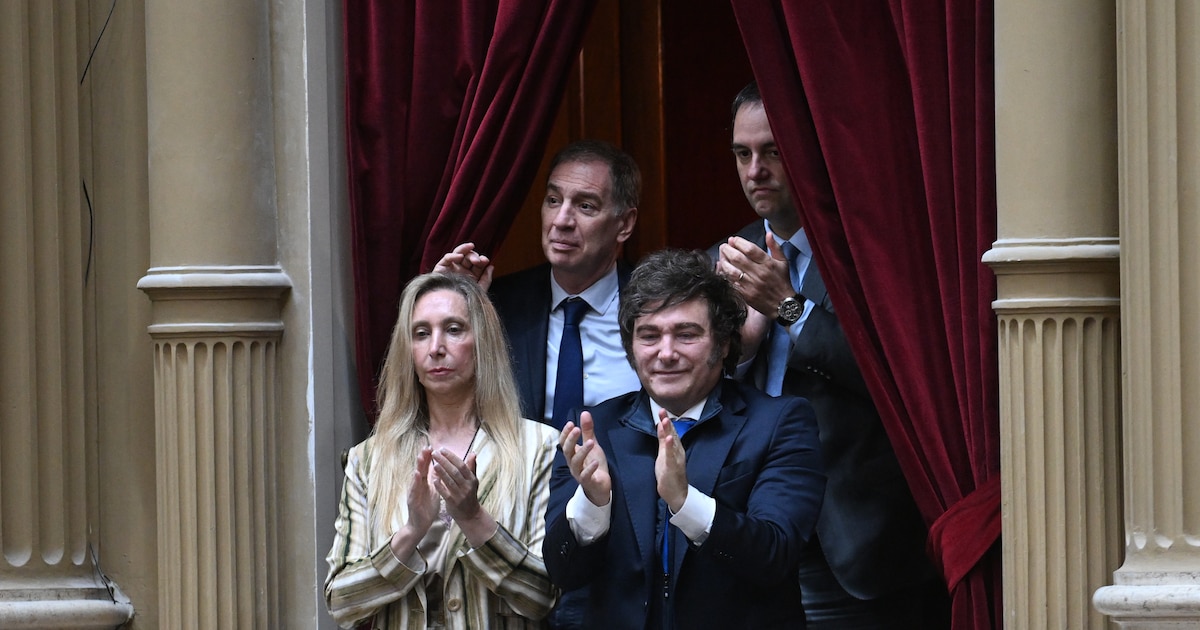
The Club Político Argentino, a coalition of lawyers and academics, fired back with a scathing indictment of the process: “We witnessed with astonishment a judicial nomination process that violates established procedures. The only criteria should be merit: moral integrity, professional competence, and academic excellence. Anything else is discrimination—by family, birthplace, or personal beliefs.” The group praised a proposal by Supreme Court justices Ricardo Lorenzetti and Carlos Rosenkrantz to limit political interference in judicial appointments, framing it as a necessary check on Milei’s discretionary power.
What’s at stake? More than a single judge. The pliego (nomination dossier) for Michelli—leaked and redacted to exclude her name—suggests a pattern: Milei’s team is weaponizing the judicial selection process to sideline opponents. Legal experts warn this could trigger a constitutional challenge, forcing the Supreme Court to rule on whether the president’s vetoes violate the independence of the judiciary. If the court sides with the Club Político, it would mark a major defeat for Milei’s executive authority—and a victory for the institutional checks he once sought to dismantle.
$171 Million Debt Deal: The Holdouts’ Gambit and Congress’s Gridlock
While the judicial battle rages, Milei’s economic team is locked in a high-stakes negotiation with two holdout creditors over a $171 million debt restructuring. The agreement, set for a Senate vote on June 4, is part of a broader push to unlock stalled legislation, including a bill to protect private property and reforms to Inocencia Fiscal (a tax amnesty program). But Congress remains a ticking time bomb.
According to Infobae, the government’s agenda is clogged with pending bills, from AI-driven corporate laws to security overhauls. Yet the $171 million deal—a drop in the bucket compared to Argentina’s $44 billion debt default risk—isn’t just about money. It’s a test of Milei’s ability to deliver after months of broken promises. If the Senate approves it, it could buoy market confidence; if it stalls, the administration’s credibility will take another hit.
The Adorni Scandal: How a Single Case Unraveled Milei’s Cabinet
The Adorni affair isn’t just a legal problem—it’s a governance crisis. The chief of cabinet’s presumed enrichment case has exposed systemic corruption risks in Milei’s inner circle, with Letra P detailing how Adorni’s team—including Javier Lanari and Aymé Ayelén Vázquez—has been scrambling to contain the fallout.

Karina Milei, the president’s sister and a key strategist, has been front and center in the damage control, even staging a photo-op walk with Adorni outside Balcarce 50 to project unity. But the optics haven’t worked. The “reunionism” strategy—constant meetings, staged appearances, and public reassurances—has only deepened skepticism. “The supposed government that doesn’t move…” Milei’s own words now haunt him.
Worse, the scandal has exposed rifts within the administration. Santiago Caputo, Milei’s economic advisor, has been locked in a power struggle with Martín Menem (Karina’s ally) and Patricia Bullrich, the former security minister. The “tregua” (truce) between Caputo and the Menem faction is fragile at best, and the Adorni case has reignited hostilities. Meanwhile, Bullrich’s public feuds with Caputo have only distracted from the economic agenda.
What’s Next: Three Scenarios for Milei’s 2026
The next 30 days will be decisive.
- Scenario 1: The Legislative Blitz Succeeds – If the Senate approves the $171 million deal and key bills pass, Milei could regain momentum. But this hinges on Caputo and Menem burying their differences—unlikely without a major concession.
- Scenario 2: The Judicial Backlash Wins – If the Supreme Court rules against Milei’s vetoes, it could trigger a constitutional crisis, forcing him to retreat on judicial appointments or face impeachment threats.
- Scenario 3: The Adorni Scandal Escalates – New evidence could expand the investigation to other officials, leading to resignations or arrests—and a full-blown cabinet collapse.
The most plausible outcome? A messy compromise. Milei will push through economic measures (like the $171 million deal) to buy time, while the judicial battle drags on. But without resolving the Adorni scandal or the Caputo-Menem feud, the administration’s long-term stability remains in doubt.
One thing is clear: Milei’s “hyperactive” phase is a desperate gamble. If it fails, his presidency could unravel faster than expected. If it succeeds, he’ll have narrowly averted collapse—but at the cost of losing control over his own agenda.
For now, the only certainty is more chaos. And in Argentina’s political climate, chaos is the new normal.
