

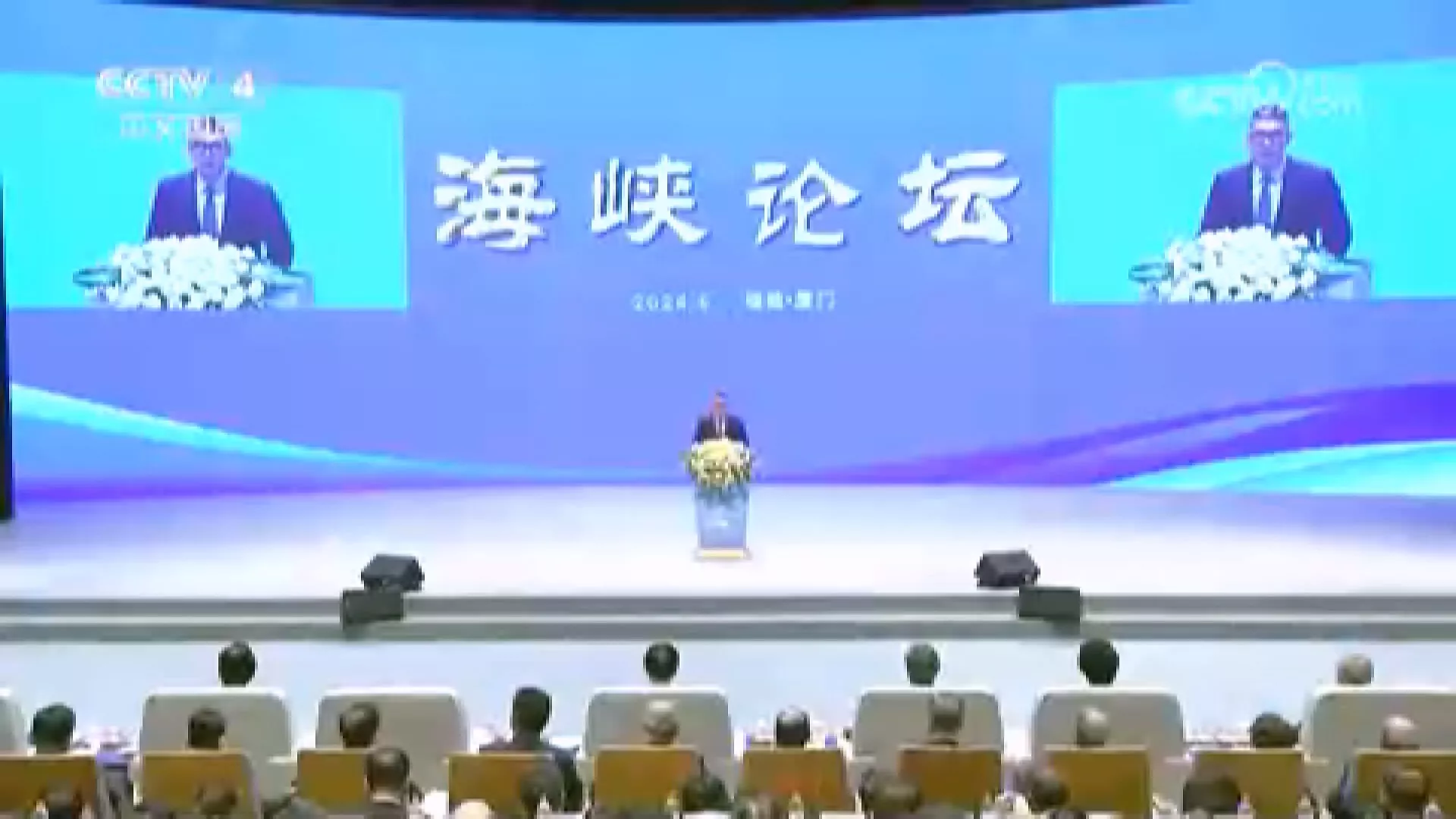
The Taiwanese government’s ban on officials attending the 18th Strait Forum in Xiamen, China, has ignited a political firestorm, with lawmakers accusing the administration of overreach and opponents warning of deeper isolation from Beijing. The forum, set to begin June 13, was labeled a “statistical warfare platform” by Taiwan’s Mainland Affairs Council (MAC), which now prohibits both central and local government officials from participating—a first in its history. The move has sparked sharp exchanges between ruling and opposition parties, with critics questioning whether the ban undermines Taiwan’s democratic institutions or protects them.
A Ban That Divides: Why Taiwan’s Leaders Are Clashing Over the Forum
The MAC’s decision to block all government officials—including local leaders like Taitung County Magistrate Rao Ching-ling, who had previously attended the forum—marks a significant escalation in Taiwan’s stance against what it calls “statistical warfare.” According to Yahoo Taiwan News, the forum’s stated goal of promoting “unification and integration” between Taiwan and China has framed it as a threat to the island’s sovereignty. The MAC’s spokesperson, Liang Wen-jie, emphasized that the forum is “well-known as a platform for China’s so-called ‘fusion and statistical warfare’ against Taiwan,” urging all parties to avoid becoming tools of Beijing’s agenda.
The ban has left local officials—who often see the forum as a platform to address economic and social issues—frustrated. Rao Ching-ling, whose application to attend was rejected, told reporters she views her role as a “bridge” between local communities, central government, and cross-strait relations. “If this platform is used well, it can benefit the people,” she said. “It’s unfortunate that I won’t be able to go this time.” Her comments reflect a broader sentiment among some officials who argue that the forum’s economic and social discussions could still serve Taiwan’s interests, even if its political undertones are problematic.
Opposition Lawmakers Accuse the Government of Weakness
KMT lawmaker Chen Yu-chen has been the most vocal critic of the ban, questioning whether Taiwan’s government lacks confidence in its own democratic system. In an interview with Yahoo Taiwan News, Chen argued that Taiwan could “statistical warfare” China just as effectively. “Why can’t we also statistical warfare them?” she asked, suggesting that the government’s fear of engagement is misplaced. Her remarks highlight a broader KMT strategy to portray the ban as a sign of weakness, particularly as China tightens its grip on cross-strait relations.

Chen’s challenge has drawn a sharp rebuke from the ruling Democratic Progressive Party (DPP). Legislative Secretary Chuang Rui-hsiong dismissed her argument as “absurd,” stating that Taiwan’s confidence should be demonstrated through economic strength, national defense, and international standing—not by participating in forums that seek to “eliminate the Republic of China.” Chuang’s stance aligns with the DPP’s broader narrative that the forum is a tool for Beijing to advance its unification agenda. “Why would we attend a forum whose sole purpose is to dismantle our own country?” he asked rhetorically. “There are countless other forums in the world—why pick this one?”
Beijing’s Response: A Rejection of Taiwan’s “Separatist” Stance
China’s response to the ban has been swift and uncompromising. The Taiwan Affairs Office (TAO) spokesperson, Zhu Fenglian, accused the DPP of being “obstinate” in its “Taiwan independence” stance, claiming that the ban disrupts two-way exchanges that benefit ordinary people. In a statement released via UDN, Zhu argued that the forum is a “grassroots” platform that has historically been welcomed by Taiwanese citizens. “The trend of two sides coming together is unstoppable,” she declared, framing the ban as an attempt to isolate Taiwan from its cultural and economic ties to the mainland.
The TAO’s rhetoric underscores Beijing’s frustration with what it perceives as Taipei’s growing distance. While the forum has long been a contentious issue, the MAC’s decision to extend the ban to local officials—including those from Kinmen, where cross-strait ties are historically strong—signals a hardening of Taiwan’s stance. This shift comes as tensions in the Taiwan Strait remain high, with China’s military drills and economic coercion strategies increasingly testing Taipei’s resilience.
Local Leaders Push Back: “We Must Maintain Dialogue”
Not all officials share the KMT’s skepticism of the ban. Taipei Mayor Chiang Wan-an and New Taipei City Mayor Hou Yu-yi have both expressed concerns about the broader implications of cutting off dialogue. Chiang, in a pointed remark, recalled President Lai Ching-te’s 2024 campaign promise to engage with Chinese leader Xi Jinping over meals—a gesture that symbolized a more conciliatory approach. “Now, after 10 years in power, the only official channel left is the Taipei-Shanghai Forum,” Chiang told reporters, adding that Taipei City will continue to focus on municipal-level exchanges to prevent a complete freeze in cross-strait relations.
Hou echoed Chiang’s sentiment, emphasizing the need for “more goodwill and less hostility” in cross-strait interactions. “Dialogue is meaningful,” he said, arguing that the ban risks deepening mutual misunderstandings. His remarks reflect a pragmatic view among some local leaders who see the forum—not despite its political context—but as a potential avenue for addressing practical issues that affect their constituents.
What’s Next? The Forum, the Ban, and Taiwan’s Future
The 18th Strait Forum begins June 13, and while government officials are barred from attending, political parties and private sector representatives will still participate. The KMT has already announced that its vice chairman, Chang Hong-kung, will lead a delegation, signaling that opposition parties remain engaged despite the ban. This dual approach—government prohibition alongside private participation—highlights the complex dynamics at play.
For Taiwan’s government, the ban sends a clear message: Beijing’s attempts to normalize unification through forums like the Strait Forum will not be accommodated. Yet, the backlash from opposition lawmakers and local leaders suggests that the issue is far from settled. The coming weeks will reveal whether the ban strengthens Taiwan’s resolve or deepens divisions at a time when cross-strait relations are already fraught with tension.
One thing is certain: the debate over the forum is not just about a single event. It reflects broader questions about Taiwan’s identity, its relationship with China, and how far it is willing to go to preserve its sovereignty—even in the face of economic and diplomatic pressure. As the forum approaches, the stakes could not be higher.
