

On January 28, 2026, the Norwegian Automobile Federation (NAF) conducted its annual El Prix winter range test, pushing 24 electric vehicles through temperatures as low as -31 degrees Celsius. The results revealed significant performance gaps, with real-world range dropping between 29% and 46% compared to official WLTP laboratory estimates.
Extreme Cold Performance and Range Degradation
The Norwegian winter test represents one of the most grueling real-world evaluations of battery-electric vehicles currently available to consumers. As reported by Auto.cz, the test route spanned from Oslo through Lillehammer and Dombås to Folldalu, where conditions reached -31 degrees Celsius. This environment forces vehicles to contend with high rolling resistance from winter tires, the energy demands of cabin heating, and the necessity of battery thermal management.

According to the NAF’s technical briefing released on January 29, 2026, the test protocol requires vehicles to be charged to 100% at a controlled facility and parked overnight in sub-zero temperatures. NAF technical consultant Nils Sødal noted in a post-test statement that the 2026 cohort faced the most severe conditions in the event’s decade-long history. The extreme cold specifically impacts the electrolyte viscosity within lithium-ion cells, which NAF engineers observed causing a sharp voltage drop during the initial cold-start phase of the route.
The data indicates that even top-tier models struggle when the mercury drops. According to Sdruzeni-sova.cz, the test concluded for each vehicle when it could no longer maintain the required speed limits, as most electric cars automatically restrict comfort features and power output to conserve the final dregs of energy. This “turtle mode” or power-limiting state was triggered significantly earlier in the 2026 test compared to the 2025 NAF test, where average temperatures remained closer to -10 degrees Celsius.
Comparative Range Data: Winter Realities vs. WLTP
The following table highlights the performance of selected models from the 2026 El Prix, demonstrating the variance between standardized laboratory testing and extreme arctic conditions.

| Model | WLTP Range | Real-World Range | Variance (%) |
|---|---|---|---|
| Lucid Air Grand Touring AWD | 960 km | 520 km | -46 % |
| Mercedes CLA 350 4Matic | 709 km | 421 km | -41 % |
| Audi A6 Sportback e-tron | 653 km | 402 km | -38 % |
| Volvo EX90 Twin Motor | 611 km | 339 km | -45 % |
| Tesla Model Y Long Range RWD | 600 km | 359 km | -40 % |
| Škoda Elroq RS | 524 km | 309 km | -41 % |
| Hyundai Inster FWD | 360 km | 256 km | -29 % |
While the Lucid Air Grand Touring AWD achieved the longest absolute distance at 520 kilometers, it also recorded one of the highest percentage losses at 46%, matching the performance drop of the Opel Grandland. Conversely, smaller vehicles like the Hyundai Inster demonstrated greater relative efficiency under stress, with a variance of only 29%. Industry analysts at BloombergNEF, in a February 2026 market brief, attributed the Inster’s resilience to its lighter curb weight and a more aggressive heat-pump duty cycle that prioritizes cabin thermal efficiency over rapid interior heating.
The discrepancy between the Lucid Air’s WLTP rating of 960 km and its performance at -31 degrees Celsius highlights the limitations of the Worldwide Harmonized Light Vehicles Test Procedure. The WLTP cycle, established by the UN Economic Commission for Europe, assumes an ambient temperature of 23 degrees Celsius. In contrast, the NAF test data confirms that the Lucid’s dual-motor configuration requires significant auxiliary power to maintain optimal battery temperature, a trend also noted in the 2025 Volvo EX90 launch documentation, which identifies thermal management as the primary energy sink in sub-zero environments.
Market Implications and Efficiency Trends
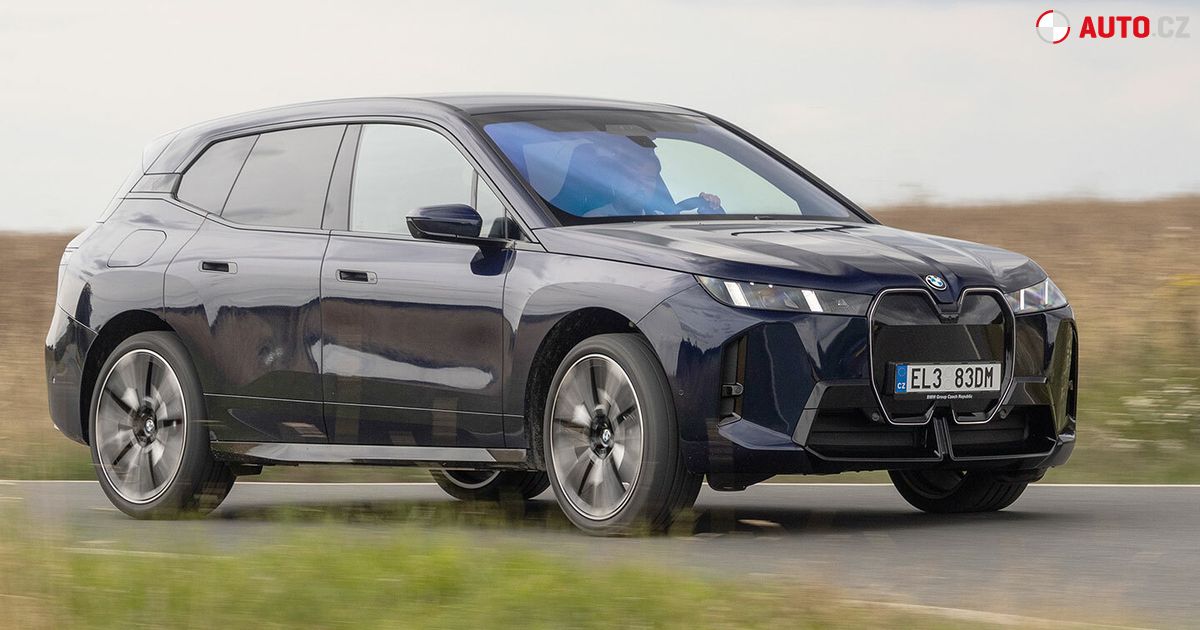
The 2026 test highlighted that a large battery capacity does not inherently guarantee stability in sub-zero climates. While premium models like the BMW iX xDrive 60 and the Audi A6 Sportback e-tron remained at the top of the distance rankings, their percentage drop—39% and 38% respectively—underscores the universal challenge of thermal management. In an earnings call on February 4, 2026, Audi AG management acknowledged the NAF findings, noting that their upcoming Q4 software update will include “arctic-optimized” battery pre-conditioning settings to mitigate future range degradation.
Analysts observing the Aktualne.cz reporting on broader automotive sector pressures suggest that consumer expectations for range are often misaligned with winter reality. The NAF test serves as a critical correction to manufacturer-provided WLTP figures, which assume optimal temperature and driving conditions. Interestingly, certain Chinese and Korean models, such as the MG IM6 and the KGM Musso, showed resilience, with range losses limited to between 30% and 32%, potentially signaling improvements in cold-weather battery chemistry and software management.
Regulatory bodies, including the Norwegian Consumer Authority (Forbrukertilsynet), have previously scrutinized range claims. In a 2024 ruling, the authority mandated that manufacturers provide more transparent “cold-weather range” estimates in marketing materials. However, as of February 2026, most European OEMs have yet to adopt a standardized winter range metric, leaving the NAF test as the de facto industry benchmark for Nordic consumers.
What the Data Means for Winter Driving
For the average driver, the El Prix data confirms that a 30% to 45% reduction in range should be factored into winter travel planning. The variation observed in the 2026 cohort—drastically higher than in previous years where temperatures stayed above -10 degrees Celsius—highlights that extreme cold remains the single most significant factor in electric vehicle efficiency.
According to data from the European Automobile Manufacturers’ Association (ACEA), the Nordic region represents the highest per-capita adoption of EVs globally. Consequently, the NAF results carry significant weight for fleet operators. Companies such as Posten Norge have cited the 2026 El Prix data in their internal logistics planning, adjusting their delivery schedules for the first quarter of 2026 to account for the reduced operational radius of their electric van fleets. As manufacturers continue to refine battery pre-conditioning and cabin heating efficiency, the gap between summer and winter performance remains a primary friction point for the transition to electric transport in colder climates.
