
World oil prices fell to their lowest level since early March as traders bet on a near-term U.S.-Iran agreement, with Brent crude dropping 3.37% to $87.33 per barrel, according to Mubasher.info. The decline followed Iranian Foreign Minister Abbas Araghchi’s denial of a signed memorandum of understanding with the U.S., while U.S. President Donald Trump canceled plans for airstrikes against Iran. The drop also reflected growing confidence in resuming oil shipments through the Strait of Hormuz, a critical global shipping lane.
Market Drivers: Iran-U.S. Talks and Geopolitical Shifts
Analysts pointed to conflicting signals from both sides. While Iranian officials denied a finalized deal, U.S. President Donald Trump’s cancellation of airstrikes signaled a de-escalation. “The market’s downward spiral stems from Iranian statements about a memorandum of understanding with the U.S.,” said John Kilduff of Agen Capital, per Mubasher.info. However, Iran’s recent closure of the Strait of Hormuz, citing threats to its sovereignty, raised concerns about supply disruptions. Meanwhile, the UK’s Youm7 reported that global oil prices had already triggered a 20% drop in European diesel prices since mid-May, with British fuel prices falling by 3-5 pence per liter.
Analysts’ Diverging Predictions
While some experts anticipated a price rebound, others warned of continued volatility. Tamas Varga of BP M. Associates noted, “Mainstream headlines are driving the market again with growing confidence in a final agreement and reopening of the Strait of Hormuz.” However, he cautioned that global oil inventories remained low, and “it could take time to ensure continuous oil flows.” Conversely, Goldman Sachs lowered its 2027 Brent crude price forecast to $80 per barrel, citing increased supply and reduced demand, though it expects prices to exceed 2025 averages due to OECD stockpiles and safety premiums. OPEC also revised its 2026 global oil demand growth forecast downward to 970,000 barrels per day, from 1.17 million, while projecting a 1.73 million barrel per day increase in 2027.
Supply Chain Dynamics and Regional Impacts
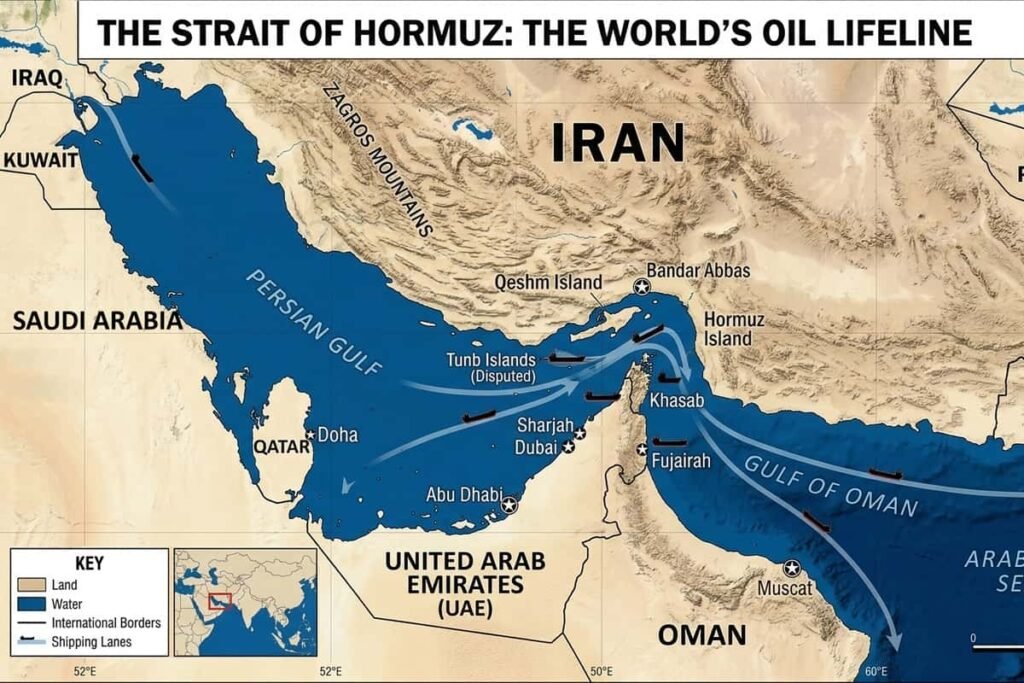
The Strait of Hormuz closure, which normally handles 20% of global oil and gas shipments, has already disrupted maritime traffic. Iran’s threat to fire on vessels attempting to pass through the strait has heightened fears of a supply crunch. Meanwhile, China’s reduced reliance on Middle Eastern oil—due to its own stockpiles—has eased some pressure on global markets, according to Youm7. However, analysts warn that any restart of oil flows through the strait could further depress prices, while lingering geopolitical tensions might prevent a return to pre-war price levels. “Any sudden surge in Chinese demand or U.S. export restrictions could reverse the trend,” the report added.

What’s Next for Global Oil Markets?
Traders are closely watching for clarity on the U.S.-Iran negotiations, with some predicting a market turning point by late July. “If oil flows don’t resume by then, inventory levels and strong seasonal demand could push prices to 120-130 dollars per barrel,” said Kilduff, per Mubasher.info. However, the lack of a confirmed agreement leaves the market vulnerable to sudden shifts. OPEC’s revised forecasts and Goldman Sachs’ price outlook highlight the uncertainty, with 2027 prices likely to hinge on whether a deal materializes and how quickly supply chains stabilize.
“The current situation is a delicate balance between optimism and caution,” said a senior analyst at BP M. Associates. “While the prospect of a deal is a positive for prices, the underlying supply constraints and geopolitical risks mean volatility is far from over.”
Find more reporting in our Business section.
